Heritage Analysis: The Table as an Object of Power and Prestige in Ancient Civilization
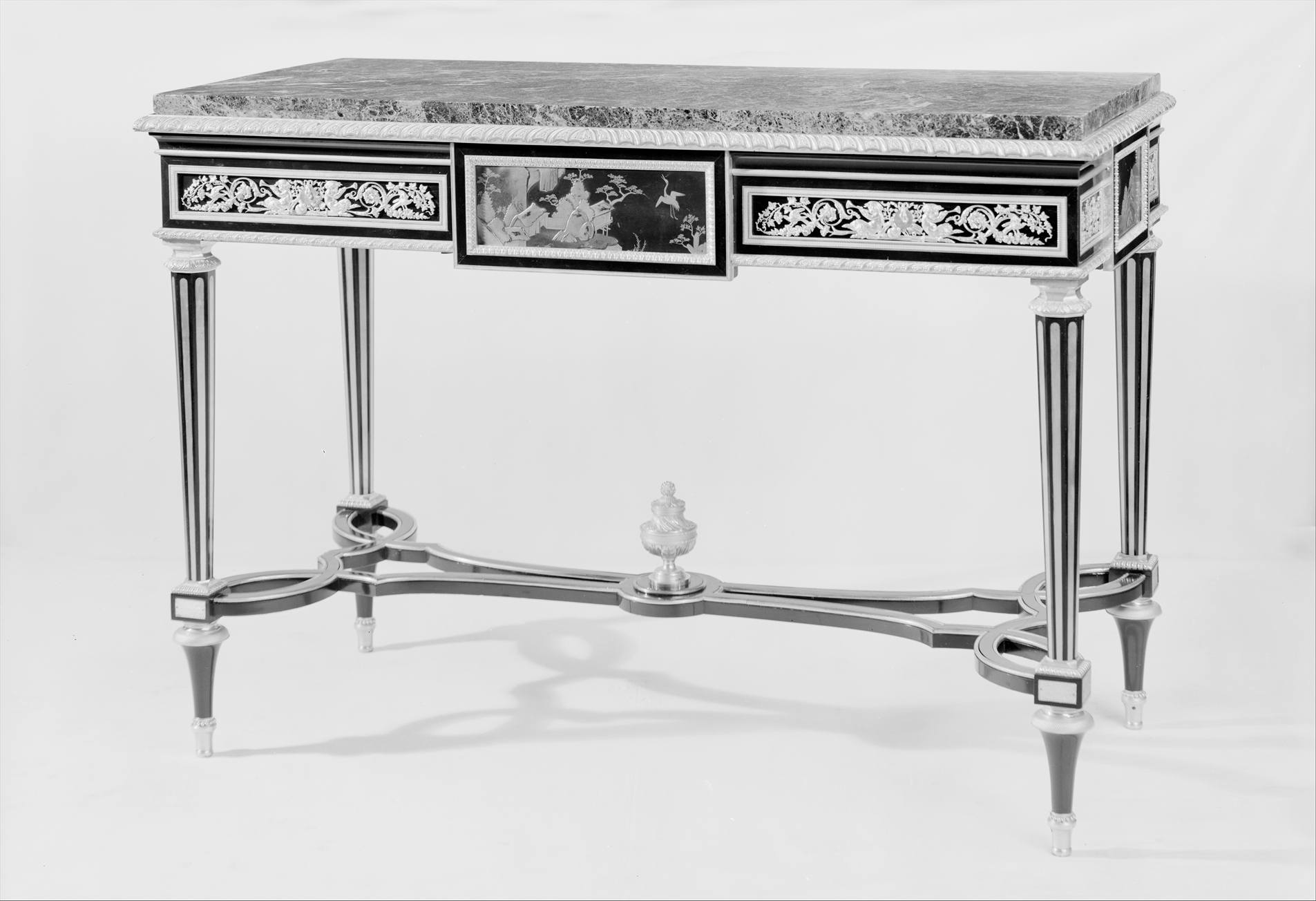
In the lexicon of luxury, the table is often relegated to the realm of utility—a surface for service, a platform for display. Yet, when we examine the archaeological and anthropological record of ancient civilizations, the table emerges as a profound symbol of hierarchical order, spiritual communion, and sovereign authority. For Katherine Fashion Lab, this heritage analysis repositions the table not as a passive furnishing but as an active instrument of symbolic power. The specific artifact under examination—crafted from oak, Japanese lacquer, ebony veneer, gilt bronze, and verde antico marble—represents a sophisticated synthesis of ancient principles and contemporary material mastery. This report deconstructs the table’s historical adornment, spiritual meaning, and strategic implications for a 2026 high-end luxury strategy.
Symbolic Power: The Table as a Stage for Authority
The Ancient Throne of Governance
In Mesopotamian, Egyptian, and early Chinese civilizations, the table was rarely a democratic object. It was the physical manifestation of the ruler’s will. The verde antico marble—a deep green stone quarried in ancient Greece and later prized by the Romans—evokes the earth’s permanence and the godlike endurance of the state. When combined with gilt bronze, a material reserved for deities and emperors due to its sunlike radiance, the table becomes a stage for decrees, treaties, and ceremonial judgments. The oak core, strong and resistant, symbolizes the unyielding foundation of law. For Katherine Fashion Lab, this suggests that a luxury table in 2026 must not merely support objects but command attention—a piece that anchors a room with the weight of governance.
Hierarchical Adornment and Status Signaling
The use of Japanese lacquer and ebony veneer introduces a layer of cultural cross-pollination. Lacquer, historically used in East Asian court rituals, was a medium for the divine—its deep black or vermilion surfaces were believed to repel evil spirits and elevate the user’s spiritual rank. Ebony, sourced from Africa and Asia, was synonymous with wealth due to its rarity and difficulty to carve. By integrating these materials, the table becomes a global statement of conquest and curation—a collector’s object that signals the owner’s access to distant resources and esoteric knowledge. In high-end luxury strategy, this translates to narrative-driven exclusivity: each material tells a story of provenance, power, and patronage.
Historical Adornment: Craftsmanship as Ritual
The Art of Surface as Sacred Space
Ancient artisans understood that adornment was never merely decorative. The gilt bronze mounts on this table—perhaps in the form of lion’s paws or lotus motifs—served as protective talismans. In Egyptian tombs, tables were inlaid with faience and gold to ensure the deceased’s passage to the afterlife. The Japanese lacquer technique, which requires dozens of layered coats and months of curing, transforms the table’s surface into a mirror of eternity. The ebony veneer, polished to a liquid sheen, invites touch and contemplation. For Katherine Fashion Lab, historical adornment teaches that luxury is a process, not a product. The 2026 consumer will seek objects that embody the patience and precision of ancient ritual, where every brushstroke and chisel mark is a meditation on permanence.
Material Alchemy: From Earth to Icon
The verde antico marble is particularly instructive. Quarried from the Greek mountains of Thessaly, this marble was used in the Baths of Caracalla and the Pantheon—spaces designed to awe and humble. Its green veining, reminiscent of serpentine, was associated with rebirth and the goddess Venus. When juxtaposed with the dark, almost obsidian ebony, the table creates a dialectic of light and shadow, life and death. This alchemical pairing is a direct ancestor of modern high-end design, where contrasting textures and colors create visual tension and intellectual depth. In strategic terms, Katherine Fashion Lab can leverage this by curating material pairings that evoke ancient dichotomies—power and vulnerability, earth and sky, finite and infinite.
Spiritual Meaning: The Table as Altar
Communion with the Divine
Across ancient civilizations, the table functioned as an altar. In Greek temples, the trapeza held offerings to the gods. In Roman households, the mensa was the site of the lararium, where family spirits were honored. The oak—sacred to Zeus, Jupiter, and Thor—was believed to channel divine lightning and wisdom. The Japanese lacquer, with its urushi resin derived from the lacquer tree, was considered a living material that breathed and aged with the owner. This table, therefore, is not a piece of furniture but a threshold between the mortal and the eternal. For Katherine Fashion Lab’s 2026 strategy, this suggests that luxury objects must serve as ritual anchors in a secular age—pieces that invite pause, reflection, and a sense of sacred continuity.
The Table as Mediator of Social and Cosmic Order
In ancient China, the kang table was central to tea ceremonies, which were philosophical exercises in harmony and humility. The ebony veneer, with its dense, almost metallic grain, was believed to absorb negative energy and promote clarity. The gilt bronze accents, often in the form of cloud scrolls or dragon claws, symbolized the emperor’s mandate to mediate between heaven and earth. This table, then, is a cosmic compass, orienting its user toward balance and authority. In a 2026 luxury context, this translates to experiential storytelling: the table becomes a stage for curated rituals—dining, writing, negotiation—that elevate everyday acts into ceremonies of power and connection.
2026 High-End Luxury Strategy: Translating Ancient Wisdom into Modern Desire
Strategic Positioning: The Table as a Heritage Asset
For Katherine Fashion Lab, this heritage analysis yields a clear strategic directive: the table must be positioned not as a commodity but as a heritage asset. The combination of oak, Japanese lacquer, ebony veneer, gilt bronze, and verde antico marble creates a multilayered provenance that appeals to the ultra-high-net-worth collector. In 2026, the luxury market will increasingly value objects that resist obsolescence—pieces that carry the weight of history while embodying future-forward craftsmanship. The table’s narrative of power, ritual, and global exchange becomes its unique selling proposition.
Experiential Luxury and the Ritual of Ownership
The 2026 consumer seeks transformative experiences. Katherine Fashion Lab can leverage the table’s spiritual and symbolic dimensions by offering curated ownership journeys. This might include a documented provenance tracing the materials’ ancient sources, a master artisan’s commentary on the lacquer and veneer techniques, or a bespoke commissioning process that allows the client to select specific motifs or bronze finishes. The table becomes a portal to ancient worlds, and its owner, a modern-day patron of the arts and keeper of tradition.
Pricing and Exclusivity Architecture
The material complexity—rare verde antico marble, hand-harvested Japanese lacquer, sustainably sourced ebony—demands a stratified pricing model. Each element should be itemized in a heritage dossier that justifies the cost through rarity and craftsmanship. Limited editions, perhaps referencing specific ancient dynasties or mythological themes, will drive scarcity and desirability. The gilt bronze mounts can be offered in custom finishes (e.g., patinated bronze or 24-karat gold) to further differentiate tiers. In 2026, the table’s price point must reflect its role as a cultural artifact, not a mere furnishing.
Brand Narrative and Cultural Authority
Finally, Katherine Fashion Lab must position itself as a custodian of ancient luxury traditions. Marketing materials should emphasize the table’s symbolic power—its role in ancient courts, temples, and ceremonies—while framing the brand as a bridge between timeless wisdom and contemporary elegance. Collaborations with historians, archaeologists, and contemporary artists will reinforce this authority. The 2026 campaign could be titled “The Table of Power: From Antiquity to Authority”, weaving together the historical adornment, spiritual meaning, and strategic exclusivity outlined in this analysis.
Conclusion: The Table as a Living Legacy
This heritage analysis reveals that the table—crafted from oak, Japanese lacquer, ebony veneer, gilt bronze, and verde antico marble—is far more than a functional surface. It is a repository of symbolic power, a canvas of historical adornment, and a vessel of spiritual meaning. For Katherine Fashion Lab, the strategic imperative is clear: to treat this object as a cultural artifact that commands reverence, curiosity, and investment. In the 2026 high-end luxury landscape, where authenticity and narrative are paramount, the table stands as a testament to the enduring human desire to elevate the ordinary into the extraordinary. By honoring its ancient origins, the brand can create a piece that is not merely owned, but inherited—a legacy for generations to come.