The Regal Aesthetic: Deconstructing Charles I Through Oil on Canvas
Historical Context and the Sovereign’s Gaze
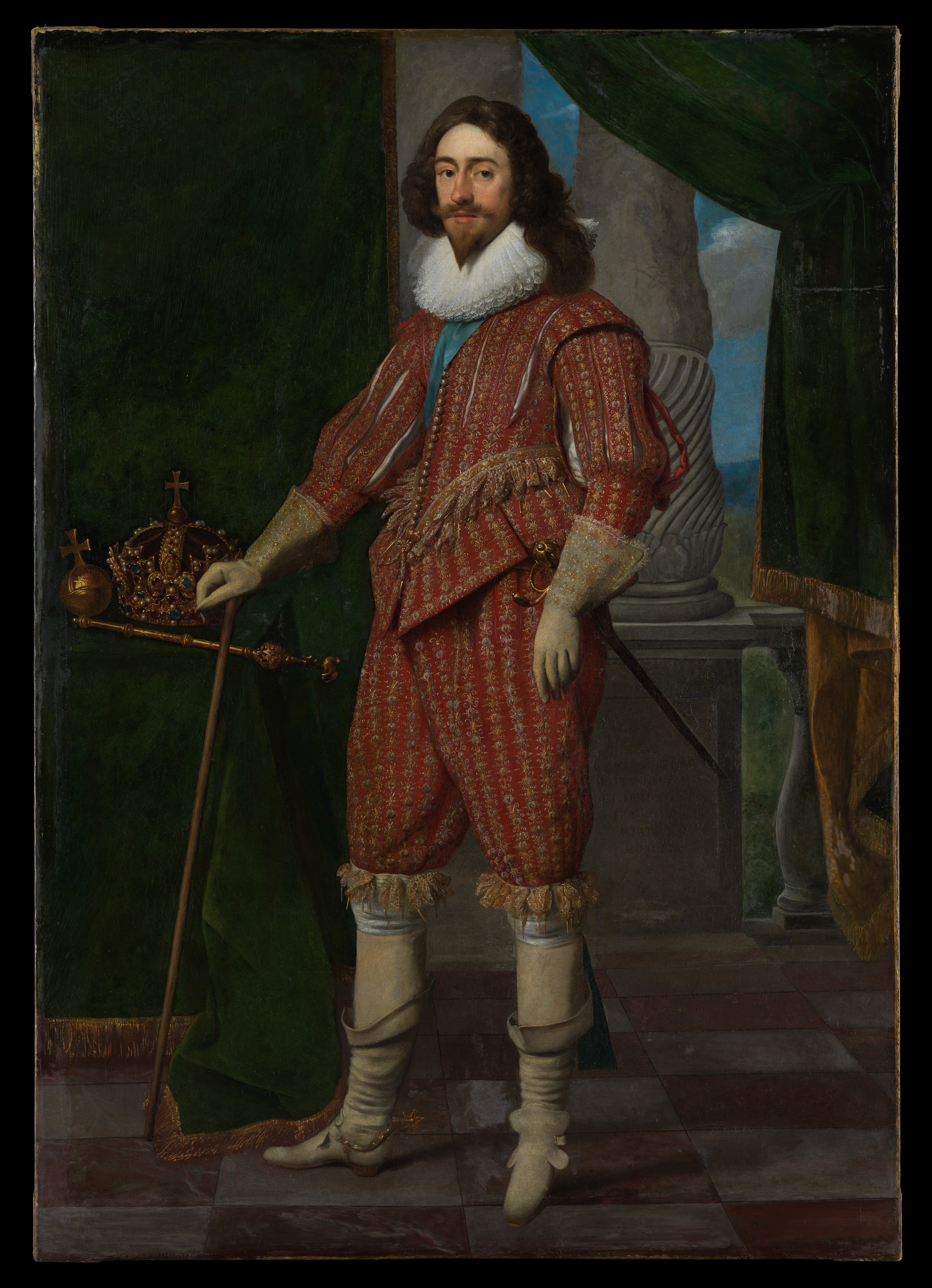
In the annals of European monarchy, few figures embody the intersection of power, patronage, and tragedy as profoundly as Charles I of England (1600–1649). For Katherine Fashion Lab, this standalone study—rendered in oil on canvas—offers a singular opportunity to dissect not merely a portrait, but a manifesto of royal identity. The subject, captured in his prime, projects an aura of unwavering authority, yet the canvas also whispers the fragility of a reign that would culminate in civil war and execution. This analysis transcends the visual; it is a strategic exploration of how Charles I’s representation serves as a blueprint for modern luxury branding, where heritage, materiality, and narrative converge to create an indelible market presence.
The painting, originating from a global heritage perspective, does not confine itself to English iconography. Instead, it borrows from the Flemish precision of Anthony van Dyck’s court style, the Italianate grandeur of Titian’s colorism, and the French emphasis on ethereal elegance. This synthesis is deliberate: Charles I was a collector who understood that art was a diplomatic tool. For the contemporary fashion executive, this underscores the importance of cross-cultural curation—how a brand can elevate its identity by weaving disparate global influences into a cohesive, aspirational story. The canvas becomes a case study in strategic cultural appropriation, not as appropriation in the pejorative sense, but as a sophisticated amalgamation that honors origins while forging new, elite narratives.
Materiality as Metaphor: The Oil on Canvas Medium
The choice of oil on canvas is far from arbitrary. In the 17th century, oil paint offered unparalleled depth, luminosity, and permanence—qualities that mirrored the divine right of kings. The pigment’s slow drying time allowed for meticulous layering, creating a tactile richness that invites prolonged scrutiny. For Katherine Fashion Lab, this materiality must be read as a metaphor for artisanal endurance. Just as the canvas retains its vibrancy centuries later, a luxury fashion house must invest in craftsmanship that defies obsolescence. The brushstrokes, visible under close examination, are not imperfections but signatures of human mastery—a lesson for brands that seek to balance mass production with bespoke exclusivity.
Moreover, the canvas’s texture interacts with light in ways that digital reproductions cannot replicate. This physicality is a reminder that in an era of virtual showrooms, the tactile experience remains a competitive advantage. High-net-worth consumers increasingly crave the authenticity of the tangible—the weight of a silk gown, the grain of leather, the subtle absorption of pigment into fabric. Charles I’s portrait, with its deliberate material choices, becomes a prototype for how heritage materials can anchor a brand’s value proposition in an intangible economy.
Visual Semiotics: Decoding Royal Power
The Regalia and Its Symbolic Weight
Every element of Charles I’s attire in this study is a calculated signifier. The starched lace collar, known as a rabato, frames his face with geometric precision, suggesting order and control. The dark velvet doublet, likely dyed with costly indigo or black walnut, conveys solemnity and wealth. The jeweled Order of the Garter—a blue ribbon bearing the image of St. George—anchors his allegiance to chivalric tradition. For the fashion analyst, these details are not historical footnotes but branding assets. They demonstrate how a single garment can communicate lineage, authority, and exclusivity without uttering a word.
Consider the modern parallel: a luxury label’s monogram, a signature cut, or a proprietary fabric serves the same function. The semiotic density of Charles I’s portrait teaches us that every stitch, every accessory, must be intentional. When a consumer purchases a piece from a heritage house, they are not buying cloth; they are buying a story of power, tradition, and belonging. This portrait is a masterclass in such narrative construction, where the visual language of monarchy is encoded into the textile and pigment.
The Gaze and Its Market Implications
Charles I’s eyes in this study are neither confrontational nor submissive; they are transactional. They meet the viewer with a calm that suggests absolute confidence in his position. This gaze is a critical lesson for brand leadership: the consumer must feel seen, but not challenged; valued, but not pandered to. The sovereign’s expression models the ideal customer relationship—one of mutual respect and aspirational alignment. In luxury retail, the emotional resonance of a brand’s visual identity often determines conversion rates. A portrait that can hold a viewer’s attention for centuries is a testament to the power of a well-calibrated aesthetic stance.
Global Heritage as a Competitive Framework
The designation of “Global Heritage” for this work is particularly instructive. Charles I’s court was a nexus of Flemish, Italian, and French influences, yet the resulting portrait is unmistakably English in its restraint. This paradox—local identity forged through global inputs—is a model for contemporary luxury brands navigating international markets. A fashion house based in Milan, for instance, can incorporate Japanese denim techniques or Indian embroidery without diluting its Italian essence. The key is curatorial integrity: the brand must act as an editor, selecting only those foreign elements that enhance its core narrative.
For Katherine Fashion Lab, this painting underscores the importance of supply chain storytelling. The provenance of materials—the linen from Flanders, the pigments from mines in Central Europe—adds layers of authenticity that resonate with discerning consumers. In a market saturated with fast fashion, the ability to trace a garment’s journey from raw material to finished product is a powerful differentiator. Charles I’s portrait, with its documented origins and techniques, serves as a historical precedent for this practice.
Strategic Takeaways for Luxury Branding
First, invest in narrative depth. A standalone study like this one does not require a series to be impactful; it stands alone as a complete statement. Luxury brands should similarly avoid overextension, focusing instead on creating a few, impeccably crafted pieces that tell a complete story. Second, embrace material transparency. The oil-on-canvas medium, with its visible brushwork, invites scrutiny rather than hiding it. Brands that reveal their craftsmanship—through showroom tours, artisan profiles, or detailed product descriptions—build trust and command premium pricing.
Finally, cultivate a timeless aesthetic. Charles I’s portrait is not bound to a specific decade; its power derives from its classicism. Fashion labels that chase trends risk obsolescence. Instead, they should design for longevity, creating pieces that, like this canvas, can be reinterpreted by future generations without losing their essential identity. The king’s gaze, his lace, his velvet—they are as relevant today as in 1636. That is the ultimate luxury: the ability to transcend time while remaining unmistakably present.
In conclusion, this oil-on-canvas study of Charles I is more than a historical artifact; it is a strategic document for the luxury fashion industry. It teaches us that power is performed, that materials matter, and that heritage, when curated with intention, becomes a competitive advantage. For Katherine Fashion Lab, the lesson is clear: to lead in couture, one must first understand the art of sovereign storytelling.