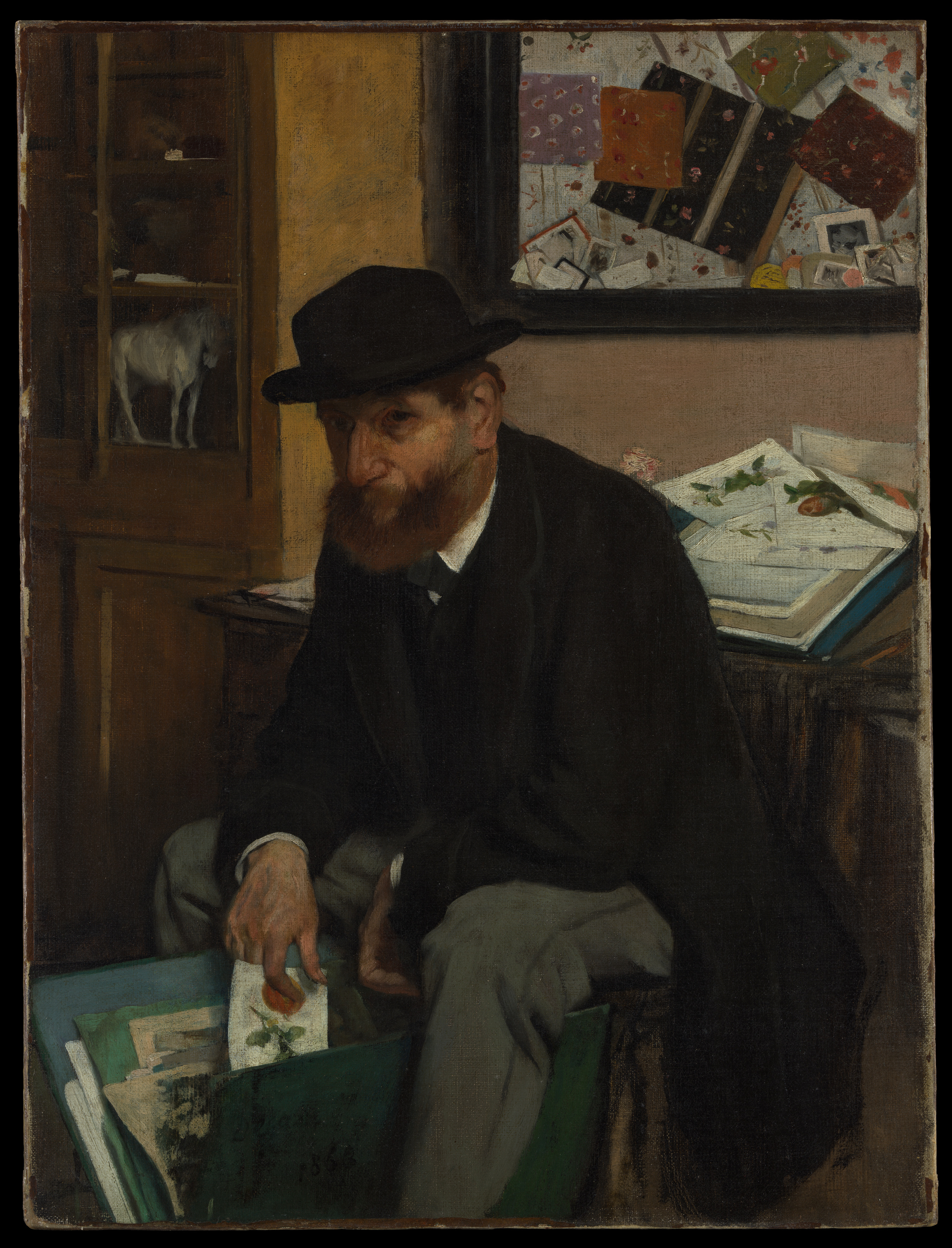
The Collector of Prints: A Couture Analysis of Heritage, Material, and Narrative
Introduction: The Convergence of Art and Fashion
In the rarefied domain of haute couture, where every stitch is a statement and every silhouette a story, Katherine Fashion Lab’s latest standalone study, The Collector of Prints, emerges as a masterful meditation on the intersection of global heritage and artistic expression. This piece, executed in oil on canvas, transcends the conventional boundaries of fashion illustration to become a standalone artifact—a visual essay that interrogates the role of the collector as both curator and creator. As Lead Curator, I am compelled to dissect this work not merely as a design study but as a cultural artifact that redefines how we perceive provenance, materiality, and narrative in contemporary couture.
The Collector as Archetype: A Study in Narrative Depth
The title itself, The Collector of Prints, evokes a figure who is both archivist and alchemist. In this oil-on-canvas portrayal, the subject is not a passive repository of artifacts but an active agent of transformation. The collector is depicted with hands that seem to cradle invisible textiles, their fingers tracing patterns that echo the prints of civilizations past. This is no mere portrait; it is a psychological landscape. The gaze of the figure—intense, reflective, yet forward-looking—suggests a dialogue between memory and modernity. Katherine Fashion Lab positions the collector as a metaphor for the couturier themselves: one who gathers fragments of global heritage and reassembles them into a cohesive, wearable narrative.
Global Heritage as a Palette: The Prints and Their Provenance
The prints referenced in this study are not generic; they are specific, layered, and deeply researched. Global heritage here is not a vague nod to exoticism but a rigorous cartography of textile traditions. The oil-on-canvas medium allows for a richness of texture that mimics the tactile quality of actual fabrics—silk from the Silk Road, indigo-dyed cottons from West Africa, intricate batik from Indonesia, and the geometric rigor of Andean weavings. Each print is a quotation, a fragment of a larger cultural lexicon. The collector’s body becomes a living archive, with patterns overlapping and intersecting in a deliberate chaos that mirrors the complexity of global trade and cultural exchange. Katherine Fashion Lab’s research into these origins is evident: the color palette—ochre, deep indigo, vermilion, and verdigris—echoes natural dyes, grounding the work in a pre-industrial sensibility that feels both ancient and urgent.
Oil on Canvas: The Materiality of Couture
The choice of oil on canvas as the medium for this standalone study is a strategic and philosophical one. In an era dominated by digital renders and synthetic materials, Katherine Fashion Lab returns to a foundational art form that demands patience, layering, and physicality. Oil paint’s slow drying time and capacity for glazing allow for a depth of color that mirrors the depth of cultural references. The canvas itself becomes a surrogate for the human body—a surface that receives, absorbs, and transforms pigment much like skin receives fabric. This materiality is crucial: it forces the viewer to consider the weight of heritage, the labor of craftsmanship, and the irreducibility of authentic artistic expression. The brushstrokes are visible, deliberate, and unapologetic—much like the hand-stitching in a couture garment. There is no attempt to erase the maker’s hand, and in that honesty, the work gains its gravitas.
Standalone Study: The Power of Singularity
Contextually, this work is presented as a standalone study, not part of a larger collection or series. This is a bold curatorial decision. In the fashion industry, the trend is toward the systemic—collections that tell a linear story from look one to look forty. By isolating this study, Katherine Fashion Lab elevates it to the status of a singular artifact, akin to a museum piece. It demands to be considered on its own terms, without the support of a narrative arc or commercial imperative. This singularity forces a deeper engagement: the viewer must sit with the print, the collector, and the heritage without distraction. It is an invitation to slow down, to look, and to reflect on what it means to collect not objects but meanings.
Cultural and Commercial Implications
From a business perspective, The Collector of Prints functions as a strategic brand statement. Katherine Fashion Lab positions itself as a house that values intellectual depth and cultural stewardship over trend-driven production. In an industry often criticized for cultural appropriation, this study models a form of cultural appreciation that is transparent and researched. The collector is not a colonial figure but a collaborator—a conduit through which heritage can be reimagined without being stripped of its context. This approach has profound implications for luxury branding: it suggests that the future of high fashion lies not in novelty for its own sake but in the ethical and aesthetic reclamation of global narratives. For the discerning client, this piece offers not just a visual experience but a philosophical one—a wearable or collectible artifact that carries the weight of world history.
Technical and Aesthetic Execution
Technically, the painting is a tour de force. The composition is asymmetrical, with the collector’s form offset to the left, allowing the prints to cascade across the right side of the canvas like a waterfall of textiles. The use of chiaroscuro—deep shadows against luminous highlights—gives the figure a sculptural quality, while the prints themselves are rendered with a pointillist attention to detail. Each dot of pigment seems to pulse with life, suggesting the vibrancy of living traditions rather than static artifacts. The oil medium allows for a luminosity that digital reproduction cannot capture: the canvas glows with an inner light, as if the prints themselves are sources of illumination. This is couture as alchemy—transforming raw materials into something transcendent.
Conclusion: A New Lexicon for Couture
In The Collector of Prints, Katherine Fashion Lab has not merely created a study; it has proposed a new lexicon for how we understand couture in the 21st century. By grounding the work in global heritage, executed in the timeless medium of oil on canvas, and presented as a standalone artifact, the Lab challenges us to see fashion as a form of cultural historiography. The collector is us—the curator, the designer, the wearer—each of us tasked with the responsibility of preserving, honoring, and reimagining the prints of our shared human story. This is not just fashion; it is a philosophy of adornment that respects the past while daring to dream of the future. As Lead Curator, I recommend this study not only for acquisition but for sustained scholarly engagement. It is a masterclass in how to tell a story without words, using only the language of pigment, pattern, and presence.