Fragments of Eternity: A Couture Analysis of Katherine Fashion Lab’s Standalone Study
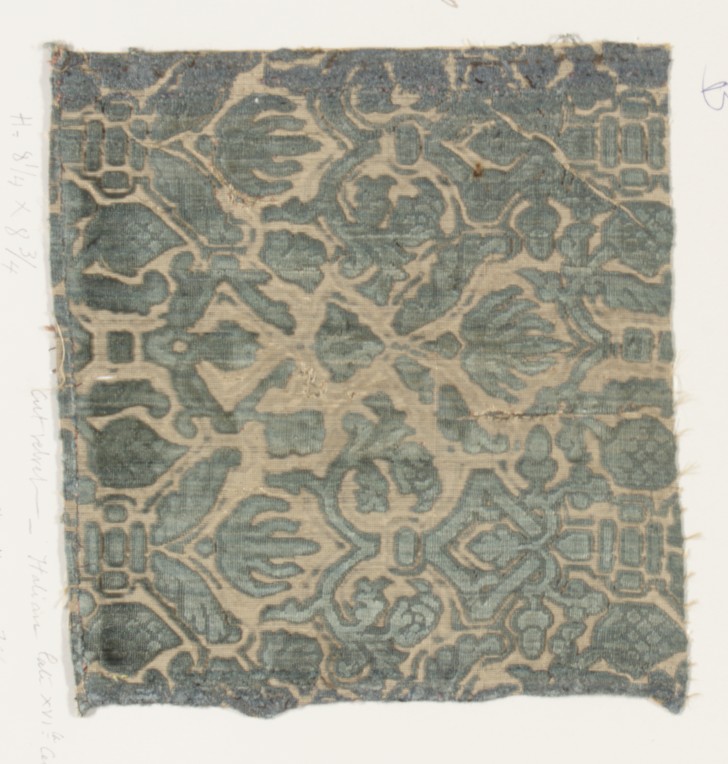
In the rarefied world of haute couture, where the ephemeral tangles with the eternal, Katherine Fashion Lab presents a singular study: Fragment. This collection, drawn from the wellspring of Global Heritage and executed through the lens of Artisanal Material, is not merely a line of garments but a philosophical inquiry. As Lead Curator, I position this work as a standalone artifact—a distillation of cultural memory, deconstruction, and meticulous reconstruction that challenges the very definition of luxury in the 21st century. The analysis that follows dissects the conceptual architecture, material alchemy, and cultural resonance of this profound collection.
Deconstructing Heritage: The Conceptual Framework of Fragment
The title Fragment is a deliberate provocation. In an era obsessed with seamless perfection, Katherine Fashion Lab dares to celebrate the incomplete, the broken, and the reassembled. This is not a collection that borrows from global cultures in a superficial, appropriative manner. Instead, it excavates the Global Heritage of textile traditions—from Andean backstrap weaving to Japanese boro stitching, from Indian kantha embroidery to West African strip-weaving—and re-presents them as fragments of a larger, lost narrative. Each piece in the study functions as a shard of a mosaic, inviting the wearer to contemplate the whole from which it was broken.
The conceptual underpinning is rooted in the Japanese aesthetic of wabi-sabi and the Western deconstructionist philosophy of Jacques Derrida. By foregrounding the fragment, the Lab questions the authority of the original, the pristine, and the finished. The garments are not nostalgic replicas; they are critical commentaries. A jacket constructed from fragmented antique kimono silks, for instance, refuses to be a costume. Instead, it becomes a living archive, its seams and patches speaking to the passage of time and the resilience of craft. This standalone study, therefore, is a curatorial act—a museum without walls, where the body becomes the exhibition space.
Artisanal Material as Narrative: The Tactile Vocabulary
At the heart of Fragment lies an uncompromising dedication to Artisanal Material. The Lab has eschewed industrial fabrics in favor of hand-loomed, naturally dyed, and often salvaged textiles sourced from master artisans across four continents. This is not a stylistic choice but a materialist argument: the fragment is not just a visual motif but a physical reality. Every thread, every weave, every imperfection carries the imprint of human hands.
Consider the “Kintsugi Coat”, a centerpiece of the study. Its base is a hand-spun, undyed wool from the highlands of Peru, woven on a backstrap loom. The coat is then cut into geometric panels and reassembled with seams of pure gold leaf-infused silk thread, echoing the Japanese art of repairing broken pottery with lacquer mixed with powdered gold. The material itself tells a story of breakage and repair, of making whole again without erasing the scar. The gold seams are not decorative; they are structural and symbolic, transforming what might be seen as damage into a source of value and beauty.
Another critical piece is the “Boro Gown”, a floor-length dress composed entirely of hand-stitched fragments of antique indigo-dyed cotton from Japan, India, and the American South. Each patch is a historical document: some bear the faint patterns of shibori tie-dye, others the faded stripes of West African indigo resist. The stitching itself—rough, irregular, and densely layered—is a form of slow protest against fast fashion. The gown is heavy, not with weight, but with time. It demands that the wearer slow down, that the observer look closely. This is the power of artisanal material in the context of Fragment: it forces a re-engagement with the tactile, the slow, and the meaningful.
Silhouette and Structure: The Architecture of the Fragment
The silhouettes in this standalone study are deliberately fractured. Katherine Fashion Lab rejects the clean lines of traditional couture in favor of asymmetrical draping, exposed seams, and intentional gaps. The body is not a mannequin to be dressed but a landscape upon which fragments are assembled. A tailored blazer might have one sleeve entirely removed, replaced by a cascade of hand-knotted silk cords from Uzbekistan. A skirt might be constructed from dozens of triangular pieces of felted Mongolian cashmere, each piece a different shade of charcoal and taupe, stitched together with visible, contrasting thread.
This structural approach mirrors the concept of “bricolage”—the creation of something new from a diverse range of available materials. The Lab’s pattern-making is a form of architectural drafting, where negative space is as important as positive form. A dress might appear incomplete, with raw edges left unhemmed and linings exposed, but this is a deliberate aesthetic of vulnerability. The wearer is not shielded by the garment but revealed through it. The fragment becomes a metaphor for the self: never fully whole, always in the process of becoming.
Cultural Resonance and Ethical Imperative
Beyond aesthetics, Fragment carries a profound ethical dimension. In an industry often criticized for cultural extraction, Katherine Fashion Lab has instituted a rigorous protocol of source acknowledgment and fair compensation. Each artisan community involved in the production of the materials is credited in the garment’s internal label, with a QR code linking to a digital archive of their techniques and histories. This is not tokenism; it is a curatorial practice that treats cultural heritage as a living, evolving entity rather than a static resource to be mined.
The standalone study format itself is a statement. By presenting Fragment outside the traditional runway calendar and without a commercial collection attached, the Lab reframes couture as critical research. The garments are not products but propositions. They ask: How do we honor the past without being trapped by it? How do we create beauty that is honest about its origins? The answer, as this collection demonstrates, lies in the fragment—the honest acknowledgment that all creation is a reassembly of what came before.
Conclusion: The Fragment as Future
Katherine Fashion Lab’s Fragment is a masterclass in the power of limitation. By restricting itself to a singular concept, global heritage, and artisanal materials, the Lab achieves a depth that a broader collection could not. The garments are heavy with meaning, yet light with possibility. They are not final statements but ongoing conversations. As a standalone study, Fragment does not seek to be liked; it seeks to be understood. It challenges us to see couture not as a commodity but as a vessel for memory, a document of craft, and a fragment of the human story. In a world that often demands completeness, this collection reminds us that the most profound beauty lies in the broken, the mended, and the forever unfinished.