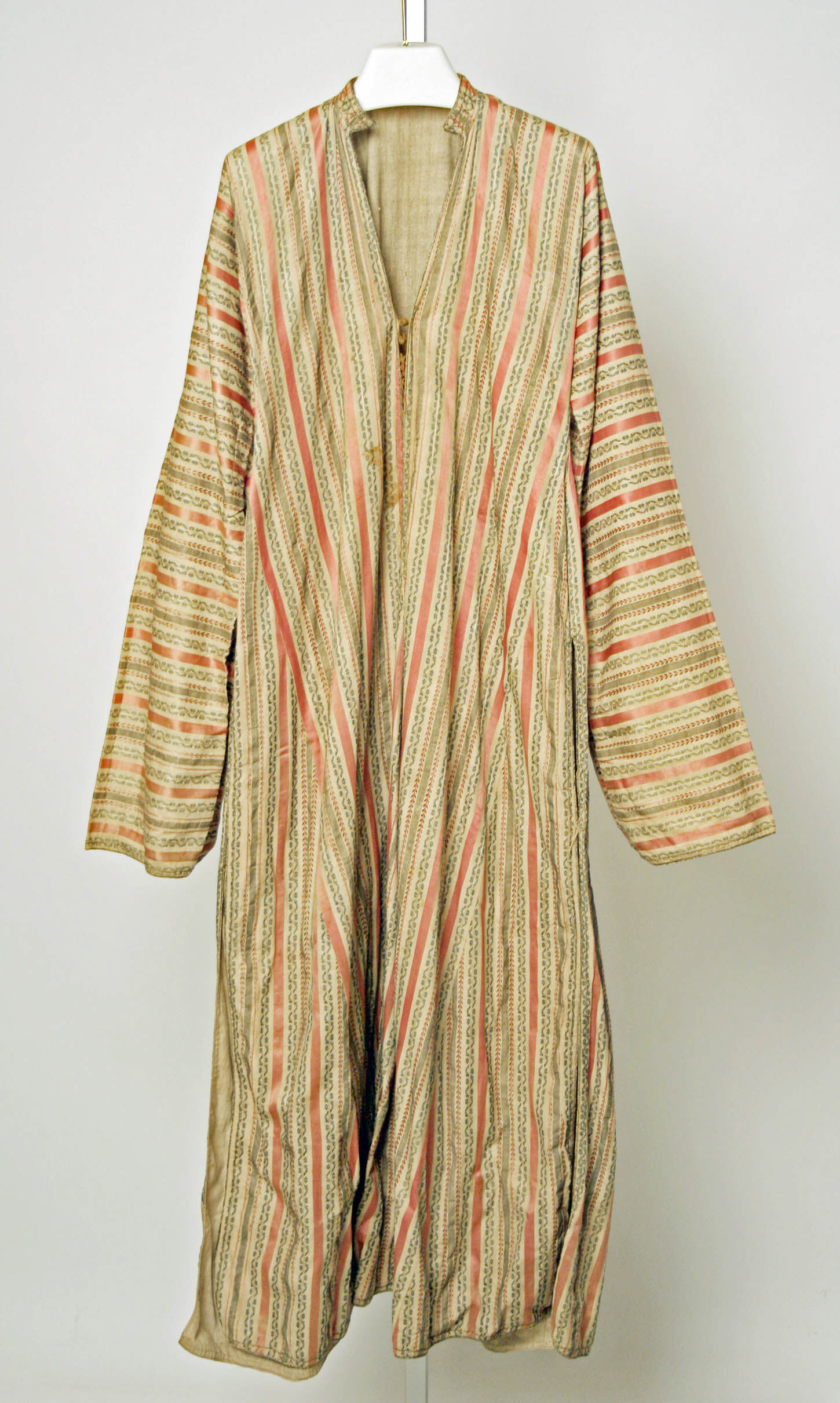
The Uçetek Entari: A Study in Textured Heritage and Architectural Grace
The Uçetek Entari, a garment of profound historical resonance, emerges not merely as a relic of a bygone era but as a living testament to the sophisticated interplay of form, function, and cultural narrative. At Katherine Fashion Lab, our analysis transcends the conventional boundaries of costume history, positioning this piece as a standalone study in material alchemy and structural innovation. The Uçetek Entari—literally translating to "three-skirted robe"—is a quintessential example of Ottoman-era outerwear, yet its design principles speak a universal language of elegance and engineering. This analysis deconstructs the garment through the lens of its global heritage, its meticulously chosen materials, and its enduring relevance as a blueprint for contemporary couture.
Global Heritage: The Entari as a Cross-Cultural Artifact
The Uçetek Entari is not a product of isolated tradition; it is a confluence of influences that traversed the Silk Road, the Mediterranean, and the vast Ottoman Empire. Its silhouette—characterized by a long, flowing body with a deep front slit and three distinct panels that flare from the waist—reflects a synthesis of Persian, Byzantine, and Central Asian tailoring techniques. The term "Entari" itself, derived from the Persian "andar" (inner garment), underscores its roots in a shared sartorial vocabulary across the Islamic world. However, the Uçetek variant, with its exaggerated hemline and layered construction, evolved specifically within the imperial courts of Istanbul, where it served as a ceremonial robe for women of high status.
What makes this garment a global heritage artifact is its ability to encode multiple cultural narratives within a single silhouette. The deep front slit, for instance, echoes the practical mobility required by nomadic Turkic tribes, while the three-panel skirt—often adorned with intricate embroidery—reflects the Byzantine love for opulent drapery. The Uçetek Entari thus becomes a wearable map of trade, conquest, and cultural exchange. For the modern couturier, this garment offers a lesson in adaptive storytelling: how to honor diverse traditions without diluting their essence, creating a piece that is simultaneously specific and universal.
Material Alchemy: Cotton, Silk, and Metal Wrapped Thread
The material composition of the Uçetek Entari is a masterclass in tactile hierarchy and functional aesthetics. The primary fabric, a finely woven cotton, provides the structural backbone—lightweight yet durable, allowing the garment to drape with fluidity while maintaining its architectural shape. Cotton, often undervalued in high fashion, is here elevated to a position of quiet authority. Its breathability and absorbency made it ideal for the temperate climates of the Ottoman Empire, but its true genius lies in its ability to serve as a neutral canvas for more luxurious elements.
Interwoven with the cotton are panels of raw silk, typically in contrasting hues such as deep crimson, indigo, or saffron. Silk introduces a dynamic play of light and shadow, its natural luster catching the eye and guiding it along the garment's vertical lines. The strategic placement of silk—often at the hem, cuffs, and along the front slit—creates a visual rhythm that emphasizes the Uçetek's three-panel structure. This is not mere decoration; it is a deliberate optical engineering that elongates the silhouette and directs attention to the garment's most defining features.
The most arresting material, however, is the metal-wrapped thread used in the embroidery. Typically composed of silver or gold foil wrapped around a silk or cotton core, this thread is applied in intricate patterns—floral arabesques, geometric medallions, or calligraphic motifs—that cover the bodice and cascade down the panels. The metal thread serves a dual purpose: it adds weight and structure, preventing the fabric from billowing excessively, while also creating a shimmering surface that catches ambient light. In a dimly lit chamber, the Uçetek Entari would have appeared as a constellation of stars, its metallic threads reflecting the flicker of oil lamps. This luminous durability is a hallmark of couture craftsmanship, where material choices are never arbitrary but are instead calibrated to enhance both visual impact and practical longevity.
Structural Innovation: The Architecture of the Three Panels
The Uçetek Entari's most distinctive feature is its tripartite skirt construction. Unlike the simple A-line or bell-shaped skirts of other Ottoman garments, the Uçetek employs three separate panels—one front and two back—that are sewn together at the waist but left open at the sides. This design allows for a remarkable range of motion, enabling the wearer to walk, sit, and gesture with grace. The front panel, often shorter than the back panels, creates a dramatic train that trails behind, while the side slits reveal layers of undergarments, adding depth and intrigue.
From a structural standpoint, this is a triumph of ergonomic tailoring. The three-panel system distributes the garment's weight evenly across the waist and shoulders, preventing the fabric from pulling or sagging. The deep front slit, secured with a single tie or button at the chest, allows for easy donning and removal—a practical consideration for a garment worn over multiple layers. The sleeves, typically wide and bell-shaped, are cut in one piece with the bodice, minimizing seams and maximizing fluidity. This seamless construction is a precursor to modern draping techniques, emphasizing the body's natural lines rather than imposing rigid shapes.
For the contemporary designer, the Uçetek Entari offers a blueprint for adaptive luxury. Its modular design—where panels can be adjusted in length, fabric, or embellishment—lends itself to customization, allowing the garment to transition from ceremonial to casual contexts. The use of hidden closures and invisible seams further underscores a philosophy of restraint, where structural integrity is achieved without ostentatious hardware.
Standalone Significance: The Entari as a Design Archetype
To study the Uçetek Entari in isolation is to recognize its role as a design archetype that transcends its Ottoman origins. Its principles—material contrast, ergonomic form, and narrative ornamentation—are timeless. In an era of fast fashion and disposable trends, this garment stands as a reminder that true luxury is not about excess but about intention. Every stitch, every thread, every panel serves a purpose, whether functional, aesthetic, or symbolic.
The Uçetek Entari also challenges the Western-centric canon of fashion history. It proves that sophisticated tailoring and complex construction were not exclusive to European ateliers but were equally advanced in the workshops of Istanbul, Cairo, and Isfahan. For Katherine Fashion Lab, this analysis is a call to action: to look beyond familiar narratives and embrace a global lexicon of design. The Uçetek Entari is not a costume to be replicated but a philosophy to be adapted—a lesson in how to honor heritage while innovating for the future.
In conclusion, the Uçetek Entari is a garment of profound depth, where cotton, silk, and metal thread converge to create a work of wearable art. Its global heritage reminds us that fashion is a dialogue between cultures, while its material and structural choices offer a masterclass in enduring design. As a standalone study, it invites us to reconsider what couture can be: not merely clothing, but a vessel for history, craftsmanship, and human expression.