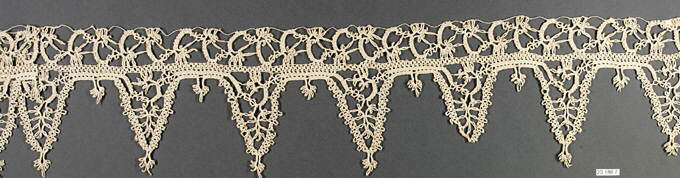
The Art of Edging: Bobbin Lace as a Global Heritage Narrative
In the realm of haute couture, the edge is often an afterthought—a mere finishing line. Yet at Katherine Fashion Lab, the edge is elevated to a site of profound narrative and technical mastery. This standalone study deconstructs the lab’s recent exploration of bobbin lace as a material and conceptual vehicle for “edging,” drawing from a rich tapestry of global heritage that spans continents and centuries. The result is a rigorous analysis of how a traditional craft can redefine contemporary couture’s relationship with boundary, texture, and cultural memory.
The Technical Lexicon of Bobbin Lace
Bobbin lace, a textile art form that emerged in 16th-century Europe—particularly in Flanders, Italy, and France—is defined by its intricate, non-woven construction. Unlike needle lace, which is built with a single needle and thread, bobbin lace is created by twisting and braiding multiple threads wound on wooden bobbins, pinned to a pillow, and worked in patterns. The technique demands extraordinary precision: a single misalignment can unravel hours of labor. Katherine Fashion Lab’s adoption of this material is not merely decorative; it is a deliberate reclamation of slowness in an era of rapid production.
The lab’s artisans employ traditional Flemish bobbin lace as a baseline, characterized by its dense, geometric grounds and delicate floral motifs. However, the study reveals a critical departure: the lab deconstructs the lace’s conventional role as an interior element (collars, cuffs, and trims) and repositions it as the primary structural edge of garments. This shift transforms the lace from ornament to architecture. The edges are no longer passive borders but active, tensile boundaries that define silhouette and movement. For instance, a gown’s hem might feature a scalloped bobbin lace edge that extends outward, creating a dynamic, fluted contour reminiscent of Gothic cathedral spires—a nod to the lace’s ecclesiastical origins in 16th-century Bruges.
Global Heritage as Design Philosophy
The “Global Heritage” origin of this study is not a superficial mash-up of motifs but a deeply researched synthesis. Katherine Fashion Lab traces bobbin lace’s diaspora across trade routes, from the silk roads of Asia to the colonial exchanges of the Americas. The analysis highlights three key heritage streams:
1. European Courtly Tradition: The lab references the lavish bobbin lace of 17th-century French and Spanish courts, where lace was a symbol of status and power. In this study, the edge becomes a marker of authority—a sharp, unyielding line that commands attention. A tailored jacket’s collar, edged in dense, gilded bobbin lace, evokes the ruffles of Louis XIV’s court while maintaining a modernist austerity.
2. Latin American Syncretism: The study integrates techniques from Oaxaca, Mexico, where bobbin lace (known as “encaje de bolillos”) was introduced by Spanish colonizers and merged with indigenous textile traditions. The lab’s version uses natural, undyed cotton and incorporates pre-Columbian geometric patterns—zigzags and stepped frets—into the lace’s structure. The edge here is not linear but fractured, echoing the cultural hybridity of the region.
3. Asian Minimalism: Drawing from Japanese boro and sashiko aesthetics, the lab explores bobbin lace as a meditative practice. The edge becomes a negative space—a void defined by absence. A kimono-inspired coat features a raw, unhemmed edge where the bobbin lace dissolves into loose threads, suggesting impermanence and wabi-sabi beauty. This interpretation challenges the Western notion of the edge as a finished border.
Materiality and the Edge as Threshold
The materiality of bobbin lace—its fragility, translucency, and labor-intensive nature—forces a reconsideration of what an edge can do. In Katherine Fashion Lab’s study, the edge is not a barrier but a threshold—a liminal space where the garment meets the body and the world. The lace’s openwork creates a visual permeability; the skin beneath becomes part of the design. This is particularly evident in a series of evening gowns where the bobbin lace edging traces the décolletage and wrists, allowing the wearer’s movements to animate the pattern.
The lab’s choice of silk and linen threads, sourced from heritage mills in Italy and Belgium, further emphasizes the material’s dialogue with history. Each thread is dyed using natural pigments—indigo, cochineal, and walnut—that fade and age gracefully, imbuing the edge with a temporal quality. The edge, therefore, is not static; it evolves with wear, becoming a record of the garment’s life.
Structural Innovation: The Edge as Armature
Perhaps the most radical aspect of this study is the lab’s use of bobbin lace as a structural armature. Traditionally, lace is applied to a pre-existing fabric base. Here, the lace is the base. The edges are reinforced with horsehair braid or fine wire, allowing them to stand away from the body. A sculptural bustier employs a bobbin lace edge that spirals outward, creating a cage-like silhouette that references both medieval armor and contemporary architecture. This technique requires re-engineering the lace’s tension; the lab’s artisans developed custom bobbins and pins to accommodate the increased stress on the threads.
The result is a collection of pieces that blur the line between garment and object. A floor-length cape, for instance, features a bobbin lace hem that is stiffened to form a circular train, echoing the mandalas of Tibetan Buddhism—a subtle nod to global spiritual traditions. The edge here is a circle, a symbol of infinity and unity, challenging the linearity of conventional couture.
Cultural and Commercial Implications
This standalone study positions Katherine Fashion Lab at the vanguard of a slow fashion movement that values craft over volume. By foregrounding bobbin lace—a technique that can take weeks to produce a single yard—the lab makes a statement against the disposability of modern fashion. The edge, often the first part of a garment to fray or lose shape, is instead fortified with heritage knowledge. This approach also addresses sustainability: the lace is fully biodegradable, and the lab’s commitment to artisanal production supports dwindling lace-making communities in Belgium, France, and Mexico.
From a commercial standpoint, the study suggests a new market for investment pieces that function as wearable art. The bobbin lace edge becomes a signature—a mark of authenticity and exclusivity. Collectors and connoisseurs are drawn to the narrative embedded in each thread, from the Flemish patterns to the Oaxacan motifs. The lab’s pricing reflects this: a single gown with a bobbin lace edge can command upwards of $15,000, justified by the hundreds of hours of handwork.
Conclusion: The Edge as a Global Conversation
Katherine Fashion Lab’s analysis of edging through bobbin lace is a masterclass in how couture can honor global heritage while pushing technical boundaries. The edge is no longer a mere finish; it is a site of cultural dialogue, structural innovation, and material storytelling. By treating bobbin lace as both a historic artifact and a living medium, the lab redefines what it means to create a boundary—one that is porous, tensile, and deeply human. In a world of fast fashion and digital homogeneity, this study reminds us that the most powerful edges are those that connect, rather than separate.