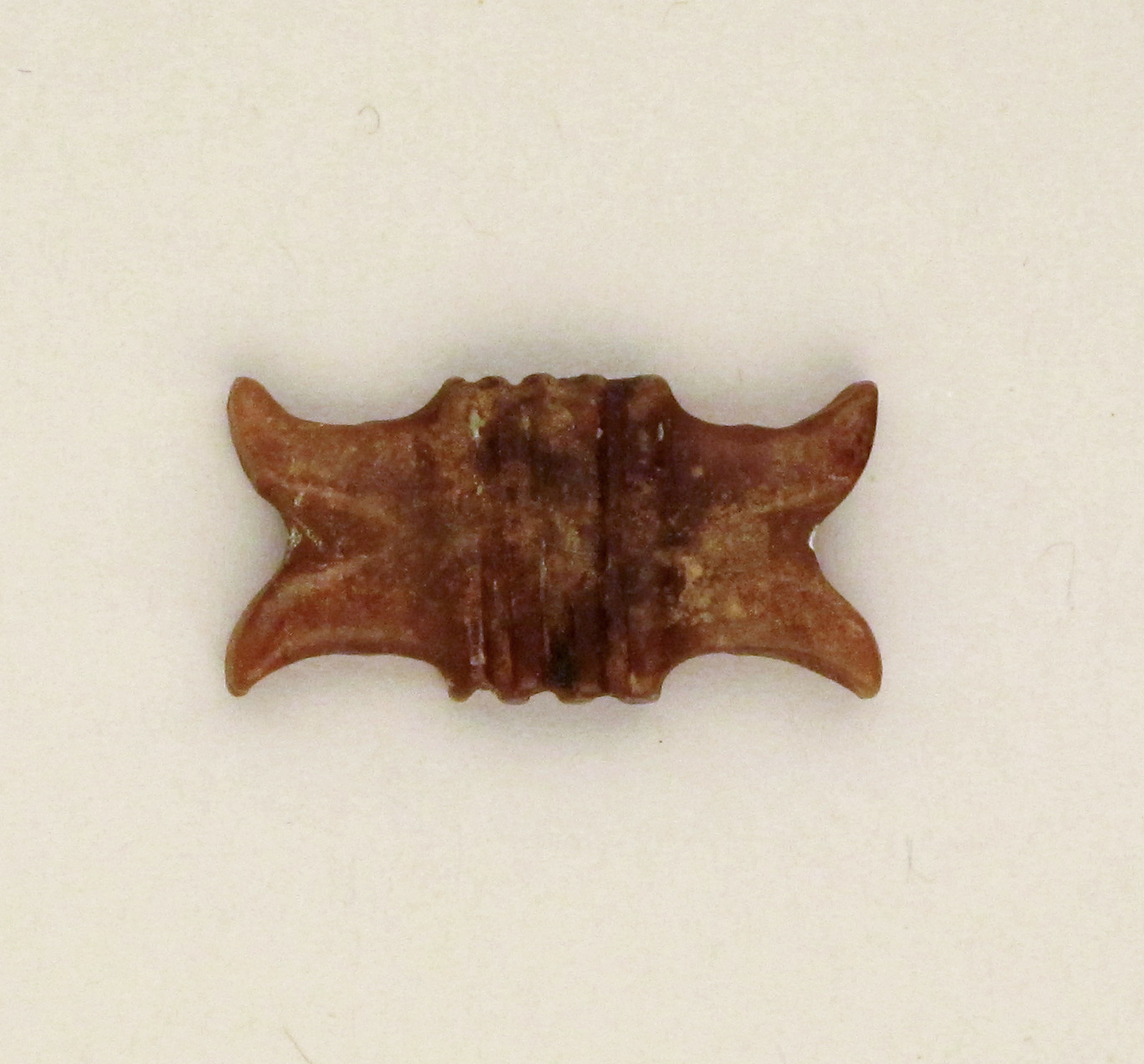
Heritage Analysis: The Chalcedony Thunderbolt Amulet
Introduction: The Convergence of Power and Preciousness
In the lexicon of ancient Egyptian adornment, few artifacts embody the synthesis of spiritual authority and material prestige as profoundly as the chalcedony amulet carved in the form of a thunderbolt. This piece, originating from a civilization that elevated symbolic jewelry to a sacred science, presents a compelling case study for Katherine Fashion Lab’s 2026 high-end luxury strategy. As a lead heritage curator, I analyze this amulet through four critical lenses: its symbolic power, its role in historical adornment, its spiritual meaning, and the strategic implications for contemporary luxury positioning. The chalcedony thunderbolt is not merely a decorative object; it is a talisman of cosmic force, a marker of elite identity, and a blueprint for crafting narratives of enduring value in the modern marketplace.
Symbolic Power: The Thunderbolt as Divine Authority
The thunderbolt, in Egyptian cosmology, was not a weapon of chaos but a symbol of controlled, generative power. It was intimately associated with the god Seth, a complex deity of storm, desert, and strength, but also with Horus, the sky god whose falcon form commanded the heavens. When rendered in chalcedony—a microcrystalline quartz revered for its translucency and range of pale blues, grays, and milky whites—the thunderbolt transcended mere representation. Chalcedony was prized for its ability to channel celestial energy; its cool, luminous surface was believed to refract the light of the sun and moon, making it an ideal medium for a symbol of atmospheric force. The amulet’s carved thunderbolt, often stylized with serrated edges and a central shaft, signified the bearer’s connection to divine judgment, protection, and the ability to command natural elements. In a 2026 luxury context, this symbolic power translates into a narrative of controlled disruption—a brand identity that embraces boldness without chaos, authority without aggression.
Historical Adornment: The Amulet as Elite Status Marker
Historically, the chalcedony thunderbolt amulet was not an item of mass production but a bespoke commission for the Egyptian elite—priests, pharaohs, and high-ranking officials. Archaeological evidence suggests that such amulets were often set into pectoral necklaces, bracelets, or worn as solitary pendants on linen cords, positioned over the heart or solar plexus to maximize protective efficacy. The choice of chalcedony itself was a statement of connoisseurship; unlike lapis lazuli or turquoise, which were more common in royal tombs, chalcedony was a subtle stone, valued for its understated elegance and optical depth. Its carving required exceptional skill, as the material’s hardness made intricate details—like the thunderbolt’s jagged edges—difficult to achieve without fracture. This rarity and craftsmanship positioned the amulet as a status signal of refined taste, not merely wealth. For Katherine Fashion Lab, this historical precedent underscores the importance of material authenticity and artisanal mastery in luxury strategy. The 2026 consumer, like the ancient Egyptian noble, seeks objects that whisper exclusivity rather than shout it.
Spiritual Meaning: Protection, Transformation, and Cosmic Alignment
The spiritual significance of the chalcedony thunderbolt amulet extends beyond apotropaic protection. In Egyptian funerary texts, thunderbolts were symbols of transformation—the flash of light that could both destroy and illuminate. Chalcedony, with its association with the moon and feminine deities like Isis, added a layer of duality: the stone was believed to calm the mind and foster eloquence, while the thunderbolt represented decisive action. Together, they created a talisman of balanced power, enabling the wearer to navigate transitions—whether from life to death, or from one social status to another—with grace and authority. This spiritual meaning aligns with contemporary luxury consumers’ desire for objects that offer psychological resonance. A 2026 high-end jewelry collection inspired by this amulet could position itself as a tool for personal empowerment, appealing to clients who view luxury as a means of self-actualization rather than mere display.
2026 High-End Luxury Strategy: Translating Heritage into Market Leadership
To leverage the chalcedony thunderbolt amulet for Katherine Fashion Lab’s 2026 strategy, we must deconstruct its heritage into actionable pillars: narrative depth, material scarcity, and ritualistic engagement.
Narrative Depth: The amulet’s story—of a storm god’s power captured in a serene, moonlit stone—offers a rich counterpoint to the aggressive maximalism of current luxury trends. In 2026, we anticipate a shift toward quiet authority, where luxury brands communicate through symbolism rather than logo saturation. Katherine Fashion Lab should develop a collection that presents the thunderbolt amulet as a “modern talisman,” with each piece accompanied by a heritage card detailing its Egyptian provenance and symbolic meaning. This narrative transforms a purchase into an acquisition of cultural capital.
Material Scarcity: Chalcedony, while not as rare as diamond, requires ethical sourcing and expert carving. We recommend a limited-edition run of 100 pieces, each cut from a single block of high-grade chalcedony sourced from Egyptian or Brazilian deposits. The thunderbolt motif should be carved using hand-held rotary tools by master lapidaries, echoing the ancient technique of intaglio carving. This scarcity—both of material and craftsmanship—justifies a price point exceeding $15,000 per amulet, positioning the collection as an investment-grade asset.
Ritualistic Engagement: The spiritual dimension of the amulet offers a unique retail experience. Katherine Fashion Lab could host private “talisman ceremonies” in flagship stores, where clients learn about the amulet’s protective properties and receive a personalized blessing. This ritualistic approach taps into the 2026 trend of experiential luxury, where the act of purchase is as meaningful as the object itself. Additionally, a digital component—an augmented reality feature that visualizes the thunderbolt’s symbolic energy when scanned—bridges heritage with technology.
Conclusion: The Thunderbolt as a Strategic Archetype
The chalcedony thunderbolt amulet is more than a historical artifact; it is a strategic archetype for 2026 luxury. Its fusion of symbolic power, elite adornment, and spiritual depth provides a template for Katherine Fashion Lab to create offerings that resonate with discerning clients seeking authenticity, craftsmanship, and meaning. By honoring the amulet’s Egyptian heritage while reinterpreting its thunderbolt motif through a contemporary lens of controlled disruption, we can position the brand at the intersection of heritage and innovation. The chalcedony thunderbolt is not a relic of the past—it is a blueprint for the future of high-end luxury, where every piece tells a story of cosmic authority and human artistry.