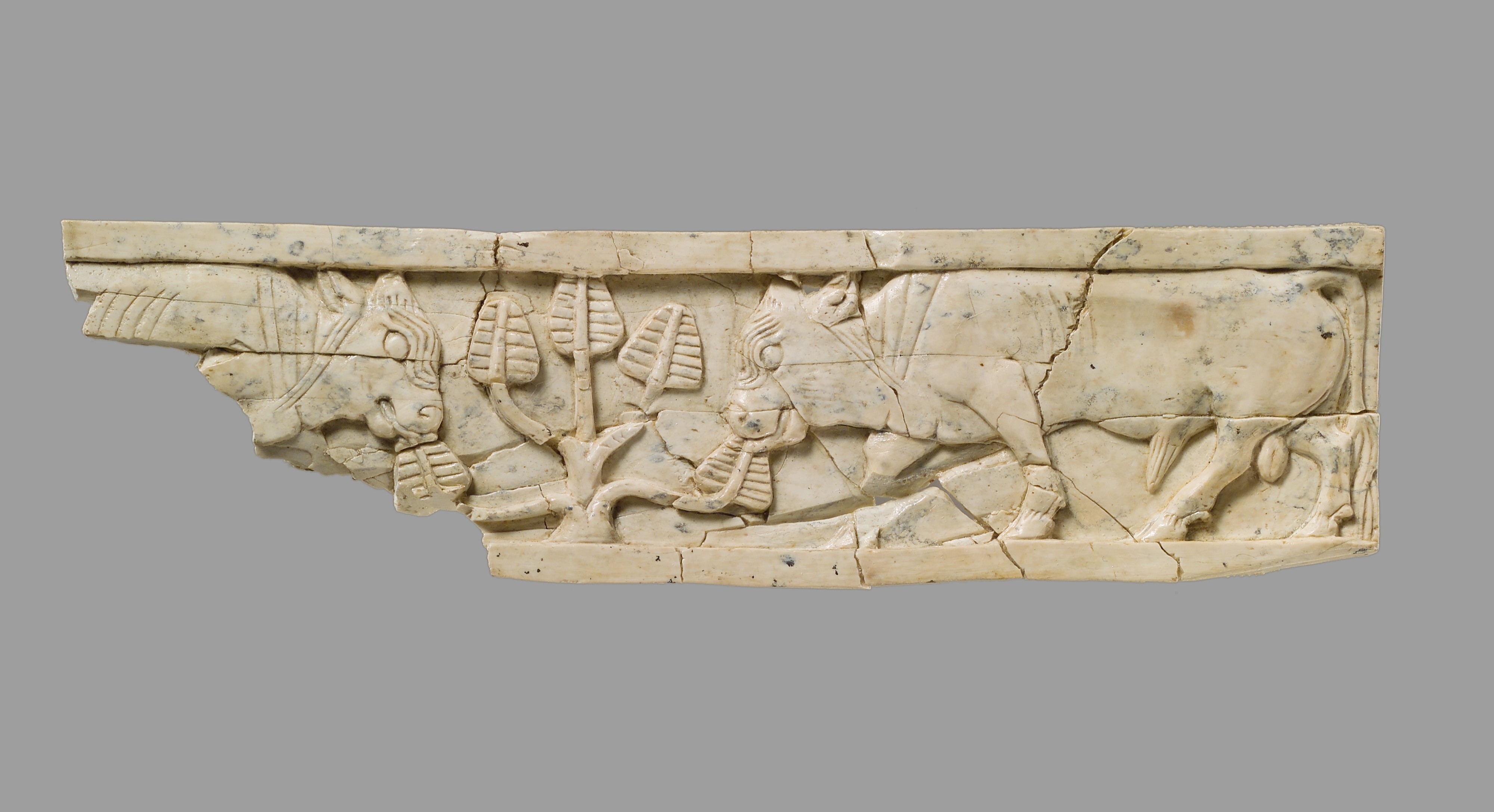
Heritage Analysis: Furniture Plaque Carved in Relief with Bulls and Tree (Assyrian, Ivory)
This analysis, prepared for Katherine Fashion Lab, examines the Assyrian ivory furniture plaque depicting bulls flanking a sacred tree, excavated from Nimrud (9th–8th century BCE). As a strategic standalone research document, it unpacks the artifact’s symbolic power, historical adornment, and spiritual meaning, then translates these into actionable insights for a 2026 high-end luxury strategy. The plaque’s fusion of naturalistic power, geometric order, and sacred narrative offers a blueprint for modern heritage-driven branding.
Symbolic Power: The Bull as Sovereign Force and the Tree as Axis Mundi
The plaque’s iconography—two bulls symmetrically positioned beside a stylized tree—encodes dual layers of symbolic power. In Assyrian cosmology, the bull (rēmu) represented divine strength, fertility, and royal authority. Bulls were associated with the god Adad (storm and rain) and served as protective lamassu figures at palace gates. Their muscular forms, rendered in low-relief ivory, convey a controlled, latent force. The tree, often identified as the “Tree of Life” or a stylized date palm, functions as the axis mundi—the cosmic center connecting heaven, earth, and the underworld. Together, the bulls and tree signify the king’s role as the earthly guardian of cosmic order (mīšaru).
For luxury strategy, this symbolism offers a potent narrative: strength in symmetry, power in protection. A 2026 collection could borrow this visual grammar—paired motifs, central sacred geometry—to evoke stability and exclusivity. The bull’s unyielding posture suggests a brand that guards its legacy while asserting dominance in a volatile market.
Historical Adornment: Ivory as a Medium of Prestige and Diplomacy
Ivory in the Assyrian court was not merely decorative but a geopolitical currency. Carved by Phoenician and Syrian artisans, these plaques adorned thrones, beds, and chariots, signaling the king’s access to exotic materials and skilled labor. The material itself—elephant tusk—was a luxury import from Africa and India, often acquired through tribute or conquest. The plaque’s relief technique, with deep undercutting and polished surfaces, demonstrates mastery of light and shadow, transforming a functional object into a statement of imperial reach.
For Katherine Fashion Lab, this historical context underscores the value of material provenance and artisanal scarcity. A 2026 high-end strategy might commission limited-edition pieces using ethically sourced, rare materials (e.g., responsibly harvested tagua nut or fossilized ivory alternatives) and collaborate with master carvers from regions with ancient ivory traditions. The narrative would emphasize “adornment as archive”—each piece bearing the story of its origins, much like the Assyrian plaque recorded diplomatic ties.
Spiritual Meaning: The Sacred Geometry of Protection and Transcendence
The plaque’s composition is deeply spiritual. The tree’s central axis, flanked by symmetrical bulls, mirrors the Assyrian concept of hierophany—the manifestation of the sacred in the material world. The bulls’ horns, often gilded in original contexts, symbolized lunar cycles and regenerative power. The tree’s seven branches (in many variations) correspond to celestial spheres, linking earthly rule to divine order. This was not mere ornament; it was a ritual object that mediated between the king and the gods, ensuring prosperity and warding off chaos.
For luxury consumers in 2026, spiritual meaning translates into intentional design and emotional resonance. A ready-to-wear line or accessory collection could incorporate these motifs as talismanic symbols—embroidered bull motifs on silk caftans, tree-of-life patterns on leather goods. The brand might position these pieces as “modern amulets,” invoking protection and transcendence for a clientele seeking meaning beyond materiality. The sacred geometry of the plaque—perfect bilateral symmetry—can inform pattern-making, ensuring each garment or accessory feels balanced and intentional.
2026 High-End Luxury Strategy: Translating Assyrian Heritage into Brand Equity
To operationalize this heritage analysis, Katherine Fashion Lab should adopt a three-pillar strategy: Iconic Reclamation, Material Storytelling, and Ritualized Exclusivity.
Iconic Reclamation
Reinterpret the bull-and-tree motif as a signature brand emblem. Unlike generic logos, this motif carries 2,700 years of symbolic weight. Use it sparingly—on leather embossing, jewelry clasps, or silk linings—to signal connoisseurship. Launch a “Nimrud Capsule” collection with 12 pieces, each referencing the plaque’s relief depth through layered textures (e.g., brocade, laser-cut leather). Price strategically above core lines to position the collection as a collectible investment.
Material Storytelling
Partner with ethical ivory-substitute suppliers (e.g., tagua nut from Ecuador, bone from sustainable fisheries) and document the sourcing journey. Create a “Material Provenance Report” for each piece, akin to a wine vintage note. Highlight the artisans’ hand-carving techniques in a short film, released on private client platforms. This transparency builds trust and justifies premium pricing—a 2026 consumer expects both beauty and ethics.
Ritualized Exclusivity
Host a private viewing at a museum or historical site with Assyrian collections (e.g., British Museum, Metropolitan Museum of Art). Invite 50 top clients for a curator-led tour of the original plaques, followed by a presentation of the capsule. Use ritualized unveiling—each piece presented in a custom box inspired by Assyrian cuneiform tablets. This creates an experiential halo, associating the brand with cultural stewardship and rarity.
Conclusion: The Plaque as a Strategic Compass
The Assyrian furniture plaque with bulls and tree is more than an archaeological artifact; it is a strategic compass for heritage-driven luxury. Its symbolic power teaches the value of enduring iconography; its historical adornment underscores material and artisanal integrity; its spiritual meaning offers emotional depth. For Katherine Fashion Lab, the path forward lies in respectful recontextualization—not imitation, but translation. By weaving these ancient threads into a 2026 narrative of strength, protection, and sacred order, the brand can differentiate itself in a crowded luxury market, appealing to clients who seek not just products, but artifacts of meaning.