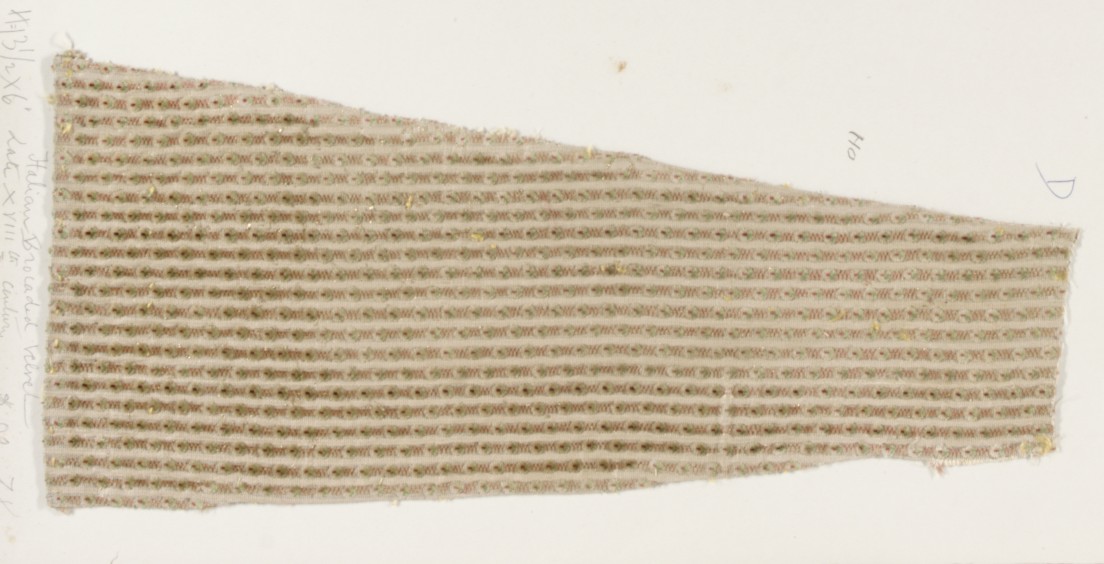
Deconstructing the Fragment: A Couture Analysis of Katherine Fashion Lab’s “Global Heritage” Study
In the rarefied world of haute couture, the fragment often signals loss—a remnant of a once-whole garment, a whisper of a bygone era. Yet, under the incisive vision of Katherine Fashion Lab, the fragment is reborn not as a relic, but as a radical site of construction. In this standalone study, the design house eschews the narrative of the complete, the seamless, and the symmetrical, instead centering the fragment as the primary unit of aesthetic and conceptual power. Drawing from a vast repository of Global Heritage—spanning East Asian embroidery traditions, Middle Eastern textile geometries, and European lace-making techniques—this piece is a masterclass in how couture can negotiate between cultural specificity and universal form. Executed in silk and metal thread, the study is not merely a garment; it is a thesis on the poetics of the incomplete.
Materiality as Metaphor: Silk and Metal Thread in Dialogue
The Fluid Foundation of Silk
The choice of silk is deliberate and layered. Silk, historically the conduit of the ancient trade routes, embodies both luxury and vulnerability. In this study, the fabric is treated with a nuanced hand: it is neither pristine nor distressed, but rather strategically fragmented. Panels of charmeuse and organza are cut asymmetrically, their edges left raw or subtly frayed, suggesting a state of becoming rather than decay. This is not a garment that pretends to be whole; it is a garment that celebrates its own seams. The silk’s natural luster catches light in unpredictable ways, creating a kinetic interplay between shadow and gleam that mirrors the fragment’s inherent instability. When draped, the fabric falls in cascading layers that recall both classical Grecian chitons and the fluid lines of a kimono, yet the intentional breaks in continuity prevent any single cultural reference from dominating. The silk becomes a neutral carrier for the more assertive metal thread.
The Rigor of Metal Thread: Embroidery as Architectural Scaffold
In stark contrast to silk’s fluidity, the metal thread—fine strands of gold and silver wrapped around a silk core—introduces a language of precision and permanence. This is not mere embellishment; it is structural intervention. The metal thread is used to stitch together the fragmented silk panels, forming a visible web of repair that evokes the Japanese art of kintsugi, where breakage is honored with gold lacquer. Here, the metal thread functions as both suture and signature. It traces the contours of missing fabric, outlining negative spaces that become as significant as the filled ones. In some sections, the thread is embroidered in dense, geometric patterns reminiscent of Central Asian suzani, while in others, it is left as loose, unbound loops that catch the light like chain mail. This duality—between the decorative and the architectural—is central to the study’s intellectual rigor. The metal thread does not hide the fragment; it amplifies it, turning each cut edge into a deliberate artistic gesture.
Global Heritage: A Lexicon of Fragments
Cultural Borrowing Without Appropriation
Katherine Fashion Lab’s engagement with Global Heritage is notably sophisticated. Rather than assembling a pastiche of recognizable motifs, the design team deconstructs cultural forms into their elemental fragments. A single stitch pattern from a Mughal shawl, a fold technique from a Japanese obi, a lace motif from a Venetian collar—all are extracted from their original contexts and recombined in a new syntax. The result is not a fusion (which often implies a blending that erases difference) but a collage that preserves the integrity of each origin. For instance, a section of the bodice features a metal-thread lattice that echoes the geometric complexity of Moroccan zellij tilework, but it is set against a raw-edged silk panel that recalls the unfinished hem of a Balinese ceremonial cloth. The viewer is invited to read these fragments as citations, not as claims of ownership. This approach positions the study as a cosmopolitan artifact, one that respects the specificity of each heritage while refusing to be constrained by any single tradition.
The Fragment as Universal Language
By centering the fragment, the study also challenges the Western couture tradition’s obsession with the complete silhouette. In many non-Western cultures—from Japanese wabi-sabi to Islamic geometric abstraction—the fragment is a legitimate aesthetic category, not a sign of failure. This piece aligns itself with that broader philosophical lineage. The unfinished edge becomes a site of potential, the missing section a space for the imagination. The metal thread’s visible mending transforms the garment into a palimpsest, where each stitch tells a story of repair and continuity. In this way, the study is not about loss but about transformation: the fragment is not what remains after destruction, but what is chosen to be preserved and elevated.
Standalone Study: The Garment as Critical Object
Beyond the Runway: A Conceptual Framework
This piece is explicitly presented as a standalone study, a designation that signals its departure from commercial or seasonal constraints. It is not a prototype for a collection, nor is it intended for mass reproduction. Instead, it functions as a critical object—a material argument about the nature of couture in a globalized age. The study format allows Katherine Fashion Lab to isolate variables: the fragment, the silk, the metal thread, the heritage references. Each element is examined in its purest form, unencumbered by the need to fit into a larger narrative. This intellectual freedom is evident in the garment’s asymmetrical construction, which rejects the traditional bodice-skirt division in favor of a continuous, ribbon-like form that wraps and reveals the body in unexpected ways. The silhouette is deliberately unstable, shifting with each movement, as if the garment itself is in a state of perpetual reassembly.
The Role of the Viewer: Completing the Fragment
Central to the study’s impact is the active role of the viewer. Because the garment is incomplete—its fragments deliberately separated by gaps of bare silk or exposed metal thread—the observer is compelled to mentally complete the form. This participatory dynamic echoes the experience of viewing a fragmented sculpture or an unfinished manuscript. The metal thread’s shimmering lines guide the eye, tracing paths that the mind must fill. In this sense, the study is not a passive object of contemplation but a provocation to interpretation. Each viewer brings their own cultural lens to the act of completion: a Japanese observer might see the ragged edges as a celebration of wabi-sabi imperfection, while a European observer might read them as a nod to the deconstructed couture of the 1990s. The study accommodates these multiple readings without privileging any single one.
Conclusion: The Fragment as Future
Katherine Fashion Lab’s standalone study on the fragment is a bold reclamation of the incomplete as a site of intentionality and beauty. By marrying the fluidity of silk with the rigidity of metal thread, and by drawing on a global lexicon of heritage techniques, the design house has created a work that is at once archaeological and futuristic. It does not mourn what is lost; it celebrates what is chosen to remain. In an industry often driven by the desire for perfection and completeness, this study reminds us that the most profound statements often emerge from the space between—the gap, the edge, the fragment. It is a testament to the power of couture to not only reflect the world but to reimagine it, one stitch at a time.