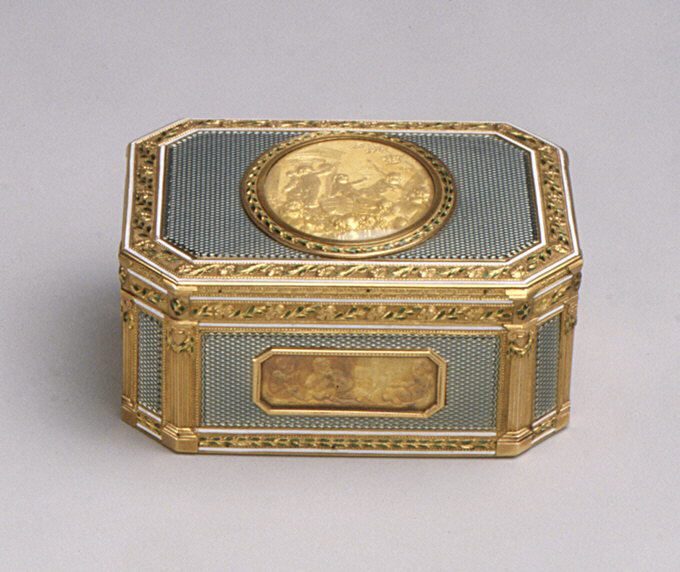
The Snuffbox as Couture Object: A Study in Global Heritage and Material Mastery
In the rarefied world of haute couture, where artistry meets material opulence, few objects encapsulate the intersection of global heritage and sartorial expression as profoundly as the snuffbox. At Katherine Fashion Lab, we approach this diminutive artifact not merely as a historical curiosity, but as a masterclass in design philosophy—a standalone study in how gold and enamel can transcend utility to become a wearable narrative of cultural confluence. This analysis deconstructs the snuffbox through the lens of couture, examining its origins, materiality, and enduring relevance as a symbol of refined taste.
The Global Heritage of the Snuffbox: A Tapestry of Influence
The snuffbox, as a cultural artifact, embodies a complex lineage that spans continents and centuries. Its roots trace to the indigenous practices of the Americas, where tobacco was first ground and inhaled for ritual and medicinal purposes. By the 16th century, European explorers brought this custom to the courts of Spain, France, and England, where it evolved into a sophisticated social ritual. The snuffbox itself became a canvas for cross-cultural exchange, incorporating motifs from Chinese porcelain, Indian gem-setting, and Ottoman metalwork. This global heritage is not a passive inheritance; it is an active dialogue between civilizations, each contributing a distinct aesthetic vocabulary.
For Katherine Fashion Lab, the snuffbox is a case study in cultural synthesis. Its design often features intricate enamel work inspired by Persian miniatures, gold filigree echoing Mughal craftsmanship, and clasps reminiscent of Japanese lacquer techniques. This fusion is not eclectic but deliberate—a testament to how luxury objects historically served as diplomatic gifts and symbols of interconnected empires. In the context of couture, this heritage informs a design ethos that values narrative depth over surface decoration. Each snuffbox is a microcosm of global artistry, demanding that the wearer engage with its layered history.
Materiality: Gold and Enamel as Couture Vocabulary
The choice of materials in snuffbox construction—specifically gold and enamel—elevates it from a functional container to a couture statement. Gold, in its various alloys, offers a palette of hues: rose gold suggests warmth and intimacy, yellow gold evokes tradition and wealth, while white gold or platinum hints at modernity and restraint. The malleability of gold allows for intricate repoussé and chasing techniques, creating textures that mimic fabric—pleats, brocades, or even the subtle grain of silk. This is not mere decoration; it is a tactile language of luxury.
Enamel, conversely, introduces a chromatic dimension that rivals the most vibrant textile dyes. Techniques such as cloisonné, champlevé, and guilloché enable the artisan to layer translucent colors over engine-turned patterns, producing a depth that shifts with light. In couture terms, enamel acts as an appliqué or embroidery, adding a jewel-like intensity to the gold base. The fusion of these materials requires a mastery of kiln temperatures and chemical reactions—a precision akin to draping a bias-cut gown. The snuffbox thus becomes a wearable sculpture, where the interplay of hard and soft, opaque and translucent, mirrors the tension between structure and fluidity in high fashion.
Design Principles: Proportion, Geometry, and the Human Form
From a design perspective, the snuffbox presents a unique challenge: it must be small enough to fit in a pocket or palm, yet possess a visual impact that commands attention. This constraint forces a focus on proportion and geometry. The typical snuffbox measures between 5 to 10 centimeters in length, with a depth of 2 to 4 centimeters—a scale that demands precision in every curve and angle. Katherine Fashion Lab’s analysis identifies three key design principles at play:
First, symmetry and balance. The box’s lid, body, and base must align with mathematical exactitude, often employing oval or rectangular forms that echo the human hand’s natural grip. This ergonomic consideration is analogous to the way a couture jacket is engineered to drape without pulling.
Second, surface tension and relief. The enamel panels are often divided by gold wire (in cloisonné) or carved recesses (in champlevé), creating a rhythm of positive and negative space. This visual rhythm guides the eye, much like the seams and darts of a tailored garment define silhouette.
Third, closure as climax. The hinge and clasp are not functional afterthoughts; they are focal points. A snuffbox might feature a diamond-set push-button or a concealed spring mechanism, requiring the wearer to engage in a micro-ritual of opening. This interaction—a pause, a click, a reveal—is akin to the moment a model turns to show the back of a gown.
The Snuffbox in the Context of Modern Couture
While historically associated with aristocratic men of the 18th century, the snuffbox has found renewed relevance in contemporary couture. At Katherine Fashion Lab, we view it as a standalone accessory that challenges the primacy of jewelry. Unlike a necklace or bracelet, which often conforms to the body’s contours, the snuffbox is a discrete object that invites tactile exploration. It can be carried in a clutch, displayed on a vanity, or passed between hands as a conversation piece. This versatility aligns with the modern ethos of “slow fashion,” where objects are cherished for their craftsmanship rather than discarded after a season.
Moreover, the snuffbox’s global heritage offers a counter-narrative to cultural appropriation. By studying its origins, designers can honor the contributions of multiple traditions without flattening them into a single aesthetic. For example, a snuffbox featuring Persian floral motifs in enamel on a gold base is not an imitation of Persian art—it is a respectful homage that acknowledges the exchange of ideas across borders. This approach is critical in an industry often criticized for superficial borrowing.
Conclusion: The Snuffbox as a Couture Manifesto
In conclusion, the snuffbox is far more than a historical oddity. It is a distilled expression of global heritage, material mastery, and design intelligence. At Katherine Fashion Lab, we see it as a standalone study in how luxury objects can communicate identity, history, and artistry within a confined space. The gold and enamel are not ends in themselves; they are the media through which a narrative of cultural dialogue is told. For the couture client, owning such an object is an act of connoisseurship—a declaration that fashion is not limited to the body but extends to the objects we choose to carry, touch, and treasure.
As we continue to explore the boundaries of wearable art, the snuffbox remains an enduring inspiration. Its lessons in proportion, material synergy, and cross-cultural respect are as relevant today as they were centuries ago. This is not nostalgia; it is a blueprint for the future of couture, where every detail is deliberate, and every object tells a story. Katherine Fashion Lab invites you to consider the snuffbox not as a relic, but as a living testament to the power of design to transcend time and place.