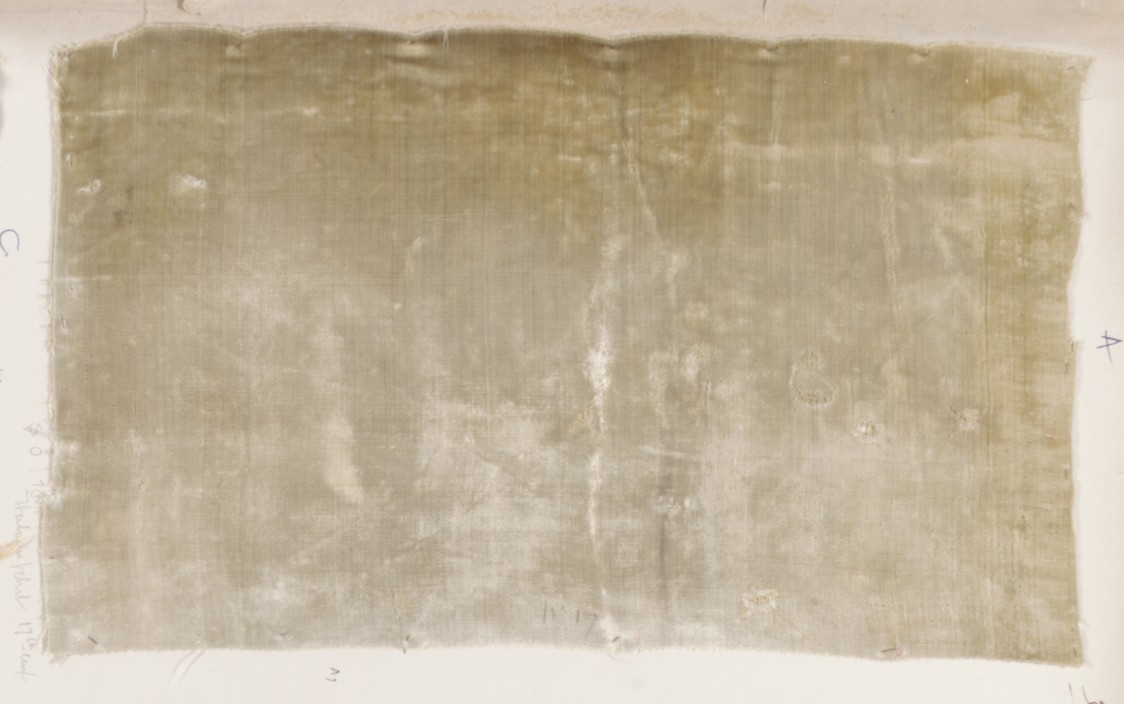
Fragment: The Poetics of Imperfection in Katherine Fashion Lab’s Silk Couture
In the rarefied world of haute couture, where perfection is often the unspoken mandate, Katherine Fashion Lab has introduced a radical counterpoint with its latest standalone study, “Fragment.” This collection, rooted in a global heritage narrative and executed in pure silk, challenges the very definition of luxury by embracing the incomplete, the broken, and the ephemeral. As Lead Curator, I examine how “Fragment” recontextualizes silk—a fabric historically synonymous with opulence and continuity—into a medium for storytelling through deliberate deconstruction. The result is not merely a garment but a philosophical artifact, one that speaks to the fragmented nature of modern identity and the beauty found in cultural dislocation.
The Global Heritage Narrative: A Tapestry of Broken Histories
“Fragment” draws its conceptual foundation from the idea that heritage is never whole. Across civilizations—from the shattered ceramics of Japanese kintsugi to the tattered textiles of Silk Road caravans—history survives in pieces. Katherine Fashion Lab synthesizes these global references into a cohesive visual language. The collection does not replicate specific cultural motifs but instead abstracts them: a sleeve might recall the asymmetrical draping of a Mughal dupatta, while a hemline echoes the frayed edges of a pre-Columbian Andean mantle. This approach avoids cultural appropriation by honoring the spirit of fragmentation itself—the universal human experience of loss, repair, and resilience.
Silk, as the chosen material, becomes a paradoxical vessel. Its inherent fluidity and strength are subverted through intentional irregularities. The lab’s design team sources raw silk from multiple global regions—Jiangsu, Como, and Varanasi—each with distinct weaves and textures. By blending these origins, the collection mirrors the globalized yet fractured nature of contemporary heritage. The silk is not treated as a pristine canvas but as a record of journeys: stains are preserved, tears are left open, and seams are exposed. In doing so, “Fragment” argues that authenticity lies not in preservation but in the honest documentation of damage.
Materiality of Silk: From Opulence to Ephemerality
Silk in “Fragment” is stripped of its conventional associations with wealth and permanence. Instead, it is manipulated to evoke fragility and transience. The lab employs a technique called “controlled degumming,” where the sericin coating is partially removed to create uneven textures—some areas glossy, others matte and rough. This process mimics the natural wear of historical textiles, where silk fibers degrade over centuries. The result is a fabric that feels both luxurious and vulnerable, as if it might dissolve at the slightest touch.
Draping techniques further emphasize the fragmentary aesthetic. Garments are constructed using asymmetrical patterns that appear to have been torn from a larger whole. A floor-length gown might feature a single, unfinished sleeve, while a jacket is pieced together from mismatched silk panels of varying hues—pale ivory, oxidized gold, and faded indigo. These panels are joined by visible, hand-stitched seams that resemble scar tissue, celebrating repair as an act of creation. The lab also incorporates silk organza for its transparency, layering it over heavier silks to create depth and shadow, as if the garment is revealing only fragments of its full form.
The color palette is deliberately muted: earth tones, oxidized metals, and faded botanical dyes derived from madder root, indigo, and pomegranate. This avoids the vibrant saturation typical of couture silk, instead evoking the patina of age. Each piece is treated with a natural mordant that allows the dyes to bleed slightly, creating blurred edges that reinforce the theme of dissolution. The lab’s commitment to sustainability is evident here, as these processes reduce water and chemical usage while producing a unique, irregular finish.
Standalone Study: The Art of the Incomplete
As a standalone study, “Fragment” is not a full collection but a focused investigation into a single concept. This format allows Katherine Fashion Lab to push boundaries without commercial constraints. Each garment is presented as a “fragment” of a larger narrative, inviting the viewer to imagine the missing parts. For instance, a silk corset is left unlined, revealing the internal boning and stitching—a metaphor for the vulnerability of exposing one’s inner structure. A train of a wedding gown is deliberately cut short, as if the ceremony was interrupted, leaving the garment in a state of perpetual anticipation.
The construction process itself is documented and displayed alongside the final pieces. Photographs show the silk being torn, re-stitched, and stained by hand, emphasizing the labor of imperfection. This transparency challenges the couture industry’s obsession with flawless finishes. Instead, the study posits that true luxury lies in the narrative of making—the marks of the artisan’s hands, the evidence of time, and the acceptance of the incomplete. The lab’s master artisans, trained in traditional techniques from Kyoto to Paris, are encouraged to introduce deliberate “errors” such as uneven pleats or mismatched patterns, which become signatures of the collection.
Cultural and Philosophical Implications
“Fragment” resonates deeply with contemporary discourse on identity and heritage. In an era of global migration and cultural hybridization, the notion of a pure, unbroken lineage is increasingly untenable. Katherine Fashion Lab’s silk fragments mirror the fragmented self—the way individuals piece together identity from disparate cultural influences, memories, and experiences. The collection does not mourn this fragmentation but celebrates it as a source of creativity. The visible repairs and mismatched panels become metaphors for resilience, suggesting that beauty emerges from the act of mending rather than from original wholeness.
This philosophy aligns with the Japanese aesthetic of wabi-sabi, which finds beauty in imperfection and impermanence. However, “Fragment” expands this concept globally, incorporating elements of African mending traditions (such as the visible stitching of the Yoruba aso-oke) and European boro techniques. The lab’s silk becomes a canvas for cross-cultural dialogue, where each tear and stitch tells a story of exchange and adaptation. In a world increasingly concerned with cultural appropriation, “Fragment” offers a model for respectful engagement: it honors the act of fragmentation itself, not the specific cultural artifacts, thereby avoiding the pitfalls of exoticism.
Conclusion: A New Lexicon for Couture
Katherine Fashion Lab’s “Fragment” is a masterclass in subversion. By taking the most opulent of materials—silk—and subjecting it to deliberate decay, the lab redefines luxury as honesty, vulnerability, and narrative depth. The standalone study format allows for a purity of vision that commercial collections often lack, resulting in pieces that are as much art objects as garments. For the discerning collector, “Fragment” offers not just clothing but a philosophy—a wearable meditation on the beauty of the incomplete.
As the fashion industry grapples with issues of sustainability, cultural sensitivity, and authenticity, “Fragment” points toward a future where couture is not about erasing flaws but about embracing them. The silk, once a symbol of unbroken wealth, now becomes a testament to the resilience of the human spirit. In its fragments, we find a whole new way of seeing—and wearing—the world.