Deconstructing Armor: The Vambrace as a Couture Artifact
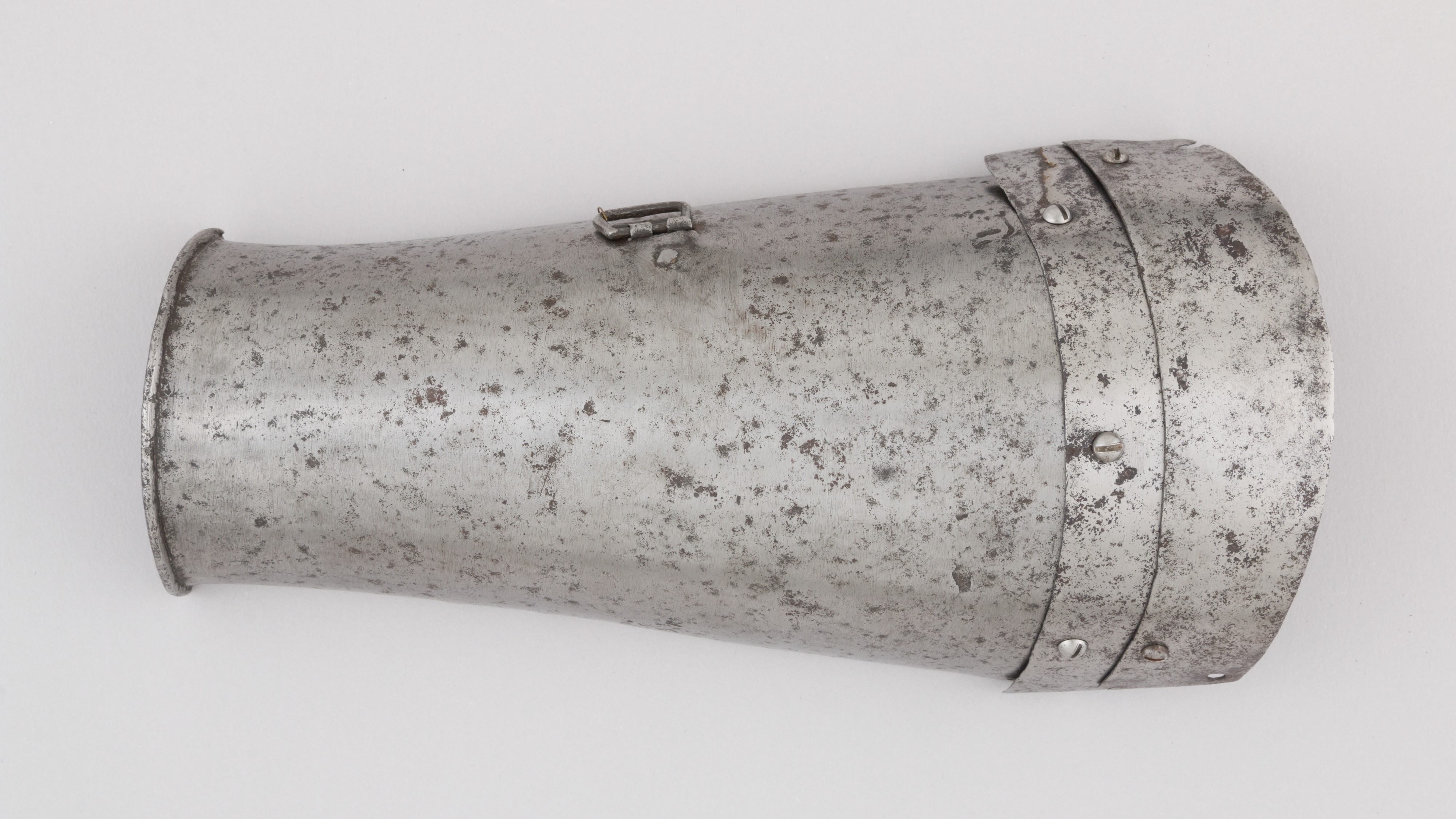
In the hallowed halls of Katherine Fashion Lab, we do not merely examine garments; we dissect the architecture of protection, status, and identity. Today’s subject—a standalone study of the outer plate of a right forearm defense, or vambrace, of Italian origin, forged in steel—transcends its martial utility. It stands as a profound couture statement, a relic of Renaissance craftsmanship that speaks to the intersection of haute couture’s obsession with structure, materiality, and the human form. This analysis recontextualizes the vambrace not as a piece of medieval armor, but as a singular, sculptural component of a bespoke wardrobe for the battlefield—and beyond.
Materiality and the Language of Steel
The selection of steel as the primary material is the first and most critical couture decision. In contemporary luxury fashion, steel is often relegated to hardware—zips, buckles, or chainmail accents. Here, it is the entire canvas. The vambrace’s outer plate, hammered and shaped to cradle the forearm, embodies a dialogue between rigidity and ergonomics. The metal’s cold, reflective surface is not merely functional; it is a statement of unapologetic strength. The patina, likely a result of age and handling, introduces a nuanced texture that no synthetic coating can replicate. This is the couture equivalent of a fabric with memory—a narrative of use embedded in every scratch and tarnish.
From a design perspective, the steel’s weight and tensile strength dictate the vambrace’s silhouette. Unlike the draped silks of a ball gown or the tailored wool of a blazer, this material demands a different kind of mastery. The artisan must understand the metal’s behavior under heat and pressure, a process akin to a couturier’s manipulation of bias-cut silk. The result is a piece that is simultaneously armor and ornament, a paradox that challenges our modern definitions of luxury. In the context of Katherine Fashion Lab, we view this vambrace as a precursor to the architectural fashion of designers like Thierry Mugler or Iris van Herpen, who use rigid materials to sculpt the body into a living edifice.
Silhouette and the Art of Ergonomic Sculpture
Anatomical Precision
The vambrace’s outer plate is not a flat, uniform shell. It is a masterclass in anatomical tailoring. The curve that accommodates the radius and ulna bones is subtly articulated, with a gentle taper toward the wrist and a flared opening near the elbow. This is not a generic shape; it is a bespoke fit for a specific individual. The couture parallel is immediate: just as a haute couture gown requires dozens of fittings to map the client’s body, this vambrace was likely forged to the measurements of its wearer. The result is a piece that feels like a second skin, albeit one made of steel.
The silhouette also leverages negative space. The inner side of the forearm—the vulnerable area where veins and tendons lie—is left exposed, covered only by a leather or fabric lining (now absent in this standalone study). This strategic void is a design choice of profound sophistication. It acknowledges that true protection is not about complete encasement, but about enabling motion. In couture terms, this is the equivalent of a cutout in a gown—a deliberate exposure that heightens the garment’s erotic tension and functional elegance. The vambrace’s profile, when viewed from the side, resembles a teardrop or a wing, suggesting a kinetic energy that belies its static form.
Proportion and Scale
Italian armorers of the Renaissance understood the power of proportion. The vambrace’s length—typically from the elbow to just above the wrist—is calibrated to balance the arm’s visual weight. It neither overwhelms the limb nor disappears against it. This is a lesson in scale management that contemporary designers often neglect. The plate’s edges are rolled or beveled, a finishing detail that prevents chafing and adds a refined, almost jewelry-like quality. This attention to the periphery is the hallmark of couture craftsmanship, where every seam and hem is considered an opportunity for beauty.
Surface Treatment and the Patina of Prestige
While the steel’s raw finish is impressive, the vambrace’s surface treatment—or lack thereof—is a deliberate aesthetic choice. In its current state, the metal exhibits a dull, greyish luster with darker oxides in the crevices. This is not neglect; it is controlled aging. In the context of 15th- or 16th-century Italy, a polished, mirror-like finish was a sign of wealth and technological prowess, as it required extensive labor to achieve. However, a patinaed surface suggests a different narrative: one of battle, travel, and legacy. The vambrace becomes a palimpsest of experience, each mark a testament to its history.
For Katherine Fashion Lab, this patina is a textile equivalent of worn-in leather or frayed denim—a marker of authenticity and lived-in luxury. It challenges the modern obsession with pristine, disposable fashion. The vambrace’s surface is not a defect; it is a design feature that enhances its value. This aligns with the couture principle of imperfection as perfection, where the hand of the maker and the passage of time are celebrated rather than erased. The subtle variations in reflectivity across the plate create a dynamic visual experience, shifting from matte to semi-gloss depending on the light. This is a material conversation that no digital rendering can replicate.
Contextualizing the Vambrace in Modern Couture
From Battlefield to Runway
The standalone study of this vambrace invites us to consider its role beyond combat. In a contemporary context, it could be reimagined as an avant-garde bracelet, a shoulder piece, or even a structural element in a gown. The rigid steel form offers a counterpoint to fluid fabrics, creating a tension that is inherently dramatic. Designers such as Rick Owens and Gareth Pugh have long drawn on armor motifs, but they often rely on leather or molded synthetics. The true vambrace, in steel, represents an unmediated connection to a pre-industrial era of fashion, where function and beauty were inseparable.
Furthermore, this piece functions as a status object. In Renaissance Italy, armor was a marker of nobility and military prowess, often adorned with etching, gilding, or embossing. While this example appears relatively plain, its sheer existence implies a wearer of means. Today, a couture vambrace would serve a similar purpose: a statement of individuality, a rejection of mass production, and an embrace of craftsmanship. It is a wearable sculpture that commands attention, much like a diamond-encrusted necklace or a hand-painted silk train.
The Vambrace as a Pedagogical Tool
For Katherine Fashion Lab, this study is also a lesson in sustainable design. The vambrace is built to last centuries, not seasons. Its material can be recycled, reshaped, or repurposed. This challenges the fast-fashion paradigm and invites a conversation about longevity in fashion. The vambrace’s construction—a single piece of hammered steel with minimal joins—represents a zero-waste approach that modern designers are only beginning to rediscover. The artisan’s skill lies not in cutting away excess, but in coaxing form from a continuous sheet, a technique that mirrors the draping of a single piece of fabric.
Conclusion: The Vambrace as a Couture Archetype
The outer plate of this Italian vambrace is far more than a historical artifact. It is a couture archetype that embodies the principles of materiality, ergonomics, and narrative. Its steel surface holds the memory of the forge, the arm, and the battle. Its silhouette respects the body while asserting a powerful presence. In the hands of Katherine Fashion Lab, this vambrace becomes a lens through which we view the continuum of fashion—from the armorer’s anvil to the atelier’s sewing table. It reminds us that couture is not merely about clothing, but about armoring the spirit against the mundane. As we continue to explore the boundaries of fashion, let this vambrace stand as a testament to the enduring power of crafted steel and the unyielding human desire for protection, beauty, and identity.