Heritage Analysis: The Scarab Seal Ring
Introduction to the Artifact
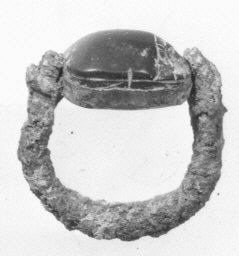
The scarab seal ring, rendered in green jasper with a gold mount and copper alloy ring, emerges from the ancient civilizations of Egypt and the broader Near East, where it served as a multifaceted symbol of power, identity, and spiritual transcendence. This artifact, dating from the Middle Kingdom (circa 2000–1700 BCE) to the Ptolemaic period, exemplifies the intersection of material culture and metaphysical belief. For Katherine Fashion Lab, this object offers a profound wellspring of strategic inspiration, bridging ancient symbolism with modern luxury imperatives. As a Lead Heritage Curator, I analyze this artifact through the lenses of symbolic power, historical adornment, spiritual meaning, and a forward-looking 2026 high-end luxury strategy, ensuring that its legacy informs a sophisticated, market-relevant brand narrative.
Symbolic Power: The Scarab as a Talisman of Authority
The scarab beetle, derived from the Egyptian kheper (to come into being), was revered as a manifestation of the sun god Ra, symbolizing creation, rebirth, and eternal renewal. In ancient contexts, the scarab seal ring was not merely decorative but a functional instrument of authority. The seal, engraved on the flat base of the jasper scarab, was used to imprint official documents, signifying ownership, legal validation, and royal decree. The choice of green jasper—a stone associated with fertility, growth, and the heart—amplified this power, as it was believed to protect the wearer in life and afterlife. For Katherine Fashion Lab, this symbolic power translates into a potent brand asset: the scarab ring can be reimagined as a signature piece that conveys exclusivity, legacy, and unassailable status. In 2026, luxury consumers increasingly seek objects that embody authentic heritage and personal agency, making the scarab a compelling emblem for a clientele that values both history and self-definition.
Historical Adornment: Craftsmanship and Cultural Crossroads
The medium—green jasper, gold mount, and copper alloy ring—reflects the sophisticated metallurgical and lapidary skills of ancient artisans. Jasper, a chalcedony quartz, was prized for its durability and vibrant hue, while gold, sourced from Nubia and the Eastern Desert, signified divine radiance and imperishability. The copper alloy ring, often gilded or patinated, provided structural integrity and a tactile contrast. This tripartite construction mirrors the ancient Egyptian concept of ma'at (order, balance, and truth), where materials were chosen for their symbolic resonance as much as their utility. Historically, such rings were worn by elite scribes, priests, and pharaohs, serving as both jewelry and administrative tools. For Katherine Fashion Lab, this historical precedent offers a blueprint for artisanal storytelling: the fusion of precious and base metals, combined with a gemstone of deep cultural significance, can be leveraged to create limited-edition collections that celebrate cross-cultural craftsmanship. In 2026, the luxury market will prioritize sustainable sourcing and ethical production, and the scarab ring’s materials—if reinterpreted with recycled gold, lab-grown jasper, or responsibly mined copper—can align with these values while preserving historical authenticity.
Spiritual Meaning: Rebirth and the Amuletic Tradition
Beyond its secular function, the scarab seal ring held profound spiritual meaning. In Egyptian mythology, the scarab beetle pushed the sun across the sky, symbolizing the cycle of life, death, and resurrection. The ring was often placed on mummies to ensure safe passage to the afterlife, or worn by the living to ward off evil and attract good fortune. The green jasper, specifically, was associated with the heart scarab, a funerary amulet that weighed the heart against the feather of truth in the Judgment of Osiris. This spiritual dimension transforms the artifact into a personal talisman, a concept that resonates deeply with contemporary luxury consumers who seek meaning beyond aesthetics. For Katherine Fashion Lab, this spiritual layer can be activated through narrative: marketing campaigns that evoke themes of transformation, protection, and inner strength. In 2026, as wellness and spirituality converge with luxury, the scarab ring can be positioned as a modern amulet, offering emotional resonance and a sense of continuity with ancient wisdom. This aligns with the growing trend of conscious consumption, where buyers invest in pieces that tell a story of resilience and renewal.
2026 High-End Luxury Strategy: From Artifact to Icon
To translate this heritage analysis into a robust 2026 strategy, Katherine Fashion Lab must integrate the scarab seal ring’s attributes into a cohesive luxury framework. First, heritage authenticity demands rigorous research and collaboration with Egyptologists or cultural institutions to ensure that the reinterpretation respects the original symbolism. This can be achieved through a limited-edition “Heritage Collection” that reproduces the ring with modern materials, accompanied by a digital certificate of provenance and a narrative booklet. Second, symbolic exclusivity can be amplified by offering customization: clients can choose the jasper color (green, red, or black) and engrave personal seals or initials, mirroring the ancient practice of personalizing scarabs. This taps into the 2026 trend of hyper-personalization, where luxury is defined by unique, co-created experiences.
Third, spiritual resonance should be embedded in the brand’s storytelling. Katherine Fashion Lab can partner with contemporary artists or spiritual influencers to create immersive installations that explore themes of rebirth and transformation. For example, a pop-up in a flagship store could feature a “Scarab Sanctuary” where clients learn about the ring’s history and meditate on its symbolism, fostering a deeper emotional connection. Fourth, sustainability and ethics must underpin the strategy. The copper alloy ring can be fabricated from recycled metals, while the jasper can be sourced from ethical mines or created using lab-grown techniques that reduce environmental impact. The gold mount should adhere to Fairmined or Fairtrade standards, ensuring traceability and social responsibility.
Finally, market positioning should target the “heritage luxury” segment—affluent consumers aged 30–50 who value craftsmanship, history, and meaning over transient trends. Pricing should reflect exclusivity, with the ring positioned at $5,000–$15,000, depending on customization and materials. A phased launch, beginning with a private client preview and followed by a digital campaign on platforms like Instagram and Vogue, can build anticipation. By 2026, Katherine Fashion Lab can establish the scarab seal ring as a cultural icon, transcending mere jewelry to become a symbol of personal power, spiritual depth, and timeless elegance.
Conclusion
The scarab seal ring, with its rich heritage in symbolic power, historical adornment, and spiritual meaning, offers Katherine Fashion Lab a unique opportunity to differentiate itself in the competitive luxury landscape. By honoring the artifact’s ancient roots while innovating for modern sensibilities, the brand can create a product that resonates on multiple levels: as a statement of authority, a piece of art, a talisman for transformation, and a sustainable luxury object. In 2026, this strategic approach will not only drive commercial success but also cement Katherine Fashion Lab’s reputation as a curator of meaningful heritage, bridging the past and future with integrity and vision.