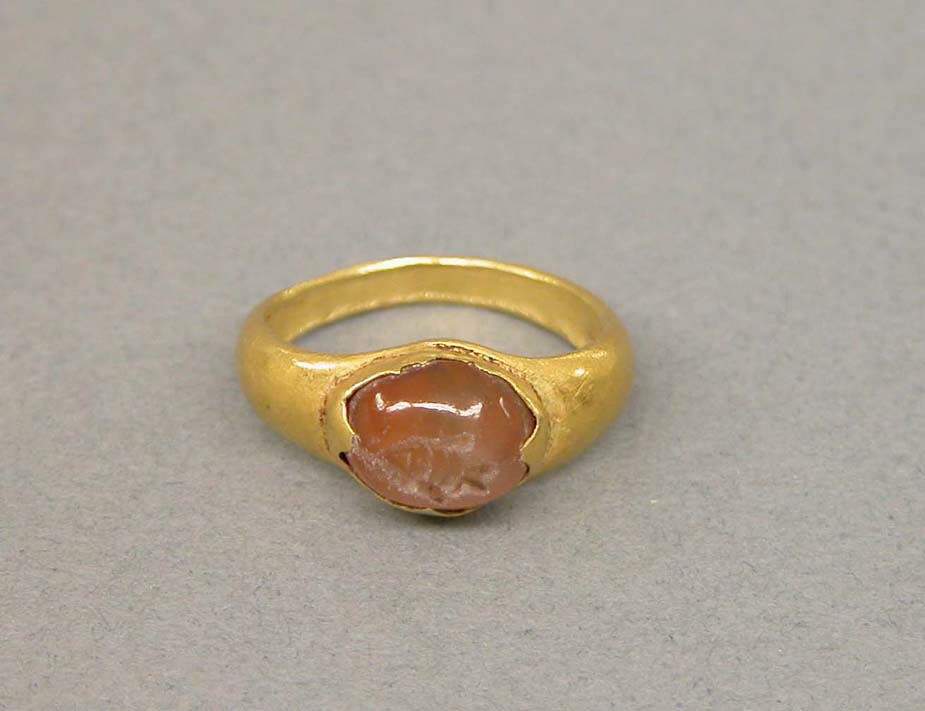
Executive Summary: A Javanese Opal Ring as a Heritage Asset
This strategic standalone research paper analyzes a Javanese gold ring with an opal-colored stone, deconstructing its multi-layered heritage to inform a forward-facing luxury strategy for Katherine Fashion Lab. Moving beyond mere aesthetic appreciation, we position this artifact not as a relic but as a dynamic blueprint. The analysis reveals a potent convergence of symbolic power, historical craftsmanship, and deep spiritual meaning, which can be leveraged to build authentic narrative capital. This capital is essential for establishing a distinct competitive position in the 2026 high-end luxury market, where provenance, consciousness, and metaphysical value are paramount currencies.
Historical & Cultural Context: Javanese Gold and the Philosophy of Adornment
The artifact's origin in Java, Indonesia, situates it within one of the world's most sophisticated gold-working traditions, dating to the classical Hindu-Buddhist kingdoms of Srivijaya and Majapahit. Javanese goldsmithing (pande mas) was never a purely decorative craft; it was a sacred vocation intertwined with kehalusan (refinement) and spiritual potency. Gold, considered the "perfected metal," was seen as a conduit between the earthly and the divine, its incorruptible nature symbolizing immortality and spiritual purity. A ring, circling the finger—a point of energy and action in many esoteric systems—was a deliberate locus of power. This historical context frames the object not as jewelry but as a talismanic instrument, where material, form, and stone were selected and combined with intentionality far exceeding ornamentation.
The Stone: Opal as a Nexus of Symbolic and Spiritual Power
While described as an "opal-colored stone," the semantic focus on opal is critical. In both Javanese and broader Austronesian belief systems, opalescence and iridescence are phenomenologically linked to the supernatural. The stone's play-of-color (labradorcence, or in local context, akin to kilau cahaya—the shimmer of light) would have been interpreted as captured lightning, the flicker of spirit (roh), or the visible breath of a gem's innate life force (semangat). This aligns with the Javanese concept of wahyu, a divine radiance or revelation that descends upon a person. Therefore, the inset stone transforms the ring into a vessel for capturing and refracting celestial light, offering the wearer protection, spiritual insight, and a visible connection to the unseen world. Its mutable colors symbolize adaptability, intuition, and the interconnectedness of all things—a deeply relevant philosophy for the modern luxury consumer.
Form & Function: The Ring as a Historical Interface
The ring’s design as a gold setting housing a prominent stone indicates a status beyond commonality. In historical Javanese society, such items denoted nobility, spiritual authority, or merchantile success. However, its power was activated through wear. Adornment was performative. Worn by a priyayi (aristocrat) or a mystic, it served as a non-verbal communicator of lineage, wisdom, and sanctioned power. The ring acted as a seal, both literally and metaphorically, signing agreements and sealing oaths with the weight of ancestral tradition. This historical function as an interface of identity and authority provides a profound narrative for modern reinterpretation, where luxury items are increasingly expected to project a curated, meaningful personal identity.
Strategic Translation: A Heritage Blueprint for 2026 Luxury
The 2026 luxury landscape, as forecasted, will be defined by hyper-personalization, experiential depth, and "quiet power" over overt logos. Consumers will invest in assets with story, soul, and sustainable integrity. The Javanese opal ring provides a masterful blueprint for this shift. Katherine Fashion Lab's strategy must move from inspiration to transmutation, embedding the artifact's core codes into a contemporary luxury paradigm.
Pillar 1: Symbolic Power & Narrative Architecture
Develop the "Katherine Talisman" collection, rooted in the concept of wahyu (divine radiance). Each piece should be presented with a "narrative dossier" detailing the symbolic attributes of its stones and metals, directly sourced from Javanese philosophy. Marketing should focus on the ring as an object of personal sovereignty and intuitive amplification, not just beauty. Collaborations with cultural historians and modern practitioners of Javanese spirituality can authenticate this narrative, creating a rich, defensible brand mythology.
Pillar 2: Craftsmanship as Spiritual Practice
Partner with surviving master pande mas artisans in Java, employing historical techniques like granulation and repoussé. This goes beyond ethical sourcing; it frames craftsmanship as a transgenerational dialogue. Limited editions can be numbered and accompanied by documentary footage of the artisan's process, emphasizing the time, meditation, and skill invested. The gold itself should be traced to sustainable Indonesian sources, completing a narrative of holistic integrity from earth to object.
Pillar 3: The Spiritual Meaning as Experiential Luxury
For the high-end client, the purchase should be an initiation. Integrate a confidential consultation—not with a stylist, but with a brand "heritage curator"—who guides the client through the symbolic meanings to select a stone and form that resonates with their personal journey. This transforms a transaction into a meaning-making ritual, directly mirroring the intentionality behind the original artifact. Consider private viewings in spaces designed with Javanese aesthetic principles (memayu hayuning bawana—beautifying the world), blending art, artifact, and contemporary design.
Conclusion: From Artifact to Armament for the Modern Soul
The Javanese gold ring with an opal-colored stone is a compact universe of meaning. Its analysis reveals that its true value lies in its synthesis of material perfection (gold), dynamic spirit (opal), and sacred purpose (the ring form). For Katherine Fashion Lab, this heritage is a strategic arsenal. By transmuting its core principles—talismanic intention, spiritually-infused craftsmanship, and adornment as identity—into a 2026 luxury strategy, the brand can cultivate an unparalleled position. It will move beyond fashion to offer modern heirlooms: objects of conscious luxury that provide wearers with a sense of anchored identity, spiritual connection, and authentic narrative power in an increasingly fragmented world. The past, in this context, becomes the most progressive blueprint for the future.