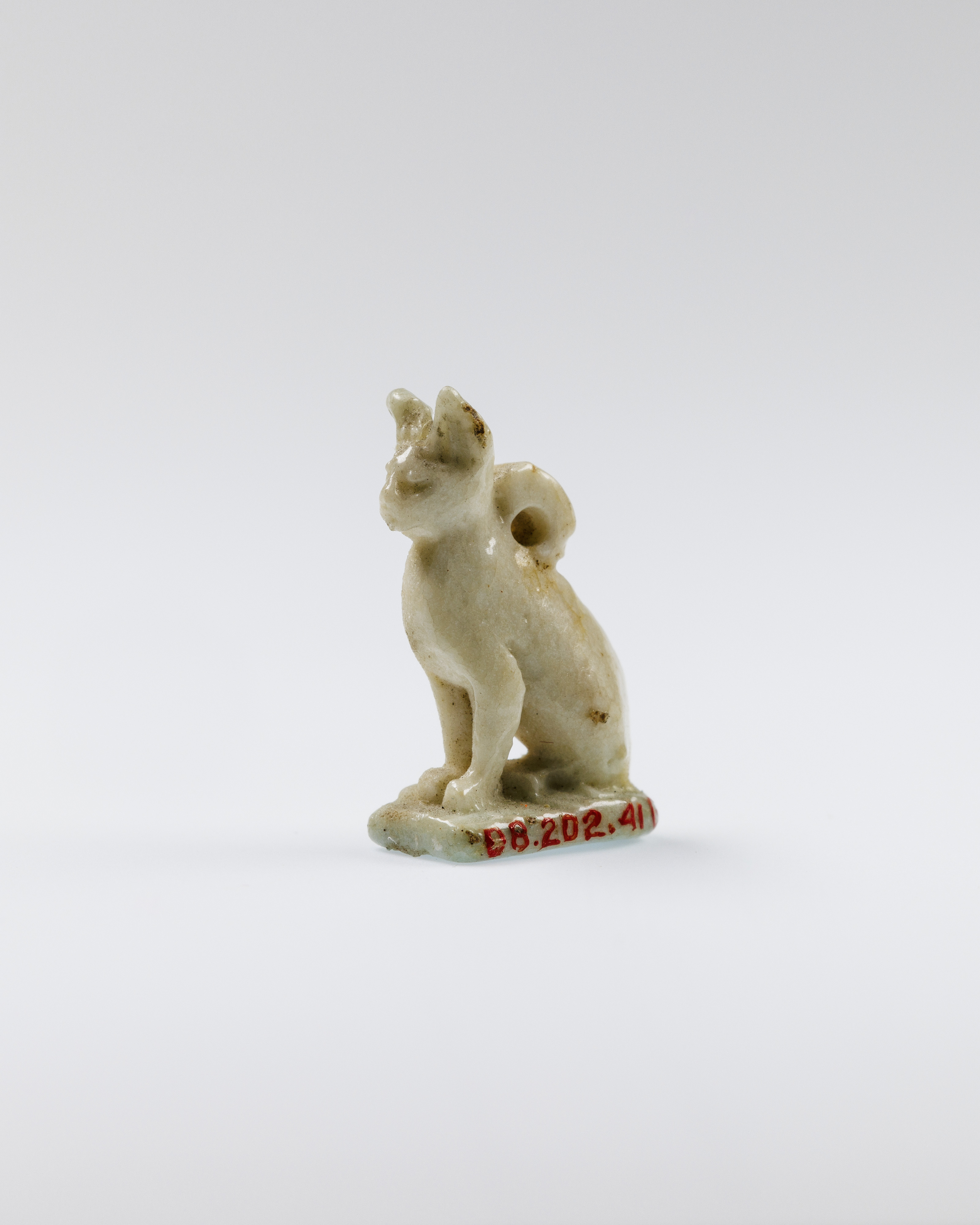
Executive Heritage Analysis: The Faience Cat Amulet
This strategic heritage analysis examines the faience cat amulet from an ancient civilization, with a specific focus on its symbolic power, historical adornment, spiritual meaning, and the actionable luxury strategy for Katherine Fashion Lab’s 2026 high-end collection. As a Lead Heritage Curator, I position this artifact not merely as a decorative object but as a potent emblem of protection, prosperity, and divine femininity—qualities that resonate profoundly with contemporary luxury consumers seeking authenticity and spiritual depth. The faience cat amulet, typically associated with ancient Egyptian culture (circa 2000–300 BCE), represents a convergence of material mastery and metaphysical belief, offering Katherine Fashion Lab a unique narrative asset for market differentiation.
Symbolic Power: The Cat as a Guardian of Thresholds
The cat amulet’s symbolic power derives from its association with the goddess Bastet, a deity of home, fertility, and protection. In ancient civilization, the cat was revered for its dual nature: a gentle companion in domestic spaces and a fierce predator against vermin, symbolizing the balance between nurturing and vigilance. The amulet’s faience medium—a glazed ceramic composed of crushed quartz, alkaline salts, and natural colorants—enhanced this symbolism through its luminous blue-green hue, which represented rebirth, the Nile’s fertility, and the heavens. For Katherine Fashion Lab, this duality offers a powerful brand metaphor: the modern luxury consumer seeks protection from societal pressures (symbolic of the cat’s guardianship) while desiring adornment that reflects inner strength and grace. The amulet’s symbolic power is not static; it adapts to contemporary anxieties, such as digital overload or environmental uncertainty, positioning the cat motif as a talisman for resilience.
From a strategic standpoint, the cat amulet’s symbolic resonance aligns with the 2026 luxury trend toward “protective luxury”—a shift where consumers invest in items that offer psychological safety and emotional anchoring. Katherine Fashion Lab can leverage this by embedding the cat amulet’s symbolism into limited-edition accessories, such as pendant necklaces or brooches, using faience-inspired glazes in collaboration with modern ceramic artisans. This creates a tangible link between ancient protection rituals and contemporary self-care, appealing to high-net-worth individuals who value narrative-driven craftsmanship.
Historical Adornment: Faience as a Medium of Prestige
Historically, faience cat amulets were not mass-produced; they were crafted for the elite, often placed in tombs or worn during life as a status symbol. The medium of faience required sophisticated kiln technology and knowledge of mineral pigments, making it a luxury good in its own time. The amulet’s small scale (typically 2–5 centimeters) belied its significance; it was often strung with other amulets on a necklace or sewn onto linen garments, creating a layered, personalized adornment system. For Katherine Fashion Lab, this historical context underscores the value of bespoke production and artisanal scarcity. The 2026 high-end strategy should reject mass-market replication in favor of limited runs (e.g., 500 pieces per design), each numbered and accompanied by a heritage certificate detailing the amulet’s provenance and symbolic meaning. This approach mirrors the ancient practice of commissioning amulets from specialized priests or craftsmen, thereby elevating the product from commodity to collectible.
Moreover, the faience medium’s durability—surviving millennia in archaeological contexts—offers a powerful metaphor for enduring value. Katherine Fashion Lab can position its cat amulet collection as heirloom pieces, designed to be passed down through generations. This aligns with the 2026 luxury consumer’s preference for “slow fashion” and sustainable luxury, where quality and meaning outweigh fleeting trends. The historical adornment context also suggests a color palette: the iconic Egyptian blue (derived from copper in faience) and turquoise hues should dominate the collection, with accent colors like gold (representing divinity) and black (representing protection) to evoke the amulet’s original aesthetic.
Spiritual Meaning: The Amulet as a Bridge Between Realms
The spiritual meaning of the cat amulet extends beyond mere decoration; it functioned as a conduit between the physical and spiritual worlds. In ancient civilization, amulets were activated through rituals—often involving anointing with oils or recitation of spells—to imbue them with protective power. The cat’s association with Bastet also linked it to music, dance, and joy, suggesting that spiritual protection was not solely defensive but also generative of positive energy. For the 2026 luxury strategy, this spiritual dimension offers a pathway to experiential luxury. Katherine Fashion Lab can host exclusive, invitation-only events where clients participate in a “modern activation” ritual, led by a cultural historian or spiritual guide, to bless their purchased amulet. This transforms the acquisition into a meaningful experience, fostering brand loyalty and word-of-mouth prestige among elite circles.
The spiritual meaning also intersects with the 2026 trend of “conscious consumption,” where consumers seek products that align with their well-being and ethical values. Katherine Fashion Lab can partner with contemporary spiritual practitioners—such as crystal healers or meditation experts—to co-create a narrative around the amulet’s energy. For example, the cat amulet could be marketed as a “frequency anchor” for grounding and intuition, appealing to the growing market of luxury wellness enthusiasts. This positioning differentiates Katherine Fashion Lab from competitors who merely replicate historical motifs without integrating their spiritual depth.
2026 High-End Luxury Strategy: From Artifact to Icon
Integrating the faience cat amulet into Katherine Fashion Lab’s 2026 collection requires a multi-layered strategy that respects heritage while innovating for modern luxury consumers. First, product development should focus on hybrid materials: combining traditional faience glazing techniques with high-end metals (e.g., 18-karat gold or platinum settings) and gemstones (e.g., lapis lazuli or turquoise) to create a contemporary aesthetic. The amulet’s size can be scaled up for statement pieces (e.g., cuffs or earrings) or kept intimate for daily wear (e.g., rings or pendants), offering versatility across the collection.
Second, brand storytelling must be immersive. Katherine Fashion Lab should produce a digital heritage dossier—accessible via QR code on each product—that includes archaeological imagery, the amulet’s symbolic meanings, and a video of the faience-making process. This educates the consumer and reinforces the artifact’s authenticity. Additionally, a limited “Bastet Edition” (e.g., 100 pieces) could be launched with a private viewing at a museum or gallery, creating exclusivity and press coverage.
Third, pricing strategy should reflect the artifact’s rarity and craftsmanship. With a suggested retail price of $2,500–$8,000 per piece (depending on materials), the collection targets the “aspirational heritage” segment—consumers aged 30–55 with disposable income who prioritize cultural capital. Finally, distribution should be selective: available only through Katherine Fashion Lab’s flagship stores, high-end e-commerce platforms (e.g., Moda Operandi), and select luxury boutiques in key markets (New York, Paris, Tokyo). This controlled scarcity mirrors the amulet’s historical exclusivity and enhances its desirability.
Conclusion: A Timeless Asset for Modern Luxury
The faience cat amulet is not a relic of the past but a strategic asset for Katherine Fashion Lab’s 2026 high-end luxury strategy. Its symbolic power, historical adornment, and spiritual meaning provide a rich narrative that aligns with contemporary consumer desires for protection, authenticity, and experiential value. By honoring the ancient craftsmanship through modern innovation, Katherine Fashion Lab can transform this artifact into an iconic collection that bridges millennia, offering clients not just adornment but a talisman for the future. This heritage analysis confirms that the cat amulet is more than a trend—it is a timeless investment in brand legacy and cultural resonance.