The Art of Absence: Deconstructing Strip, Global Heritage, and Cutwork at Katherine Fashion Lab
In the rarefied echelons of haute couture, where fabric is both medium and message, the concept of “Strip” emerges not as a gesture of reduction, but as a profound act of architectural revelation. Katherine Fashion Lab’s latest standalone study repositions the strip—a linear excision, a deliberate void—as the central protagonist of a narrative that spans continents and epochs. By anchoring this exploration in Global Heritage and executing it through the meticulous technique of Cutwork, the Lab delivers a collection that is less about clothing and more about cartography: a mapping of cultural memory onto the human form. This is not mere fashion; it is a doctoral thesis in textile engineering and anthropological curation, articulated through silk, linen, and the eloquent language of absence.
The Strip as a Linguistic Device: From Void to Volume
Conventionally, the strip is understood as a diminishment—a removal of material for the sake of lightness or transparency. Katherine Fashion Lab inverts this paradigm. Here, the strip becomes a generative force, a positive space that defines the negative. In this collection, the body is not draped or covered, but rather framed by a lattice of carefully orchestrated voids. Each strip is a deliberate incision, a cut that does not destroy but rather articulates. The eye is forced to travel across the skin, tracing the pathways left by the absent fabric. This technique transforms the garment into a three-dimensional sketch, where the line is the primary element of design. The result is a silhouette that breathes, moves, and interacts with light in a way that solid textiles cannot replicate. The strip, in this context, is not a compromise of coverage but a strategic amplification of form and movement.
Global Heritage: A Tapestry of Influences
The genius of this collection lies in its ability to synthesize disparate cultural traditions into a coherent, avant-garde language. The Global Heritage underpinning is not a superficial pastiche of motifs, but a deep structural borrowing of techniques and philosophies. One can discern the precision of Japanese kiri-e (paper cutting) in the clean, geometric edges of the strips, where every incision is final and irreversible. Simultaneously, the flowing, asymmetrical arrangements evoke the layered draping of Indian kanchivaram silks, where fabric is manipulated to create depth without bulk. There is also a clear nod to the intricate latticework of Islamic mashrabiya, where patterns are created by the interplay of light and shadow through carved wooden screens. The Lab does not simply borrow these elements; it distills them to their essence, stripping away the ornamental to reveal the underlying principle of controlled transparency. This is heritage as a toolkit, not a museum display.
Cutwork: The Discipline of Precision
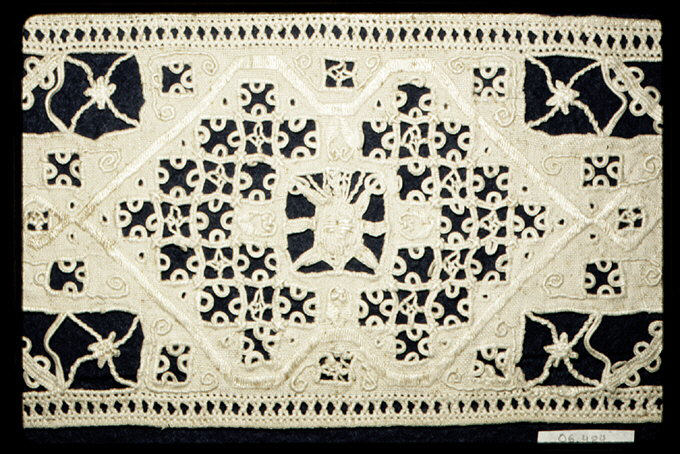
At the technical heart of this study lies Cutwork, a technique that demands the highest level of precision and risk. Unlike embroidery, which adds, cutwork subtracts. A single misplaced snip can ruin hours of labor. Katherine Fashion Lab elevates this craft to a form of mathematical poetry. The cuts are not random; they follow a rigorous geometry that accounts for fabric grain, tension, and the natural drape of the body. The Lab employs a hybrid methodology: hand-guided laser cutting for initial precision, followed by hand-finishing to soften edges and integrate the cutwork with the garment’s structure. The result is a series of garments where the cut itself is the embellishment. In one key piece—a floor-length gown in raw silk—the strips are arranged in a Fibonacci-like spiral around the torso, creating a vortex of negative space that draws the eye inward. In another, a structured jacket in black linen uses horizontal strips that widen and narrow, mimicking the rhythm of a musical staff. The cutwork here is not decoration; it is the skeleton of the design, visible and unapologetic.
Materiality and Movement: The Dialogue Between Skin and Silk
The choice of materials is critical to the success of the “Strip” study. The Lab favors high-twist silks and crisp linens—fabrics that possess both structure and a subtle, organic stiffness. These materials hold the shape of the cut, preventing the edges from curling or fraying. More importantly, they create a dynamic dialogue with the skin. When the wearer moves, the strips shift and separate, revealing glimpses of the body beneath, only to realign when still. This creates a constant state of visual tension, a kinetic sculpture that is never the same from one moment to the next. The Lab also experiments with double-faced fabrics, where the reverse side is a contrasting color or texture. On the inside of a cut, a flash of deep burgundy or metallic gold appears, adding a layer of hidden luxury. This is a masterclass in material intelligence, where every fiber is chosen for its role in the overall performance of the garment.
Contextualizing the Standalone Study: A New Vocabulary for Couture
This collection is explicitly positioned as a standalone study, a deliberate departure from seasonal commercial cycles. It is an academic exercise in pure design research. The Lab’s decision to focus solely on the strip and cutwork is a radical act of specialization. In an industry obsessed with novelty and volume, Katherine Fashion Lab chooses depth over breadth. The garments are not intended for mass production or even for the red carpet in the traditional sense. They are wearable prototypes of a new design philosophy. The standalone format allows the Lab to explore the limits of the technique without the constraints of marketability. The result is a body of work that feels both ancient and futuristic—a testament to the enduring power of a single, well-executed idea. The study challenges the viewer to reconsider what constitutes a garment: is it the fabric that is present, or the space that is carved out? The answer, according to the Lab, is both.
Conclusion: The Elegance of the Incomplete
Katherine Fashion Lab’s “Strip” study is a landmark in the discourse of contemporary couture. It proves that innovation often lies in subtraction, not addition. By stripping away the extraneous, the Lab reveals the essential. The cutwork, rooted in global heritage, becomes a universal language of line and light. The garments are not merely worn; they are inhabited, their voids becoming extensions of the wearer’s own form. This collection is a quiet, powerful manifesto for a new kind of elegance—one that finds beauty in the incomplete, the exposed, and the meticulously absent. For the discerning connoisseur, this is not just fashion; it is a philosophy, rendered in silk and precision.