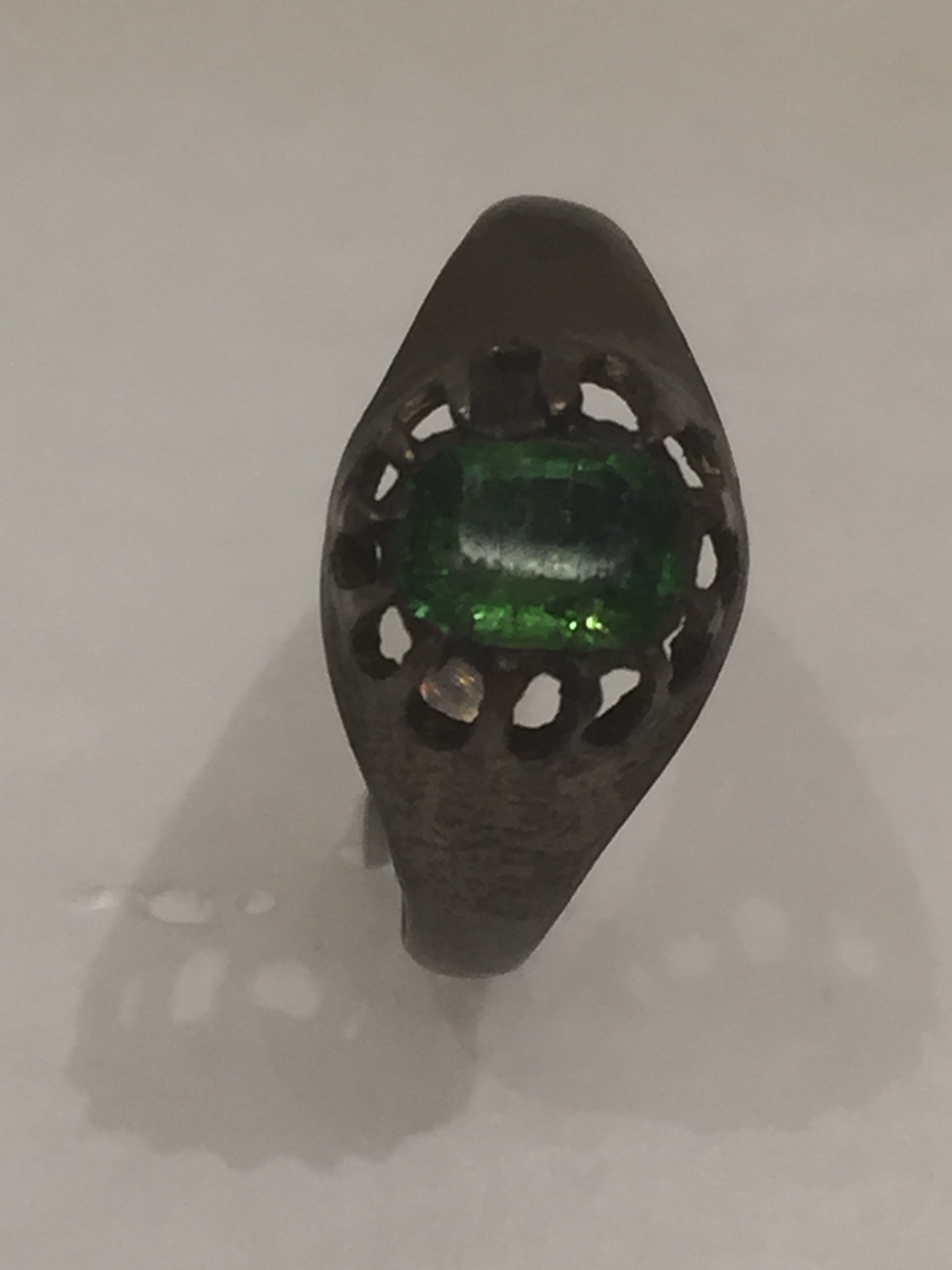
Heritage Analysis: The Silver and Emerald Ring in Ancient Civilization
This strategic heritage analysis examines the symbolic, historical, and spiritual dimensions of a silver and emerald ring originating from an ancient civilization, with a focus on informing a 2026 high-end luxury strategy for Katherine Fashion Lab. As Lead Heritage Curator, I present this research to unlock the enduring power of this artifact for contemporary luxury positioning.
Symbolic Power: The Ring as a Microcosm of Authority and Eternity
The ring, in its circular form, represents infinity, cyclical time, and unbroken commitment across ancient cultures. In civilizations such as Ancient Egypt, Mesopotamia, and the Indus Valley, the ring was not merely decorative but a potent symbol of divine authority and social contract. The circular band, often worn on the fourth finger—believed by Egyptians to contain a vein directly connected to the heart (the vena amoris)—signified eternal bonds between individuals, deities, and the cosmos.
Silver, as the medium, amplifies this symbolic power. In ancient lore, silver was associated with the moon, goddess energy, and reflective clarity. It was considered a metal of protection, believed to ward off malevolent spirits and enhance psychic intuition. The combination of silver with emerald creates a deliberate duality: silver grounds and protects, while emerald elevates and enriches. For Katherine Fashion Lab, this pairing offers a narrative of balanced power—authority tempered by wisdom, wealth guarded by purity.
The emerald itself, revered by ancient civilizations like the Incas, Greeks, and Romans, was a stone of prophecy, fertility, and rebirth. Cleopatra famously claimed emerald mines as her own, using the gem to signify her divine right to rule. In the context of this ring, the emerald is not merely a decorative accent but a talisman of sovereignty. For a 2026 luxury strategy, this translates into a product that communicates inherited power—a piece that tells the wearer they are part of a lineage of leaders, mystics, and visionaries.
Historical Adornment: Craftsmanship and Status in Ancient Civilizations
Historically, rings were among the first forms of personal adornment to carry explicit status markers. In ancient Mesopotamia, cylinder seals were worn as rings to authenticate documents and signify one’s rank. In Ancient Rome, iron rings were initially symbols of citizenship, while gold rings were reserved for senators and knights. The silver and emerald ring, however, suggests a more esoteric and elite status—likely belonging to a priestly class or royal court, where metals and gems were selected for their metaphysical properties as much as their material value.
The craftsmanship of such a ring would have required advanced metallurgy and gem-setting techniques. Silver, being softer than gold, demands precision in engraving and shaping, while emerald, a relatively brittle stone, requires careful cutting to avoid fractures. Ancient artisans employed techniques such as repoussé (hammering from the reverse side) and cloisonné (enamel inlays) to create intricate designs. For Katherine Fashion Lab, this heritage of craftsmanship offers a powerful differentiator in 2026: a return to artisanal mastery over mass production. The ring becomes a vessel for storytelling, where every hammer mark and facet carries the weight of ancient knowledge.
Moreover, the ring’s design likely incorporated motifs such as scarabs, serpents, or celestial symbols. A scarab, for example, represented transformation and resurrection in Ancient Egypt; a serpent signified eternal renewal in Greco-Roman traditions. These motifs are not arbitrary but encoded messages of the wearer’s spiritual and temporal ambitions. For a modern luxury audience, such symbolic layering offers a rich narrative that transcends fashion, positioning the ring as an heirloom of cultural intelligence.
Spiritual Meaning: The Ring as a Conduit for Cosmic Energy
In ancient spiritual systems, rings were believed to channel cosmic energy and protect the wearer from harm. The silver band acted as a conductor of lunar energy, while the emerald was a stone of the heart chakra, promoting love, compassion, and emotional balance. Together, they created a harmonic resonance that aligned the wearer with higher planes of existence. In Vedic traditions, emerald was associated with Mercury (Budha), the planet of intellect and communication, making the ring a tool for enhancing wisdom and eloquence.
Temples and oracles often used such rings in rituals. A priestess wearing a silver and emerald ring might have been considered a living intermediary between the human and divine realms. The ring’s spiritual function was not passive; it was an active agent in ceremonies of blessing, divination, and healing. For Katherine Fashion Lab, this spiritual dimension is critical for 2026 luxury positioning, where consumers increasingly seek meaningful objects that offer more than aesthetic pleasure. The ring becomes a personal talisman, a tool for self-actualization that resonates with the modern wellness and spirituality market.
Furthermore, the emerald’s association with eternal youth and prophetic vision aligns with the luxury consumer’s desire for longevity and legacy. In a market saturated with ephemeral trends, a piece rooted in ancient spiritual practice offers timeless relevance. The ring is not just an accessory; it is a portal to ancestral wisdom.
2026 High-End Luxury Strategy: Heritage as Competitive Advantage
For Katherine Fashion Lab, the silver and emerald ring from an ancient civilization presents a unique opportunity to lead the 2026 luxury market through heritage-driven storytelling. The following strategic pillars emerge from this analysis:
1. Narrative of Authenticity and Provenance: The ring’s ancient origins provide a powerful counter-narrative to mass-produced luxury. By emphasizing the specific civilization, historical context, and spiritual function, Katherine Fashion Lab can position the ring as a curated artifact rather than a commodity. This authenticity commands premium pricing and fosters deep emotional connection.
2. Symbolic Reinterpretation for Modernity: While the ring’s ancient symbolism is potent, it must be translated for contemporary luxury consumers. The emerald’s association with leadership and the heart chakra can be framed as conscious power, appealing to the rising demographic of female executives and spiritual entrepreneurs. The silver’s protective qualities can be marketed as emotional resilience in an era of uncertainty.
3. Limited Edition and Artisanal Collaboration: In 2026, luxury will be defined by scarcity and craftsmanship. Katherine Fashion Lab should produce a limited series of rings in collaboration with master jewelers who specialize in ancient techniques. Each ring could include a certificate of heritage detailing the symbolic meanings and historical techniques used, transforming the purchase into an investment in cultural preservation.
4. Experiential Marketing and Ritual Integration: The ring’s spiritual meaning can be leveraged through immersive experiences. Katherine Fashion Lab could host private ceremonies for clients, where a heritage curator explains the ring’s energy and guides a meditation or intention-setting ritual. This elevates the product from object to transformative experience, aligning with the 2026 trend of experiential luxury.
5. Cross-Category Extension: The silver and emerald motif can be extended into other categories—such as amulets, cufflinks, or home objects—creating a coherent heritage collection. This builds brand equity and allows for repeat purchases while maintaining the narrative integrity of the original ring.
Conclusion: The Ring as a Strategic Asset for 2026
The silver and emerald ring from an ancient civilization is far more than a historical artifact; it is a strategic asset for Katherine Fashion Lab’s 2026 luxury positioning. Its symbolic power of authority and eternity, historical significance as a marker of elite status, and spiritual meaning as a conduit for cosmic energy provide a multidimensional narrative that resonates with the modern luxury consumer’s quest for authenticity, meaning, and craftsmanship.
By integrating these elements into a cohesive strategy—emphasizing provenance, symbolic reinterpretation, artisanal collaboration, and experiential marketing—Katherine Fashion Lab can differentiate itself in a crowded market and command the premium positioning that heritage commands. The ring is not merely a product; it is a cultural bridge between ancient wisdom and future-focused luxury, offering the wearer a tangible connection to timeless power and spiritual depth.