Deconstructing the Gaze: A Couture Analysis of the "Actresses" Series Tobacco Card
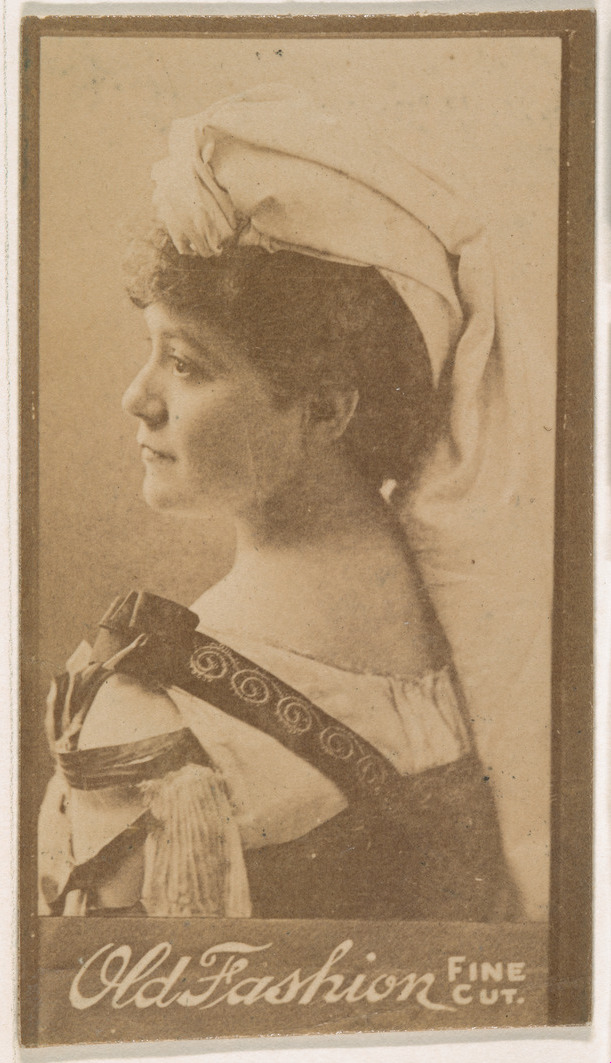
Within the curated archives of global heritage, certain images transcend their original commercial purpose to become profound studies in constructed identity and sartorial narrative. The subject at hand—a portrait from the Actresses series (N664) promoting Old Fashion Fine Cut Tobacco—is one such artifact. As a standalone albumen photograph, it presents a rich, if compact, tableau where fashion, commerce, and performance intersect. For Katherine Fashion Lab, this is not merely a vintage advertisement but a critical case study in how couture-level intention can be imbued into mass-produced ephemera, using the language of adornment to craft a persona that is both aspirational and accessible.
The Turban as a Canvas of Cultural Synthesis
The most immediate and commanding element of the portrait is the elaborately wrapped cloth turban. This is not a casual headscarf but a deliberate, structured composition of fabric. Its meticulous folds and artful drape suggest a couturier’s hand, transforming simple cloth into a sculptural form that frames the face and dictates the portrait’s entire silhouette. In the late 19th-century context of this card’s production, the turban occupied a complex space in Western fashion. It referenced an imagined, romanticized "Orient"—a symbol of exoticism, luxury, and a perceived mysterious wisdom.
From a technical couture perspective, the turban’s construction speaks to principles of balance, volume, and texture. The fabric appears to be a lightweight silk or cotton, chosen for its ability to hold a fold while creating soft, dynamic lines. The wrapping technique itself is the core of the design, creating a non-stitched, ephemeral garment that is entirely dependent on skill for its form. This aligns with haute couture’s emphasis on transformative construction and unique, often impermanent, beauty. The actress’s turban is her primary accessory, a statement piece that communicates a curated identity of sophistication and worldly experience, deliberately staged to elevate her personal brand and, by association, the tobacco product she endorses.
The Dialogue Between Restraint and Revelation
The power of the turban is amplified by its stark contrast with the subject’s attire and pose. Typically, these actresses are depicted in décolleté evening gowns or theatrical costumes. The gown, often visible at the shoulders and bust, is likely of a rich, dark fabric—velvet or a heavy silk—providing a somber, velvety ground that makes the luminosity of the skin and the whiteness of the turban all the more striking. This creates a masterful visual hierarchy: the face and headdress are the undisputed focal points.
This is a calculated exercise in controlled revelation. The fashion narrative is one of contrast: the modesty and coverage of the wrapped head against the revealed skin of the shoulders and chest; the structured, architectural form above against the soft, flowing drape of the gown below. It is a silhouette that speaks to a duality in the actress’s projected role—both respectable and alluring, cultured and sensuous. The jewelry, often minimal—perhaps a simple necklace or earrings—serves not as distraction but as punctuation, acknowledging the need for adornment while ensuring the turban remains the sartorial protagonist.
Contextual Alchemy: From Commercial Ephemera to Couture Icon
The true genius of this image, from a fashion lab analytical standpoint, lies in its contextual alchemy. It was produced as a mass-collectible card, inserted into packets of tobacco to drive sales. Yet, its execution borrows directly from the conventions of high-society portraiture and theatrical carte-de-visite photography. The albumen print process, with its sepia tones and capacity for fine detail, lends an aura of authenticity and artistry that elevates the subject matter.
The "actress" herself is wearing a costume, but it is a costume for the stage of public perception. She is not playing a specific theatrical role here, but rather the role of The Actress—a archetype of beauty, fashion-forwardness, and a slightly bohemian lifestyle. Her turbaned couture is a key prop in this performance. It signals her membership in a creative, avant-garde class that has the cultural capital to adopt and adapt motifs from global wardrobes. For the male consumer collecting these cards, the image sold more than tobacco; it sold a fantasy of proximity to this rarefied world of beauty and art. The fashion is the primary vehicle for this fantasy.
Materiality and the Haunting Presence of the Albumen Print
The material substrate, the albumen photograph, is an active participant in the couture narrative. The silver particles embedded in the egg-white coating create a unique luminosity, a subtle sheen that mimics the texture of satin and highlights the gradients in the turban’s folds. The inevitable fading and toning of the print over time add a layer of patina, making the garment feel even more like a relic from a specific, vanished moment of sartorial performance. This physicality reminds us that the image is an object of history. The cracks and imperfections in the albumen do not detract from the fashion analysis; they enhance it, speaking to the fragility of trends and the enduring nature of an iconic silhouette.
In conclusion, this standalone study from the Actresses series is a masterclass in condensed sartorial storytelling. The cloth turban is its centerpiece—a couture object born of cultural synthesis, technical draping skill, and symbolic potency. Through the strategic contrast of fabric and skin, structure and flow, the image crafts a persona that is meticulously designed to captivate and sell. For Katherine Fashion Lab, it stands as a powerful testament to the idea that couture is not defined solely by ateliers and runways, but by the intentional, impactful use of adornment to construct identity, even within the most commercial of frames. It is a portrait where fashion is the lead actor, and its performance continues to resonate over a century later.