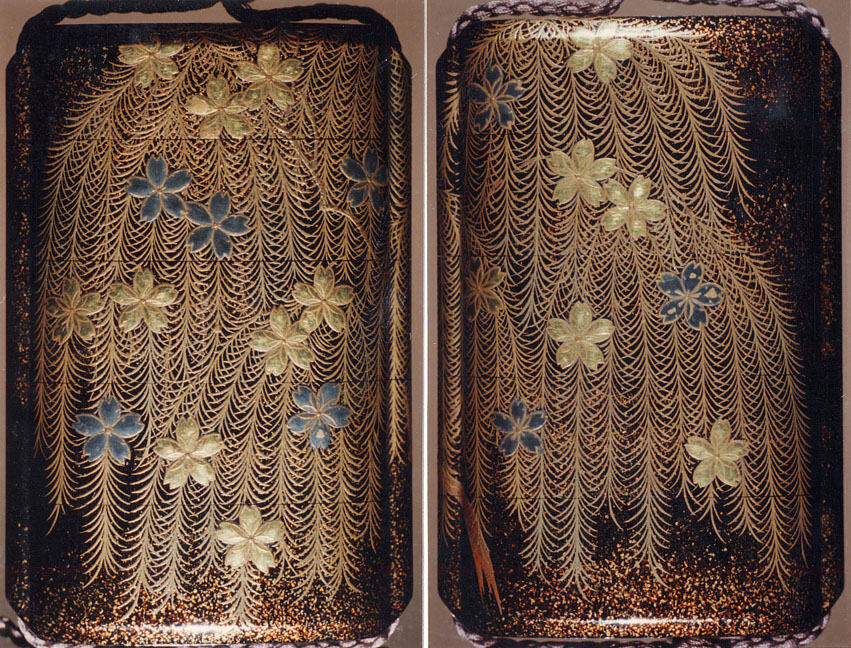
Heritage Analysis: Case (Inrō) with Design of Weeping Willow and Cherry Blossoms
Introduction: The Inrō as a Cultural Artifact
The Case (Inrō) with Design of Weeping Willow and Cherry Blossoms represents a pinnacle of Edo-period Japanese craftsmanship, embodying both functional utility and profound symbolic resonance. Crafted using hiramaki-e with nashiji on black lacquer, this piece integrates gold and silver hiramakie, foil, and intricate interior detailing. The accompanying ojime—an ivory bead decorated with vines and grasses in gold lacquer—and the netsuke, a woven basket with shell and gold lacquer, complete the ensemble. For Katherine Fashion Lab, this artifact offers a strategic lens through which to examine the intersection of cultural symbolism, historical adornment, and spiritual meaning, while informing a 2026 high-end luxury strategy rooted in authenticity and narrative depth.
Symbolic Power: The Weeping Willow and Cherry Blossoms
The design of weeping willow and cherry blossoms is not merely decorative but laden with layered symbolism. In Japanese culture, the cherry blossom (sakura) epitomizes the ephemeral nature of life—a concept central to Buddhist philosophy. Its brief, vivid blooming season serves as a metaphor for beauty, mortality, and the transient joy of existence. The weeping willow (yanagi), by contrast, symbolizes grace, flexibility, and resilience. Its drooping branches evoke humility and the ability to bend without breaking, often associated with feminine virtues and emotional depth.
Together, these motifs create a dialectic between fleeting beauty and enduring strength. The cherry blossom’s fragility is tempered by the willow’s supple endurance, suggesting a harmonious balance that resonates with the Japanese aesthetic of wabi-sabi—the acceptance of impermanence. For a luxury brand, this duality offers a powerful narrative: products that celebrate both transient moments of elegance and timeless craftsmanship. The inrō’s design thus becomes a visual manifesto for emotional resilience and refined impermanence, qualities that align with modern luxury consumers’ search for meaning beyond materiality.
Historical Adornment: The Inrō as Status and Utility
Historically, the inrō served as a portable container for seals, medicines, or personal items, suspended from the obi (sash) of a kimono via the netsuke and ojime. Its evolution from a practical accessory to a status symbol reflects the social stratification of Edo-period Japan. Samurai and wealthy merchants commissioned inrō as markers of taste, wealth, and cultural literacy. The use of hiramaki-e (low-relief lacquer) and nashiji (pear-skin ground) required exceptional skill, with gold and silver foils indicating the owner’s affluence and patronage of elite artisans.
The black lacquer (roiro) background, polished to a mirror-like finish, was a hallmark of sophistication. This medium demanded patience and precision—traits that align with contemporary luxury’s emphasis on artisanal mastery. The interior, finished in nashiji and fundame (matte gold), reveals a hidden opulence, rewarding the discerning observer. For Katherine Fashion Lab, this historical context underscores the value of covert luxury: designs that reveal their richness only upon closer inspection, appealing to clients who seek exclusivity without ostentation.
Spiritual Meaning: Lacquer as a Vessel for Transcendence
Beyond aesthetic and social functions, the inrō carried spiritual significance. The lacquer itself, derived from the sap of the toxicodendron vernicifluum tree, was believed to possess protective properties. In Shinto and Buddhist traditions, lacquerware was often used in ritual contexts, and the meticulous process of layering and polishing mirrored the discipline of spiritual refinement. The weeping willow, associated with water and purification, further amplifies this sacred dimension, while cherry blossoms evoke mortality and rebirth—core tenets of Zen Buddhism.
The netsuke, carved as a woven basket with shell and gold lacquer, adds a layer of symbolism. Baskets in Japanese culture represent containment and offering, often used in tea ceremonies to hold utensils. The shell motif suggests the ocean as a source of life and mystery, while gold lacquer elevates the object from mundane to sacred. Together, these elements transform the inrō into a portable talisman, a microcosm of the wearer’s spiritual journey. For luxury brands, this spiritual dimension offers a pathway to differentiate through ritualistic design—creating objects that serve not just as accessories but as companions for introspection and daily mindfulness.
2026 High-End Luxury Strategy: Translating Heritage into Modern Relevance
As Katherine Fashion Lab looks toward 2026, the inrō’s heritage provides a blueprint for strategic innovation in high-end luxury. The following pillars emerge from this analysis:
1. Narrative-Driven Craftsmanship
Just as the inrō’s design tells a story of impermanence and resilience, future collections should embed micro-narratives within each piece. This could involve collaborating with contemporary lacquer artists to reinterpret classic motifs, or using QR codes or NFC tags to unlock digital stories about materials and techniques. The goal is to transform products into conversation starters that resonate with culturally literate consumers.
2. Covert Opulence and Hidden Details
The inrō’s interior finishes—nashiji and fundame—exemplify hidden luxury. For 2026, Katherine Fashion Lab can apply this principle through reversible linings, concealed compartments, or unexpected material contrasts (e.g., matte exteriors with glossy gold interiors). This appeals to clients who value subtle exclusivity over flashy branding.
3. Ritual and Mindfulness
The inrō’s spiritual dimensions invite a ritualistic approach to product design. Limited-edition “mindfulness kits” could include accessories designed for daily meditative practices, such as a lacquer compact for incense or a netsuke-inspired pendant. Packaging could incorporate sensory elements—like the scent of cherry blossom or the texture of woven silk—to create a multisensory unboxing experience.
4. Collaborative Artisanship
Edo-period inrō were often produced by collaborative workshops of lacquerers, metalworkers, and carvers. Katherine Fashion Lab should forge cross-disciplinary partnerships with traditional Japanese artisans, potters, and textile weavers. These collaborations not only ensure authenticity but also position the brand as a patron of endangered crafts, appealing to ethically minded luxury consumers.
5. Ephemeral Collections
Cherry blossoms’ transient beauty suggests a seasonal release model. Rather than evergreen products, Katherine Fashion Lab could launch “bloom collections” available for limited windows, emphasizing scarcity and the joy of the moment. This aligns with the FOMO-driven luxury market while honoring Japanese aesthetics.
Conclusion: The Inrō as a Strategic Compass
The Case (Inrō) with Design of Weeping Willow and Cherry Blossoms is more than a historical artifact; it is a strategic compass for high-end luxury in 2026. Its symbolic power—balancing ephemeral beauty with enduring grace—offers a narrative framework for products that speak to modern consumers’ desire for authenticity and emotional depth. Its historical role as a status symbol reinforces the value of covert opulence, while its spiritual dimensions invite brands to create objects of daily ritual and reflection. By translating these heritage insights into actionable strategies—narrative craftsmanship, hidden details, mindfulness, collaboration, and ephemerality—Katherine Fashion Lab can forge a distinctive identity that honors tradition while leading the future of luxury. The weeping willow bends, the cherry blossom falls, but their legacy endures in every carefully crafted piece.