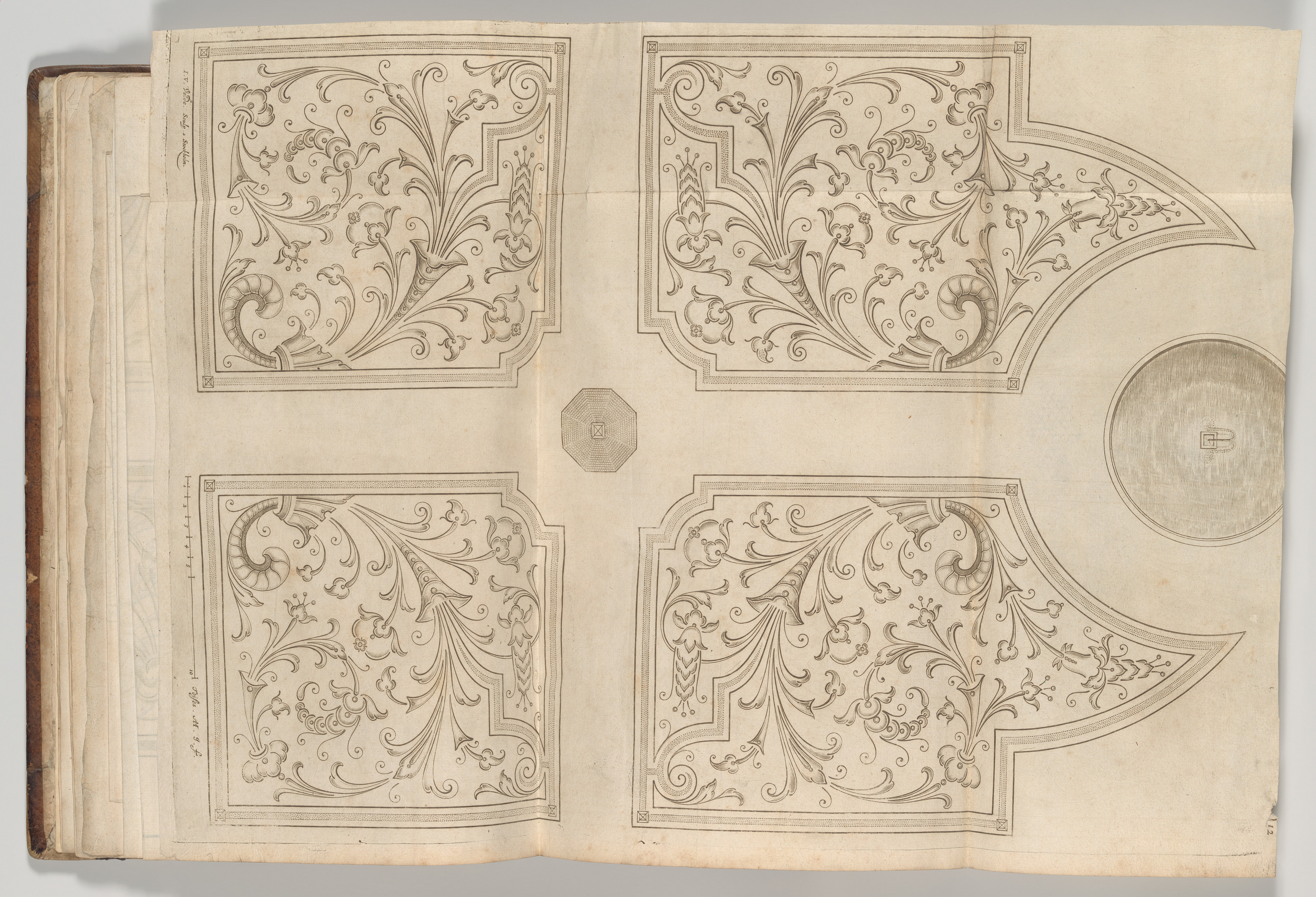
The Geometry of Prestige: A Couture Analysis of the Fountain and Parterre Engraving
In the rarefied world of high fashion, inspiration often transcends the textile and the silhouette, venturing into the realms of architecture, landscape design, and the decorative arts. For Katherine Fashion Lab, the study of a global heritage engraving depicting a fountain and four square parterres for a pleasure garden offers a profound lexicon of structure, symmetry, and controlled opulence. This is not merely a historical reference; it is a masterclass in the translation of spatial hierarchy into haute couture. The engraving, a standalone artifact of meticulous line and shadow, presents a blueprint for a collection that speaks to the power of order, the drama of water, and the luxury of cultivated nature.
The Parterre as Silhouette: Structured Symmetry and Geometric Rigor
The four square parterres, with their intricate knot gardens and clipped hedges, introduce the foundational principle of rigorous geometry. In couture, this translates directly into architectural silhouettes. The sharp, defined edges of the parterre beds become the clean lines of a tailored jacket or a sculptural A-line skirt. The repetitive, interlocking patterns of the boxwood hedging—often arabesques or complex scrolls—are reimagined as intricate jacquard weaves or intarsia knits. Each "square" of the parterre is not a mere block but a universe of micro-detail, mirroring the way a couture garment must be captivating both from a distance and in its closest inspection.
The symmetry of the design dictates a collection built on balance. A dress might feature a perfectly mirrored left and right side, with seams aligning to create a central axis, much like the central fountain. This is not a call for monotony, but for a dynamic equilibrium. The "pleasure" of the garden is found in the tension between the rigid structure and the organic growth of the plants. Similarly, a Katherine Fashion Lab garment might use a stiff, structured base of duchesse satin or faille, overlaid with delicate, almost rebellious embroidery that mimics the wilder, unclipped edges of a flowering parterre. The contrast between control and abandon becomes a core design tenet.
The Fountain as Focal Point: Fluid Drama and Ornamental Excess
At the heart of the engraving lies the fountain, a vertical exclamation point within the horizontal plane. In the context of fashion, the fountain represents the single, dramatic gesture. It is the focal point—the statement piece. The cascading water, captured in the engraving's fine lines as a series of arcs and splashes, inspires fluidity in fabric manipulation. Think of a gown with a train that pools and ripples like overflowing water, or a cape that drapes in layered, liquid folds of silk chiffon. The fountain's vertical thrust suggests a high, structured neckline or a dramatic, upwards-sweeping shoulder detail, drawing the eye upward and commanding attention.
The ornamentation of the fountain itself—often featuring carved figures, urns, or mythical beasts—becomes a source for embellishment and hardware. The engraved lines that define the stone carvings translate into intricate beadwork, metal thread embroidery, or laser-cut leather appliqués. A single, oversized brooch at the waist of a gown can echo the fountain's central, anchoring presence. The water, in its perpetual motion, inspires the use of movement and transparency. Layers of organza, tulle, and micro-pleated fabrics can mimic the shimmer and flow of a fountain's spray, creating a garment that seems to be in constant, gentle motion. The play of light and shadow on the engraved water lines is replicated through strategic use of sequins, cutouts, and sheer panels.
Global Heritage and Materiality: The Engraving as Textile
The medium of the engraving itself—a print on paper, a study in black and white—dictates a specific material palette. This is not a collection of pastels or floral prints. Instead, it is a study in monochrome and texture. The primary palette is black, white, and the entire spectrum of grey, from charcoal to silver. The challenge is to create depth and richness without relying on color. This is achieved through the tactile quality of the fabrics: the crispness of a starched cotton piqué to mimic the paper's surface, the matte finish of a heavy wool crepe for the stonework, and the high sheen of a liquid satin for the water.
The "global heritage" aspect of the engraving is not about a specific cultural costume, but about a universal language of power and leisure. The pleasure garden was a symbol of status, intellect, and control over nature. In fashion, this translates into a collection that exudes confident, understated luxury. The craftsmanship must be impeccable. Seams are not just functional; they are part of the design, echoing the engraved lines that define the parterre's borders. The construction is a visible testament to skill, much like the engraver's hand is visible in every stroke. The choice of materials—perhaps a rare, heavyweight silk faille, or a custom-milled wool—underscores the exclusivity and heritage of the design.
From Garden to Garment: The Standalone Study as a Capsule Collection
Viewing the engraving as a "standalone study" allows for a focused, edited approach. This is not a sprawling, multi-piece collection, but a capsule of eight to ten key looks, each a direct translation of a design element. The first look might be a parterre coat: a floor-length, double-breasted coat in black wool, with the lapels and pockets cut in precise, geometric shapes, and the entire surface embroidered in a monochrome, repeating arabesque pattern. The second look is the fountain gown: a column dress of white duchesse satin, with a dramatic, asymmetrical overskirt of layered, sheer organza that cascades from the left shoulder, creating the illusion of falling water. Beaded "droplets" are sewn into the organza, catching the light.
A third look could be a pleasure suit: a sharply tailored trouser suit in charcoal grey, with a single, oversized, sculptural shoulder that mimics the fountain's vertical thrust. The trousers are wide and fluid, like the water's basin. The accessories are equally architectural: a belt buckle shaped like a stylized urns, earrings that are miniature, cascading fountains of silver chain, and a clutch that is a perfect, rigid square, embossed with a parterre pattern. The footwear might feature a clear, sculptural heel that looks like a block of carved marble or a frozen water droplet.
The Strategic Vision: Positioning the Collection in the Modern Market
For Katherine Fashion Lab, this analysis is not merely academic. It is a strategic blueprint for a collection that speaks to the discerning, intellectual client. In an era of fast fashion and digital saturation, a collection rooted in the quiet authority of historical design and masterful craftsmanship offers a powerful point of differentiation. The narrative of the pleasure garden, the fountain, and the parterre is one of intentionality, patience, and a deep understanding of beauty. This resonates with a clientele seeking meaning and permanence in their wardrobe.
The marketing language would emphasize the "architectural rigor," the "monochrome elegance," and the "global heritage of leisure." The collection would be presented in a space that evokes the engraving itself—perhaps a stark, white gallery with precisely placed mirrors and a single, dramatic water feature. The pricing strategy would reflect the labor-intensive craftsmanship and exclusive materials, positioning the collection at the apex of the luxury market. The final message is clear: this is not fashion as decoration, but fashion as curated environment, a statement of control, and a celebration of the art of design itself. The fountain and parterre engraving, a silent study in geometry and flow, becomes a loud statement of prestige and unparalleled taste.