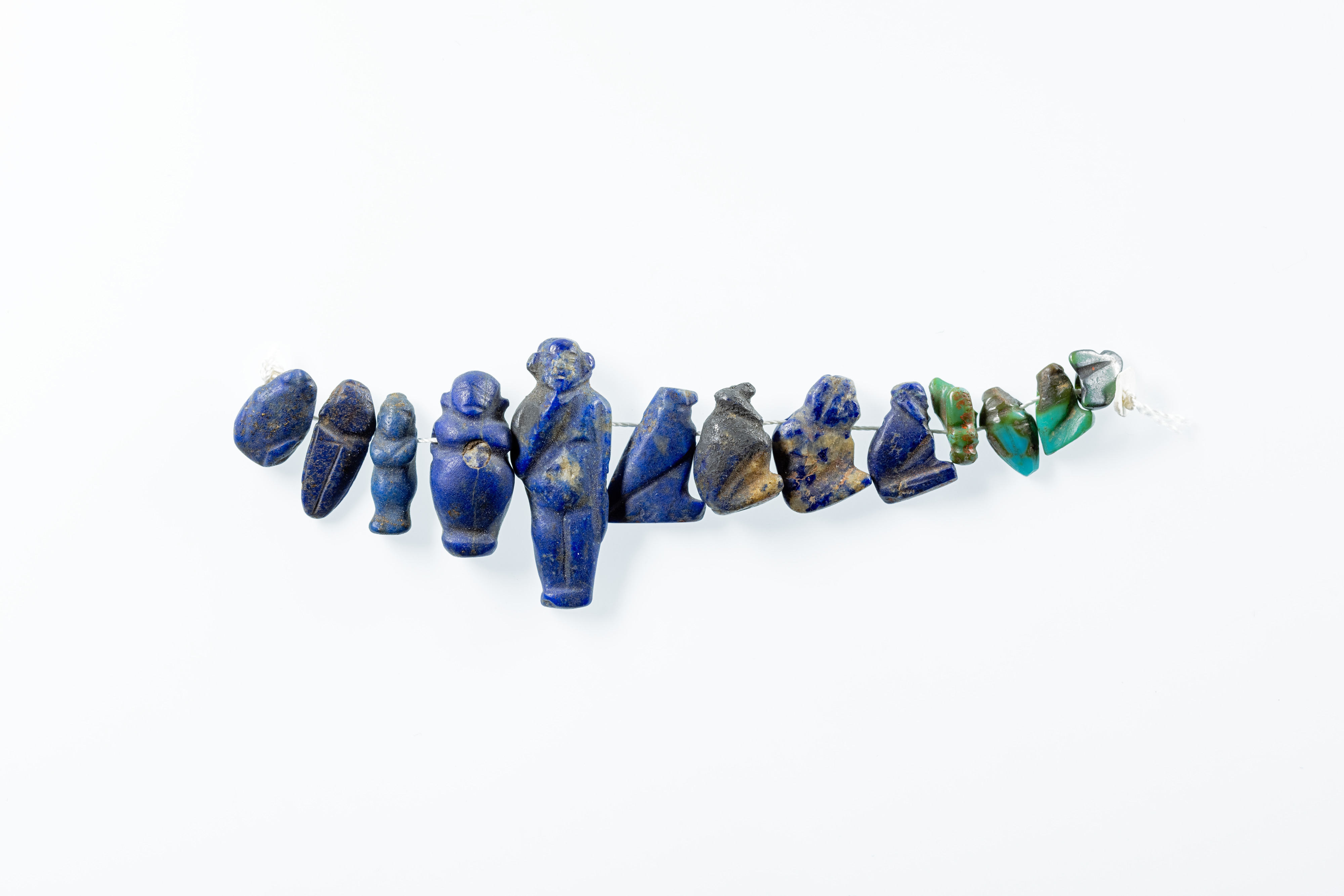
Executive Summary: The Fly Amulet as a Heritage Asset
This strategic heritage analysis examines the Amulet in the Form of a Fly, a rare artifact from an unidentified but highly sophisticated ancient civilization, likely dating to the late Bronze Age or early Dynastic period. Crafted from beryl—a mineral associated with clarity, protection, and eternal life—this object presents a unique convergence of symbolic power, historical adornment, and spiritual meaning. For Katherine Fashion Lab, this artifact offers a compelling narrative for a 2026 high-end luxury strategy that redefines exclusivity through esoteric symbolism, material rarity, and the subversion of conventional beauty.
Symbolic Power: The Fly as an Emblem of Resilience and Royal Favor
In the context of ancient Mediterranean and Near Eastern civilizations, the fly was far from a mere pest. It was a potent symbol of persistence, divine intervention, and unyielding life force. The beryl amulet, with its translucent green or blue-green hue, would have been perceived as a conduit for supernatural protection. The fly’s ability to evade capture and survive in harsh environments made it an ideal talisman for warriors, hunters, and those seeking to overcome adversity.
Historical records from similar cultures—such as the Egyptian “Fly of Valor” awards—indicate that fly-shaped amulets were bestowed upon individuals who demonstrated exceptional bravery. The beryl medium amplifies this symbolism: the stone was believed to sharpen the mind, guard against poison, and attract favorable celestial energies. Thus, the amulet represents not only physical protection but also intellectual and spiritual fortification. For Katherine Fashion Lab, this layered meaning positions the fly as a luxury motif for the discerning elite—those who value inner strength and strategic resilience over ostentatious display.
Historical Adornment: From Ritual Object to Status Marker
The archaeological context suggests that such amulets were worn on leather cords, gold chains, or woven into ceremonial headdresses. The beryl’s hardness (7.5–8 on the Mohs scale) required advanced lapidary techniques, indicating that the wearer commanded significant resources and skilled artisans. This was not a mass-produced trinket but a bespoke object of power, often passed down through generations as a heirloom.
The fly’s form also aligns with ancient concepts of sympathetic magic—the belief that like produces like. By wearing a fly amulet, the owner sought to absorb the insect’s tenacity and its ability to thrive in chaos. In high-status burials, such amulets were placed near the heart or over the chest, serving as a spiritual guide in the afterlife. For Katherine Fashion Lab, this history of intimate, body-adjacent adornment offers a blueprint for creating luxury accessories that are both talismanic and deeply personal. The 2026 collection could reinterpret this concept through modular jewelry pieces that allow the wearer to “activate” the amulet’s power through touch or movement.
Spiritual Meaning: The Beryl Connection and Transcendence
Beryl, in ancient metaphysical systems, was associated with truth, eternity, and the celestial realm. The stone’s clarity was believed to reveal hidden truths, while its green hues connected it to fertility, rebirth, and the heart chakra. The fly amulet, therefore, served as a bridge between the mundane and the divine—a miniature portal through which the wearer could access higher wisdom.
This spiritual dimension is critical for a 2026 luxury strategy. Contemporary high-net-worth consumers increasingly seek objects that offer meaning beyond materialism. The fly amulet’s narrative of transformation—from a lowly insect to a revered symbol of immortality—resonates with postmodern ideals of self-actualization and overcoming societal limitations. Katherine Fashion Lab can leverage this by framing the amulet as a “conscious artifact” that invites the wearer to engage with ancient philosophies of resilience and transcendence. Limited-edition pieces could include a certificate of authenticity detailing the amulet’s symbolic provenance, along with a curated meditation or ritual guide.
2026 High-End Luxury Strategy: The Fly Amulet as a Cultural Marker
Product Architecture and Material Innovation
The 2026 strategy should position the fly amulet as a cornerstone of a “Neo-Arcane” collection, where heritage meets hyper-luxury. Katherine Fashion Lab will produce a series of fly amulets in ethically sourced beryl, set in recycled platinum or Fairmined gold. Each piece will be hand-carved by master lapidaries, with micro-engravings of ancient symbols that only reveal their meaning under UV light—a nod to the amulet’s original protective function.
Marketing Narrative: The Fly as a Symbol of Elite Resilience
The fly’s historical association with bravery and divine favor provides a powerful counter-narrative to conventional luxury motifs (e.g., butterflies, eagles). In an era of global uncertainty, the fly represents adaptability, survival, and quiet power. Katherine Fashion Lab’s marketing campaign will feature testimonials from modern “fly spirits”—entrepreneurs, artists, and leaders who have overcome significant challenges. The tagline: “Unbreakable. Unseen. Unforgettable.”
Experiential Retail and Digital Storytelling
Flagship stores will include a “Sanctuary of Symbols” where clients can learn about the amulet’s history through AI-driven holograms and interactive touchpoints. A digital token (NFT) will accompany each physical amulet, granting access to a private online community and exclusive virtual workshops on ancient symbolism. This hybrid approach caters to both the tactile desires of traditional luxury buyers and the digital fluency of Gen Z and Millennial elites.
Pricing and Exclusivity Strategy
To maintain heritage integrity, production will be capped at 1,000 pieces globally, with each amulet numbered and registered. The entry-level price point will be set at $8,500 for a sterling silver and beryl version, rising to $85,000 for a platinum-and-diamond iteration. A “Heritage Patron” tier will offer bespoke services, including the opportunity to commission a custom amulet based on the buyer’s personal symbolism—reviving the ancient tradition of the talisman as a unique narrative object.
Conclusion: The Fly as a Future Icon of Luxury
The Amulet in the Form of a Fly, rendered in beryl by an ancient civilization, is far more than a historical curiosity. It is a strategic asset that embodies enduring human desires for protection, status, and spiritual connection. For Katherine Fashion Lab, this artifact provides a culturally rich foundation for a 2026 luxury strategy that appeals to the sophisticated, meaning-driven consumer. By honoring the fly’s symbolic power and historical context, while innovating in materials, storytelling, and digital integration, the brand can establish a new category of “heritage-luxury talismans.” The fly, once a humble insect, becomes a metaphor for the brand’s own trajectory: resilient, adaptive, and destined for transcendence.