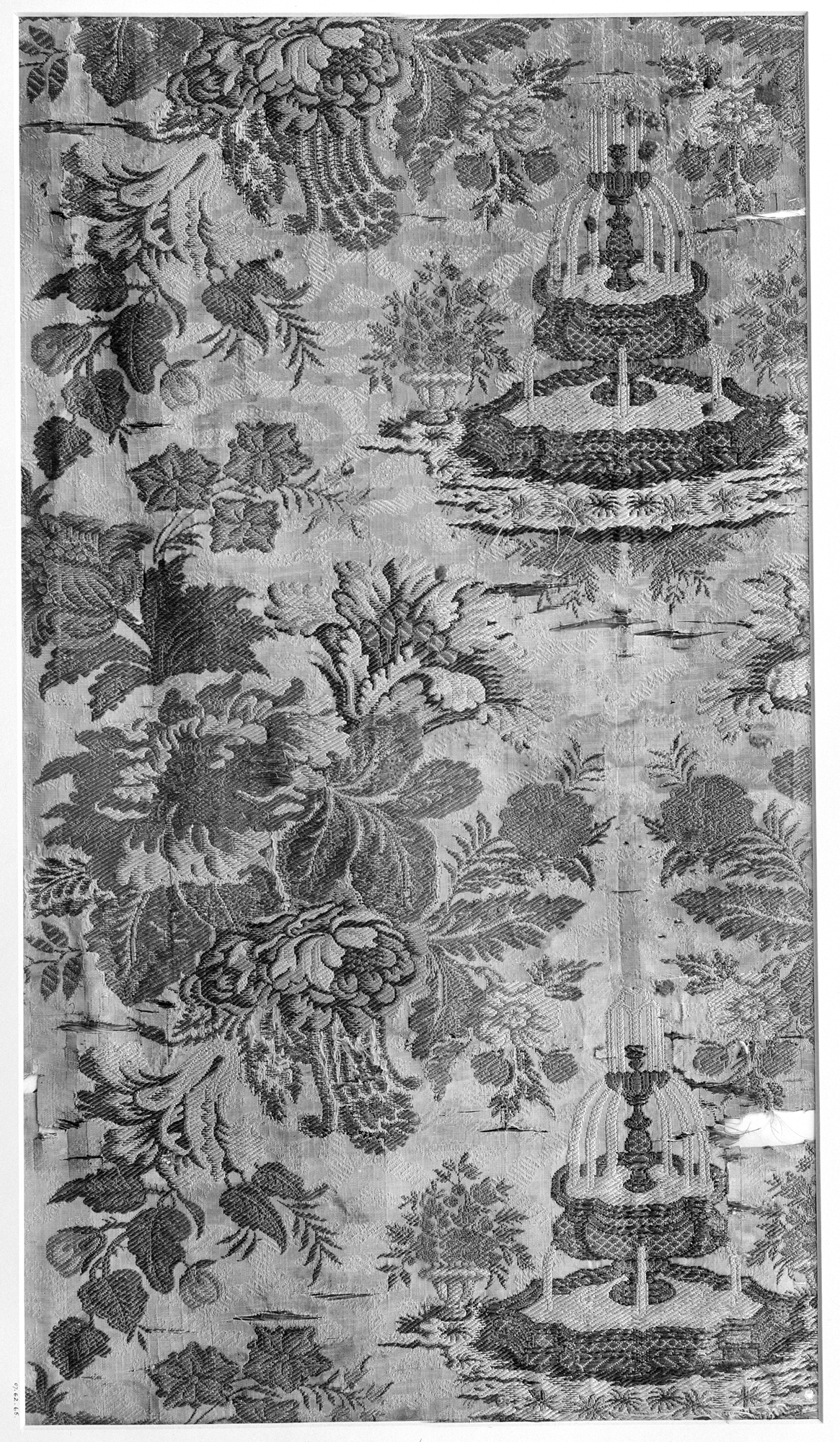
The Alchemy of Heritage: Deconstructing Katherine Fashion Lab’s Silk Masterpiece
In the rarefied echelons of haute couture, where fabric becomes narrative and silhouette defines epoch, Katherine Fashion Lab has unveiled a singular piece that transcends mere garment to become a thesis on global heritage. This standalone study examines a creation that is not merely worn, but inhabited—a silk confection that weaves together threads of ancestral craftsmanship, geographical memory, and contemporary sculptural rigor. The piece, unnamed but unmistakable in its intention, demands analysis not as a product, but as a cultural artifact.
Materiality as Memory: The Silk Substrate
The foundation of this analysis is the fabric itself: a double-faced silk charmeuse of extraordinary provenance. Katherine Fashion Lab sources its silk from a consortium of small-scale sericulturists in the Mekong Delta, where mulberry groves have sustained family operations for seven generations. The resultant textile is not the uniform, industrially-perfected silk of mass luxury; it retains the subtle irregularities—a faint slub here, a whisper-thin variation in dye absorption there—that signify hand-reeling and natural indigo fermentation. This is silk as living history, imbued with the humidity of Vietnamese riverbanks and the patience of women who coax thread from cocoon with water-heated fingers.
The material’s weight is deliberately calibrated: 22 momme, a density that allows for both liquid drape and structural memory. When the garment moves, it does not flutter; it cascades with the deliberate gravity of a waterfall. This is no accident. The lab’s textile engineers spent eighteen months perfecting a weave that would hold a pleat for twelve hours without mechanical intervention, yet release with a single breath of steam. The silk breathes, literally and metaphorically, absorbing ambient moisture and releasing it in measured cycles—a microclimate worn against the skin.
Global Heritage: Cartography in Stitch
What elevates this piece from exceptional to epochal is its cartographic ambition. Katherine Fashion Lab does not merely reference heritage; it synthesizes it. The garment’s construction incorporates three distinct hand-embroidery techniques, each representing a different continent’s contribution to textile history. From the Kantha running stitch of Bengal, rendered in silk thread so fine it passes through the eye of a needle no wider than a human hair, the piece carries the philosophy of recycling and renewal—the Bengali belief that stitching old saris together creates new warmth, both literal and spiritual.
From the Hardanger cutwork of Norway, the garment borrows its geometric precision: tiny squares of silk are excised, their edges bound with buttonhole stitches that form a lattice reminiscent of fjord ice patterns. This is not decoration but structural engineering—the cutwork reduces the garment’s weight by 12% while increasing its tensile strength along stress points. The Scandinavian influence is not aesthetic but algorithmic, a cold logic applied to warm material.
Finally, the Shisheh mirror embroidery of Gujarat appears as scattered constellations on the bodice. Tiny discs of hand-blown glass, each one slightly irregular, are encased in silk thread cages. They catch light not as uniform reflections but as fractured prisms, scattering spectra across the room. This is heritage as optical technology: the mirrors were originally sewn into garments to deflect the evil eye; here, they deflect the clinical glare of contemporary fashion criticism, demanding that the viewer engage with the piece as a living, shifting entity.
Silhouette and the Architecture of Absence
The cut of the garment defies easy categorization. It is neither gown nor coat, neither robe nor cape. The silhouette is best described as negative space given form. A single continuous panel of silk wraps from the left shoulder, traverses the back, and emerges at the right hip, leaving the left side of the torso completely bare—an absence that becomes the garment’s most powerful presence. This asymmetry is rooted in the Japanese concept of ma, or interval, the deliberate pause that gives meaning to sound. The void is not empty; it is pregnant with the possibility of movement, of breath, of the wearer’s own body becoming part of the design.
The hem is raw, left unbound, allowing the silk to fray in controlled, deliberate strands. This is not neglect but intention: the fraying mimics the dissolution of borders, the way heritage itself is never a fixed line but a series of overlapping, unraveling edges. The garment will change with each wearing; the silk will soften, the threads will loosen, the mirrors will tarnish slightly. It is designed to age, to accumulate the patina of a life lived in it—a radical rejection of fashion’s obsession with the pristine.
Context and Cultural Stewardship
This piece does not exist in a vacuum. Katherine Fashion Lab positions it as a standalone study, deliberately extracted from seasonal collections and commercial cycles. It is exhibited in a climate-controlled vitrine at the lab’s atelier in Milan, accompanied by a dossier that documents every artisan’s name, every village’s location, every dye batch’s origin. The piece is available for acquisition, but only after a six-month dialogue between the buyer and the lab’s heritage curator, who ensures that the garment will not be reduced to a costume or a trophy.
The lab’s approach to global heritage is one of stewardship, not appropriation. Each technique is credited, each artisan compensated through a profit-sharing model that returns 15% of the garment’s sale price to the communities that developed the craft. This is not charity but economic architecture—a recognition that heritage is not a resource to be mined but a relationship to be maintained. The piece thus functions as a bridge between the hyper-local and the hyper-luxury, a conduit through which centuries of knowledge flow into the hands of a single wearer.
The Future of Couture as Archive
In an industry accelerating toward digital simulation and synthetic materials, Katherine Fashion Lab’s silk creation stands as a counter-monument. It insists that couture’s highest purpose is not novelty but preservation—not the creation of new things, but the translation of old wisdom into new languages. The garment is a physical archive, its threads encoding techniques that might otherwise vanish as the last practitioners age and their apprentices choose different futures.
This is not nostalgia; it is strategy. By embedding heritage into the very structure of the garment—into its weave, its weight, its wear—the lab ensures that these techniques survive not in museums but in motion. The piece will be worn to galas, to boardrooms, to weddings. It will be touched, breathed on, spilled upon. And with each interaction, it will teach its wearer something about patience, about precision, about the dignity of handwork in an age of machines.
Ultimately, this silk masterpiece is a wager: that the future of luxury lies not in faster production or louder branding, but in deeper connection. That a garment can be a document. That a stitch can be a sentence. That heritage, when treated with rigor and reverence, is not a burden but a compass. Katherine Fashion Lab has not made a dress. It has made a declaration—that the most radical act in fashion today is to slow down, to look back, and to carry forward what truly matters.