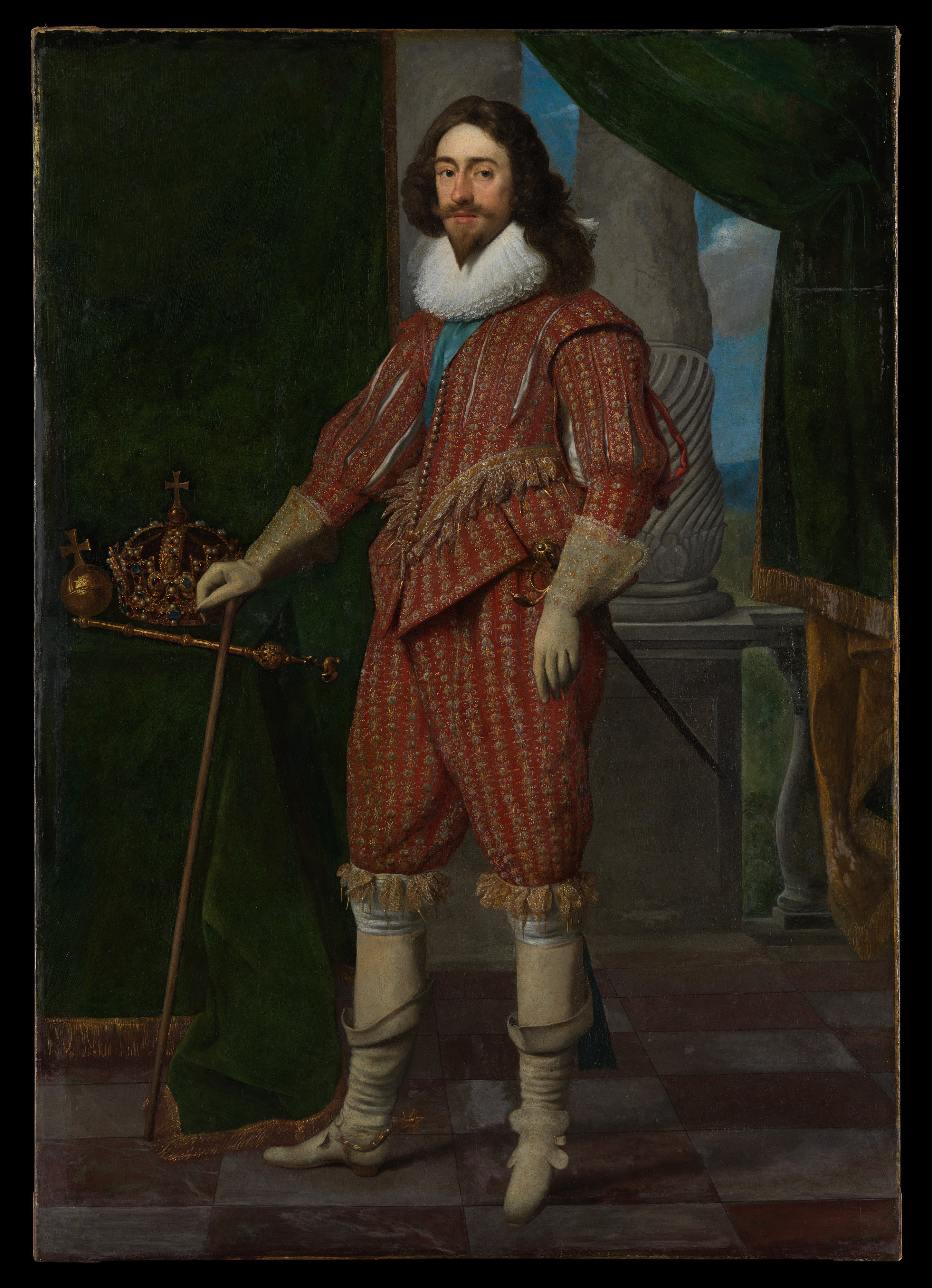
Executive Heritage Analysis: Charles I and the Reclamation of Sovereign Adornment
This paper presents a strategic heritage analysis of Charles I (1600–1649), King of England, as depicted in oil on canvas, for the purpose of informing Katherine Fashion Lab’s 2026 high-end luxury strategy. The analysis is conducted through the lens of symbolic power, historical adornment, and spiritual meaning, treating the monarch’s portrait not merely as a historical artifact but as a living lexicon of authority and transcendence. For a luxury house seeking to differentiate in an increasingly commoditized market, the visual language of Charles I offers a potent, untapped reservoir of aristocratic symbolism and enduring craftsmanship.
Symbolic Power: The Monarchical Gaze as Brand Authority
In the oil-on-canvas depictions of Charles I—most famously by Anthony van Dyck—the king is never merely present; he is a carefully constructed emblem of divine right. The strategic positioning of his body, often in a slight contrapposto, communicates effortless command. His gaze, direct yet detached, establishes a hierarchy between subject and viewer. This is not a democratic engagement; it is a unilateral assertion of power.
For Katherine Fashion Lab, this symbolic power translates directly into brand positioning. In a 2026 luxury landscape where “quiet luxury” often risks becoming invisible, the Charles I archetype offers an alternative: declarative authority without vulgarity. The king’s sartorial restraint—dark silks, minimal jewelry, yet unmistakable presence—provides a template for a luxury collection that communicates status through composition and material integrity rather than overt branding. The symbolic lesson is clear: true power does not shout; it occupies space with intention.
The Iconography of the Medal and the Garter
Van Dyck’s portraits consistently feature the Lesser George, the jewel of the Order of the Garter, suspended from a blue ribbon. This is not decoration; it is a visual contract of loyalty and hierarchy. The medallion, bearing the image of St. George slaying the dragon, functions as a heraldic anchor, grounding the king’s temporal authority in chivalric and spiritual tradition. For luxury strategy, this suggests the power of a signature talisman—a single, meaningful object that carries the weight of a house’s narrative. Katherine Fashion Lab could consider a signature medallion or brooch woven into each collection, serving as a silent, repeatable emblem of lineage and protection.
Historical Adornment: The Armor of Silk and Steel
Charles I’s attire in his state portraits is a masterclass in the semiotics of fabric. His doublets are often of black silk or satin, meticulously tailored to reveal the body’s form without effeminacy. The collar—the iconic “Van Dyck” lace collar—is a paradox: it is the most delicate element of the ensemble, yet it frames the face of absolute authority. The lace, imported from Flanders, was a statement of global trade networks and economic power. The king’s boots, often of soft Spanish leather, imply readiness for action even in repose.
This historical adornment offers three strategic pillars for 2026 luxury:
- Material Provenance: The use of rare, traceable materials (e.g., black silk from a specific Italian mill, lace handcrafted in a single atelier) can mirror the exclusivity of Charles I’s wardrobe. Consumers in 2026 will increasingly demand material storytelling—the ability to trace a garment’s origin as one traces a royal lineage.
- Tailoring as Armor: The precision of the king’s silhouette—neither loose nor constricting—suggests a new luxury silhouette for Katherine Fashion Lab: structured ease. Garments that fit with mathematical exactitude but allow for fluid movement, communicating readiness and refinement.
- The Collar as Signature: The lace collar, reimagined in modern materials (e.g., laser-cut leather or metallic mesh), could become a house code—a recurring architectural detail on necklines, cuffs, or even accessories. This is not historical pastiche but symbolic extraction.
Spiritual Meaning: The Sacred Body and the Divine Right of Luxury
Charles I’s reign was predicated on the doctrine of the divine right of kings—the belief that his authority was ordained by God. In his portraits, this spiritual dimension is rendered through light and color. Van Dyck often bathes the king’s face in a soft, almost celestial glow, while the background recedes into shadow. The effect is that of a sacred relic being presented for veneration. The king’s hand, often resting on a table or the pommel of a sword, is rendered with a delicate, almost priestly stillness.
For a luxury house, this spiritual dimension translates into the ritual of dressing. In a 2026 context, where consumers are seeking meaning beyond material accumulation, the act of wearing a Katherine Fashion Lab garment can be framed as a ceremony of self-sovereignty. The collection becomes a set of vestments for the modern individual who claims authority over their own life. The spiritual meaning of Charles I’s image—the fusion of mortal body with immortal authority—can be translated into a brand philosophy: luxury as a consecration of the self.
The Palette of Devotion
The color palette of Charles I’s portraits is deliberately restrained: blacks, deep blues, silver, and the occasional flash of royal crimson. This is not austerity; it is chromatic discipline. Each color carries weight: black for solemnity and eternity, blue for constancy, silver for purity of intent. For Katherine Fashion Lab’s 2026 collection, a limited palette of three to five “sovereign colors” could create immediate visual recognition and a sense of timelessness. These colors should be proprietary—dyed exclusively for the house, with names referencing the heritage (e.g., “Charles Black,” “Van Dyck Blue”).
2026 High-End Luxury Strategy: The Sovereign Collection
Based on this heritage analysis, the following strategic recommendations are proposed for Katherine Fashion Lab’s 2026 high-end luxury line:
1. The Sovereign Silhouette
Develop a core silhouette inspired by the king’s doublet and boot combination: a fitted, high-neck upper body piece (jacket, bodice, or coat) paired with a clean, elongated lower line. This silhouette should be architectural yet wearable, serving as the collection’s foundational shape. Every garment in the line should reference this silhouette, creating a cohesive visual identity.
2. The Talisman Object
Introduce a single, repeatable accessory—a medallion, brooch, or ring—that features a proprietary emblem (e.g., a stylized dragon or lion). This object should be offered in limited editions, with a certificate of authenticity that traces its materials and craftsmanship. The talisman becomes a portable heritage artifact, linking the wearer to the brand’s narrative of sovereign power.
3. The Ritual of Presentation
Align the collection’s launch with a curatorial experience. Rather than a traditional fashion show, present the garments in a gallery-like setting, with each piece displayed as a portrait. Use lighting and composition that echoes Van Dyck’s chiaroscuro, emphasizing the sacrality of the object. Invite clients to private viewings by appointment, reinforcing exclusivity and reverence.
4. Material Lineage
Partner with a single, historic European textile mill (e.g., a silk weaver in Lyon or a lace maker in Calais) to produce exclusive fabrics for the collection. Each garment should include a material provenance tag, detailing the origin of every thread and button. This aligns with the 2026 consumer’s demand for transparency and craftsmanship.
Conclusion: The King as Brand Archetype
Charles I, in his oil-on-canvas incarnations, offers Katherine Fashion Lab a complete archetype for 2026 high-end luxury: authority without aggression, adornment without excess, and spirituality without dogma. His image is a reminder that true luxury is not about accumulation but about the deliberate curation of presence. By extracting the symbolic power, historical adornment, and spiritual meaning from this heritage subject, Katherine Fashion Lab can create a collection that speaks to the modern sovereign—the individual who commands their own domain with grace, precision, and an unshakable sense of self. In a market saturated with nostalgia and trend-chasing, the Charles I heritage analysis provides a roadmap to timeless, transcendent luxury.