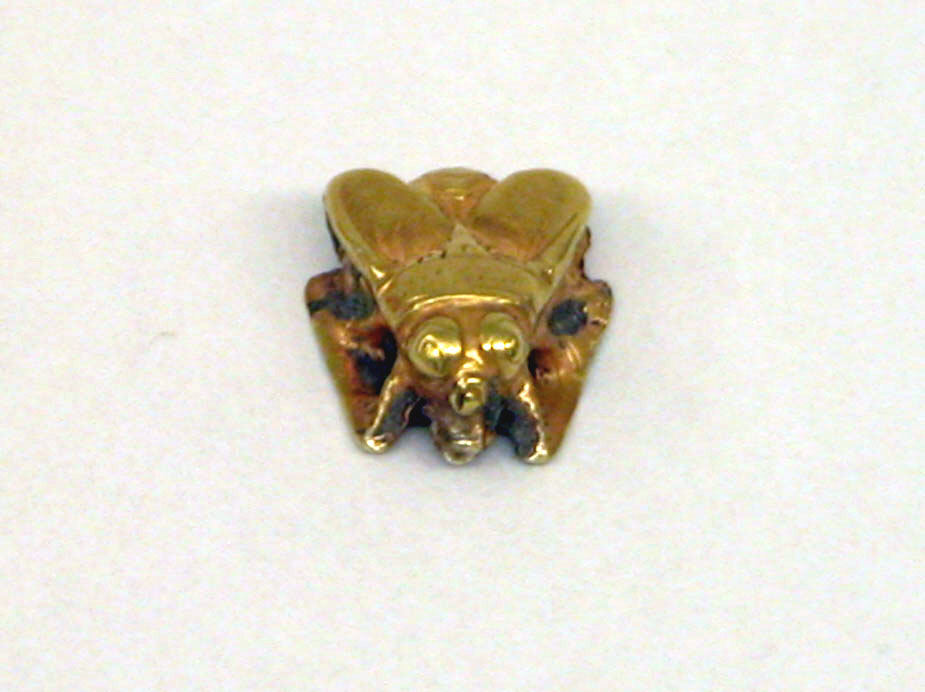
Heritage Analysis: The Golden Bee Ornament of Java
Introduction: The Bee as a Cross-Cultural Emblem of Power and Continuity
The subject of this analysis—a gold ornament in the shape of a bee from Java, Indonesia—represents a profound convergence of symbolic power, historical adornment, and spiritual meaning. Within the research framework of Katherine Fashion Lab, this artifact resonates deeply with our ongoing study of the Mirror with Split-Leaf motif, which juxtaposes the luminous, reflective surface of a silver mirror inlaid with gold palm leaves against the narrative stillness of a sarcophagus carved in bas-relief. The bee, as a golden emblem, bridges these dualities: it is at once a creature of light and industry, and a symbol of eternal life, decay, and regeneration. This paper will examine the bee ornament’s heritage significance and propose a strategic pathway for its integration into a 2026 high-end luxury narrative.
Symbolic Power: The Bee as Sovereign and Spiritual Mediator
In Javanese cosmology, the bee holds a place of elevated reverence. Historically, the bee was associated with royalty, divine favor, and the soul’s journey. In pre-Islamic Hindu-Buddhist kingdoms such as Majapahit, the bee symbolized the king’s wisdom and the harmonious order of the universe—a concept known as Ratu Adil, or the Just King. The bee’s role as a pollinator, bridging flower and fruit, mirrored the sovereign’s duty to connect the earthly realm with the divine. The gold medium amplifies this symbolism: gold, in Javanese tradition, is not merely a precious metal but a material imbued with wahyu—a divine radiance that legitimizes rule and protects the wearer from malevolent forces.
This symbolic power aligns with our Mirror with Split-Leaf study, where the gold palm leaves on the silver mirror represent the eternal cycle of life and death. The bee, like the split-leaf, is a threshold symbol—it moves between the living world of flowers and the hidden world of the hive, much as the mirror reflects the surface while the sarcophagus narrates the depths. For luxury strategy, the bee ornament can be positioned as an emblem of enlightened leadership, appealing to clients who seek not just adornment but a talisman of purpose and legacy.
Historical Adornment: Gold as a Marker of Status and Spiritual Protection
Historically, golden bee ornaments in Java were worn by nobility and high priests during court ceremonies and funerary rites. These pieces were often affixed to headdresses, necklaces, or belts, serving both as markers of status and as protective amulets. The Javanese belief in kasunyatan—the ultimate reality that transcends physical form—meant that gold objects were not merely decorative but were considered vessels for ancestral spirits. The bee, specifically, was thought to guide the soul after death, ensuring a safe passage to the afterlife.
This dual function—adornment and spiritual protection—resonates with the Mirror with Split-Leaf dichotomy. The mirror, polished silver, captures the ephemeral beauty of the living; the sarcophagus, carved in stone, holds the eternal narrative of the deceased. The gold bee ornament, when worn, becomes a third element: a living, mobile artifact that connects the wearer to both realms. For Katherine Fashion Lab, this historical context offers a rich narrative for 2026 collections. We can design pieces that honor this duality—gold bee motifs embedded in reversible or transformable jewelry, where one side reflects the light of the present and the other reveals the depth of heritage.
Spiritual Meaning: The Bee as a Soul-Emblem and Cosmic Weaver
In Javanese mysticism, the bee is also a symbol of the soul’s industrious journey toward enlightenment. The hive represents the cosmos, with each bee contributing to a greater, unseen order. This aligns with the concept of manunggaling kawula Gusti—the union of the servant and the Lord—where the individual soul seeks to merge with the divine. The bee’s golden form, therefore, is not just an ornament but a meditative tool, reminding the wearer of their place in the cosmic web.
This spiritual dimension is particularly relevant to high-end luxury consumers in 2026, who increasingly seek meaning beyond material wealth. The bee ornament, when contextualized within Javanese philosophy, offers a narrative of purposeful craftsmanship, ecological harmony, and spiritual depth. Our Mirror with Split-Leaf study similarly emphasizes the tension between surface reflection and inner narrative. The bee, as a golden emblem, resolves this tension by embodying both: its shimmering exterior attracts the eye, while its symbolic weight invites contemplation.
2026 High-End Luxury Strategy: DNA Correlation and Brand Positioning
To translate this heritage into a 2026 luxury strategy, Katherine Fashion Lab must leverage the DNA correlation between the bee ornament and our Mirror with Split-Leaf research. The bee’s golden radiance and its dual role as a life-affirming and death-guiding symbol create a powerful brand story. We recommend the following strategic pillars:
Pillar One: Artisanal Authenticity and Material Storytelling
Position the gold bee ornament as a masterpiece of Javanese lost-wax casting, a technique that dates back over a millennium. Each piece should be accompanied by a detailed provenance card, explaining the symbolic meaning and the artisan’s lineage. This aligns with the luxury consumer’s growing demand for transparency and cultural respect. The gold should be ethically sourced, with a narrative that ties the metal’s journey from mine to altar to wearer.
Pillar Two: Transformative Design Language
Inspired by the Mirror with Split-Leaf’s dual surfaces, the bee ornament can be reimagined as convertible jewelry. For example, a bee-shaped brooch that opens to reveal a miniature mirror on one side and a carved narrative on the other. This design invites the wearer to engage with the piece as a personal ritual object, not just an accessory. The 2026 collection could be titled “The Golden Hive: Between Reflection and Eternity.”
Pillar Three: Experiential Luxury and Spiritual Resonance
Offer curated experiences for clients, such as private viewings of Javanese gold artifacts or guided meditations on the bee’s symbolism. This elevates the brand from a purveyor of objects to a custodian of cultural wisdom. The bee ornament becomes a gateway to a deeper understanding of life, death, and legacy—values that resonate with the high-net-worth individual seeking authenticity and transcendence.
Conclusion: The Bee as a Strategic Emblem for 2026
The golden bee ornament of Java is not merely a historical curiosity; it is a potent symbol of power, continuity, and spiritual purpose. Its DNA correlation with our Mirror with Split-Leaf study reveals a shared narrative of duality—light and shadow, life and death, surface and depth. For Katherine Fashion Lab, this artifact offers a unique opportunity to create a 2026 luxury collection that is both culturally grounded and commercially visionary. By honoring the bee’s symbolic power, historical adornment, and spiritual meaning, we can craft a brand story that resonates with the discerning consumer of the future: one who seeks not just beauty, but meaning; not just gold, but golden wisdom.