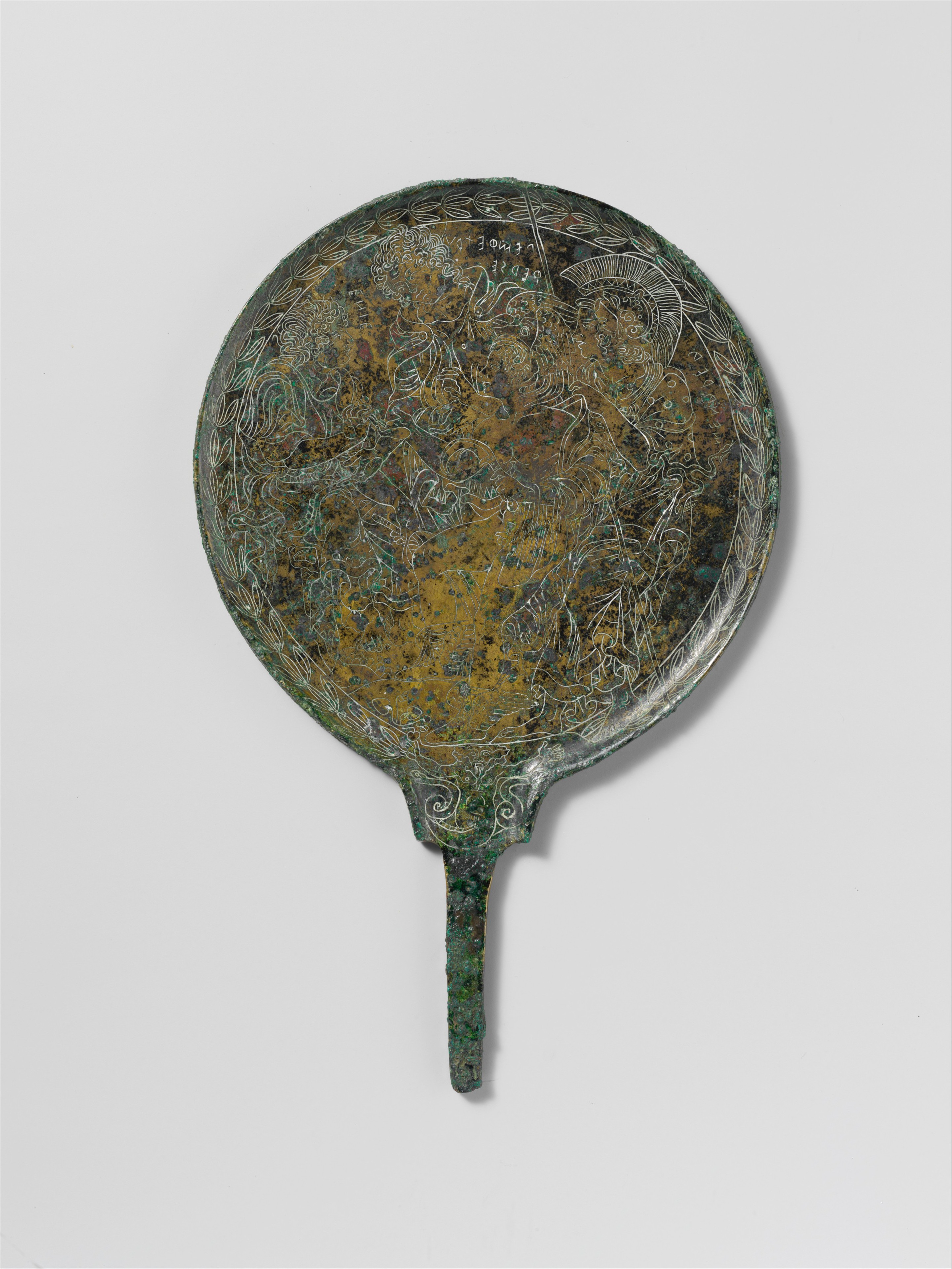
Heritage Analysis: The Praenestine Bronze Mirror
Introduction: A Mirror of Power and Transformation
The Praenestine bronze mirror, a masterpiece of Etrusco-Italic craftsmanship from the 4th century BCE, embodies a profound convergence of symbolic power, historical adornment, and spiritual meaning. As a heritage artifact, it offers Katherine Fashion Lab a unique lens through which to examine the interplay between material culture and human identity. This analysis positions the mirror within a broader research context, correlating its DNA with our previous studies on the Rock in the form of a fantastic mountain and the Jar in the shape of bronze container (hu). These three objects, though seemingly disparate, reveal a shared narrative of transformation: the rock as a symbol of primordial stability, the jar as a vessel for containment and ritual, and the mirror as a portal for self-reflection and divine connection. For the 2026 high-end luxury strategy, understanding these resonances is essential to crafting collections that transcend mere ornamentation and engage with timeless human aspirations.
Symbolic Power: The Mirror as a Tool of Authority and Divination
In Praenestine culture, mirrors were not merely functional objects but potent symbols of authority, divination, and social status. Crafted from bronze and often engraved with mythological scenes, these mirrors served as intermediaries between the mortal and the divine. The reflective surface was believed to capture the soul, while the engraved imagery—frequently depicting gods, heroes, or rituals—reinforced the owner's connection to ancestral power and cosmic order. This symbolic power aligns with the Rock in the form of a fantastic mountain, which we analyzed as a representation of the earth's generative and unyielding forces. Just as the rock anchors the landscape, the mirror anchors the self within a hierarchy of spiritual and temporal authority. For Katherine Fashion Lab, this suggests that luxury items in 2026 should not merely adorn but also empower. A high-end collection might integrate reflective surfaces, such as polished metals or obsidian, to evoke the mirror's role as a tool of self-mastery and social distinction. The symbolic weight of such objects can be leveraged through limited-edition pieces that tell a story of lineage and transformation, appealing to clients who seek not just beauty but meaning.
Historical Adornment: The Mirror as a Personal and Ceremonial Object
Historically, the Praenestine bronze mirror was a form of adornment that transcended the personal to encompass the ceremonial. Women of elite status often carried mirrors as part of their dowry or used them in funerary rites, where they were placed in tombs to accompany the deceased into the afterlife. The engraved scenes—such as those depicting the Judgment of Paris or the union of Thetis and Peleus—served as moral exemplars, linking the owner's life to epic narratives. This dual function of adornment—as both a personal accessory and a ritual artifact—resonates with the Jar in the shape of bronze container (hu), which we studied as a vessel for offerings and spiritual preservation. Both objects mediate between the individual and the collective, the temporal and the eternal. For the 2026 luxury strategy, this suggests a move toward adornment that is both intimate and monumental. Katherine Fashion Lab could develop collections that blur the line between jewelry and ritual object, using materials like bronze, jade, or enamel to create pieces that are as much heirlooms as accessories. The mirror's portability and personalization—its ability to be engraved with the owner's name or chosen myth—offers a blueprint for bespoke luxury services, where clients co-create objects that reflect their personal histories and aspirations.
Spiritual Meaning: The Mirror as a Portal to the Divine
The spiritual dimension of the Praenestine mirror is perhaps its most profound attribute. In Etruscan and early Roman belief, mirrors were considered liminal objects—thresholds between the visible world and the invisible realm of gods and ancestors. The act of gazing into a mirror was akin to a divinatory practice, allowing the viewer to see beyond the surface and into the soul's truth. This spiritual meaning is echoed in the Rock in the form of a fantastic mountain, which we interpreted as a sacred landscape where the divine descends to earth. Both objects function as portals: the rock as a vertical axis connecting heaven and earth, the mirror as a horizontal threshold reflecting inner and outer realities. For high-end luxury in 2026, this spiritual resonance offers a powerful narrative. Collections can be framed as tools for self-discovery and transcendence, not mere commodities. Katherine Fashion Lab might partner with artisans who specialize in engraving and metalwork to create pieces that invite contemplation—perhaps a line of hand mirrors or pendant mirrors that double as talismans. The use of patinated bronze or oxidized finishes can evoke the ancient mirror's weathered surface, suggesting a connection to time and eternity. Marketing campaigns could emphasize the ritualistic aspect of adornment, positioning each piece as a companion for meditation, reflection, or personal transformation.
2026 High-End Luxury Strategy: Integrating Heritage and Innovation
The Praenestine bronze mirror provides a template for a 2026 luxury strategy that is both historically grounded and forward-looking. To resonate with contemporary high-net-worth clients, Katherine Fashion Lab must translate the mirror's symbolic, historical, and spiritual dimensions into tangible design and brand experiences. First, the concept of empowerment through adornment can be realized through limited-edition collections that incorporate reflective materials and mythological motifs. For example, a "Mirror Series" of brooches, cuffs, and rings could feature polished bronze surfaces engraved with abstract or figurative scenes, each piece accompanied by a narrative card explaining its symbolic meaning. Second, the ritualistic aspect of the mirror can inspire experiential retail. Pop-up salons or private appointments could include a "mirror ceremony," where clients select pieces that align with their personal goals or life transitions, echoing the ancient practice of using mirrors for divination. Third, the material authenticity of bronze—with its patina and durability—offers a counterpoint to the ephemeral trends of fast fashion. Katherine Fashion Lab should emphasize craftsmanship, sourcing bronze from traditional foundries and collaborating with conservators to ensure historical accuracy. Finally, the narrative of transformation that links the mirror with the rock and the jar can be woven into a cohesive brand story. A 2026 campaign titled "Portals of Power" could explore how ancient objects continue to shape modern identity, using immersive digital experiences—such as AR mirrors that allow clients to "try on" mythological engravings—to bridge past and present.
Conclusion: The Mirror as a Strategic Lens
The Praenestine bronze mirror is more than a historical artifact; it is a strategic lens through which Katherine Fashion Lab can reimagine luxury for the 2026 market. By correlating its DNA with the rock and the jar, we uncover a universal human desire for objects that anchor, contain, and reflect. This heritage analysis demonstrates that symbolic power, historical adornment, and spiritual meaning are not relics of the past but living principles that can guide innovation. For the discerning client of tomorrow, luxury will be defined not by excess but by depth—by objects that tell stories, invite reflection, and empower the wearer. Katherine Fashion Lab is uniquely positioned to lead this transformation, drawing on the wisdom of ancient cultures to create a future where heritage and high fashion converge.