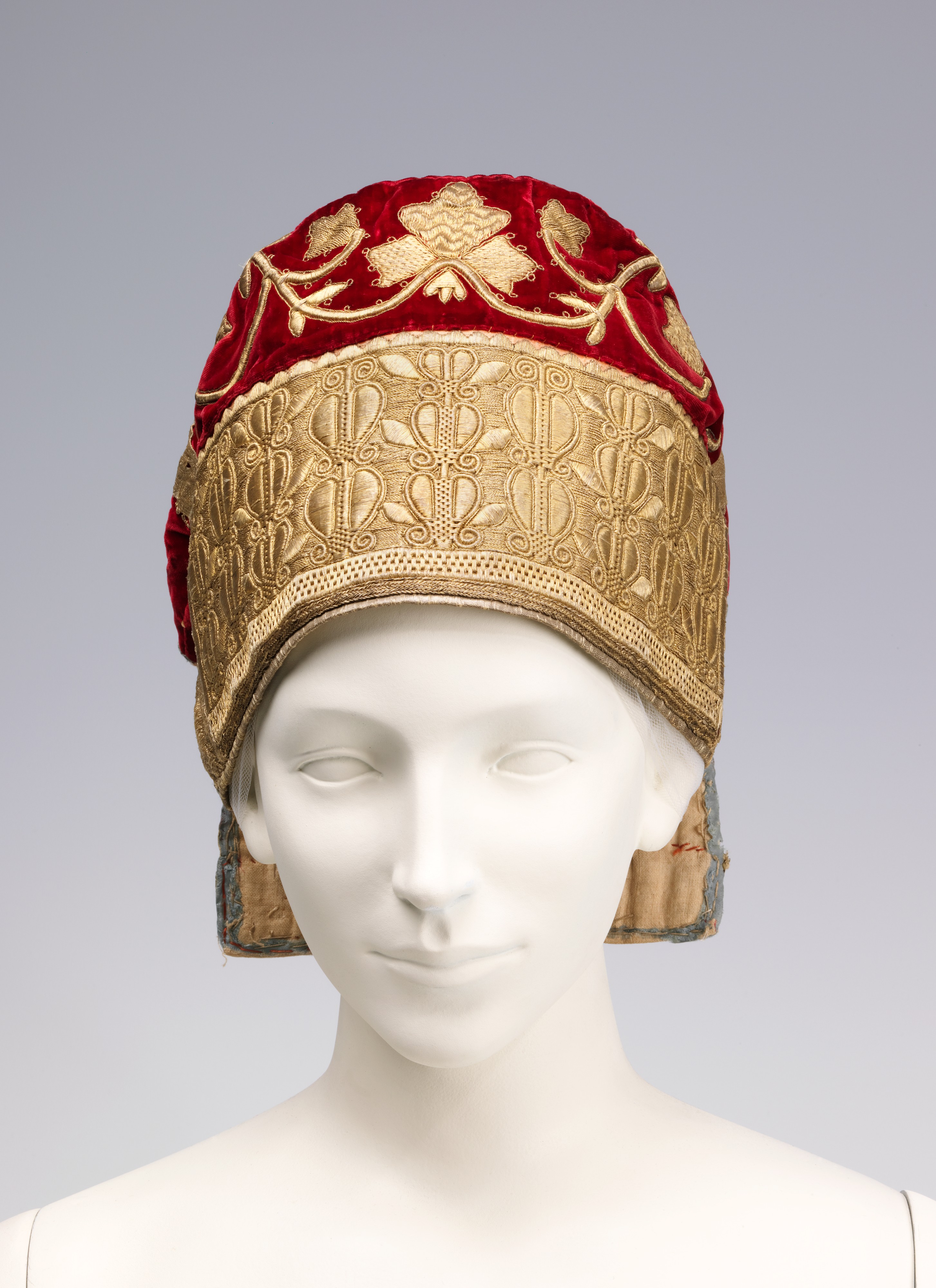
The Russian Silk-Metal Hat: A Study in Structural Elegance and Cultural Narrative
In the rarefied world of haute couture, the hat transcends its utilitarian origins to become a sculptural statement, a narrative device, and a testament to artisanal mastery. Katherine Fashion Lab’s latest standalone study—a hat crafted from Russian silk, metal, and linen—offers a compelling case for reexamining the headpiece as a locus of cultural identity and technical innovation. This analysis dissects the piece’s material interplay, structural logic, and symbolic resonance, positioning it within the broader discourse of contemporary luxury design.
Material Alchemy: Silk, Metal, and Linen
The foundation of this hat’s allure lies in its deliberate juxtaposition of materials, each chosen not merely for aesthetic appeal but for their inherent properties and cultural connotations. Russian silk, renowned for its lustrous sheen and pliable strength, forms the primary fabric. Historically, Russian silk weaving—particularly from centers like Moscow and St. Petersburg—has been associated with imperial opulence and Orthodox liturgical vestments. Here, the silk is used in a matte finish, its subtle iridescence catching light without overwhelming the piece’s architectural lines. This restraint speaks to a modern sensibility, where luxury is defined by texture and depth rather than overt glitter.
Interwoven with the silk is a delicate framework of metal, likely a lightweight alloy or brass, which provides the hat’s structural backbone. The metal is not concealed but exposed in strategic arcs, creating a visual tension between the soft drape of the fabric and the rigid, almost industrial, geometry of the armature. This choice echoes the Russian constructivist tradition, where functional materials were repurposed into avant-garde forms. The metal’s cool, silver-gray tone contrasts with the silk’s warmth, introducing a duality of softness and strength that defines the piece’s character.
Finally, linen—a material often overlooked in couture millinery—is employed as an inner lining and as a subtle accent along the brim. Russian linen, historically a staple of peasant craftsmanship, is elevated here to a textural counterpoint. Its coarse, natural weave grounds the piece, preventing it from veering into mere ornamentation. The linen’s earthy beige hue, when viewed against the silk’s depth and the metal’s gleam, introduces a narrative of class and craftsmanship: the hat becomes a dialogue between aristocratic refinement and rustic authenticity.
Structural Innovation: The Standalone Silhouette
As a standalone study, the hat eschews the typical constraints of wearability, instead prioritizing sculptural purity. The silhouette is a departure from conventional Russian headwear, such as the kokoshnik or ushanka, though it nods to their architectural principles. The crown rises in a truncated cone, its peak flattened and slightly asymmetrical, suggesting a modernist reinterpretation of the traditional Russian dome. The brim, rather than encircling the head, is a single, sweeping arc that extends forward and to one side, creating a dynamic, off-balance profile that demands attention from multiple angles.
The metal framework is integral to this form. Thin, wire-like ribs run from the base of the crown to the brim’s edge, visible through the silk as subtle ridges. This transparency of construction—a hallmark of deconstructivist fashion—invites the viewer to appreciate the engineering behind the elegance. The linen lining, meanwhile, is cut with precision to follow the hat’s interior contours, its raw edges left exposed as a deliberate finish. This technique, known as couture brut, celebrates the hand of the artisan, rejecting the anonymity of machine-perfect seams.
Cultural Resonance: Russian Roots and Global Couture
To understand this hat fully, one must situate it within the broader context of Russian material culture. The use of silk and metal evokes the opulence of the Romanov court, where jeweled headpieces were symbols of divine right. Yet, the inclusion of linen—a fabric of the people—subverts this hierarchy, suggesting a democratization of luxury that aligns with contemporary values of inclusivity and sustainability. Katherine Fashion Lab’s choice to foreground Russian origins is not nostalgic; rather, it is a reclamation of heritage through a modernist lens.
The hat also engages with the Russian avant-garde of the early 20th century, particularly the work of artists like Liubov Popova and Varvara Stepanova, who championed functionalism and geometric abstraction. The hat’s angular lines and exposed metal ribs recall the constructivist ethos of “truth to materials,” where form follows function without decorative excess. In this sense, the piece is not merely an accessory but a wearable sculpture that critiques the excesses of traditional millinery while honoring its craft.
Technical Execution: Artisanal Precision
The construction of this hat demands a level of skill that few ateliers can achieve. The silk is hand-blocked over a wooden mold, a process that requires meticulous steaming and stretching to achieve the desired shape without distorting the weave. The metal ribs are individually bent and soldered, then attached to the silk with invisible stitches that allow for slight movement, preventing the fabric from tearing under tension. The linen lining is hand-stitched with a double running stitch, ensuring durability while maintaining a soft, tactile interior.
One notable detail is the use of a metal-tipped closure at the base of the crown, where a small, oxidized clasp secures the hat’s structure. This closure, reminiscent of traditional Russian jewelry clasps, is both functional and decorative, its patina contrasting with the silk’s pristine surface. The overall effect is one of controlled imperfection—a hallmark of haute couture, where the human hand leaves its mark in every seam and curve.
Market Positioning and Conceptual Value
In the context of Katherine Fashion Lab’s portfolio, this hat represents a strategic move toward high-concept, collectible pieces that transcend seasonal trends. Priced in the upper echelons of couture, it appeals to a niche clientele of collectors and museums who value narrative and craftsmanship over mass appeal. The standalone study format—presented without accompanying garments—allows the hat to exist as an autonomous artwork, challenging the traditional hierarchy of fashion where accessories are subordinate to clothing.
From a marketing perspective, the piece’s Russian heritage and material storytelling offer a rich vein for editorial content, from documentary-style videos on the silk’s provenance to interviews with the artisans who wove the linen. This narrative depth aligns with the luxury sector’s growing emphasis on transparency and cultural authenticity, positioning Katherine Fashion Lab as a thought leader in the intersection of heritage and innovation.
Conclusion: A New Paradigm for Couture Millinery
Katherine Fashion Lab’s Russian silk-metal-linen hat is more than a study in material and form; it is a manifesto for the future of couture millinery. By merging the tactile opulence of Russian silk with the structural audacity of metal and the earthy humility of linen, the piece achieves a rare synthesis of history and modernity. It challenges the viewer to reconsider the hat as a vehicle for cultural commentary, technical mastery, and aesthetic transcendence. In doing so, it sets a new benchmark for standalone accessories in the haute couture landscape—one where every thread, every curve, and every material choice tells a story worth wearing.