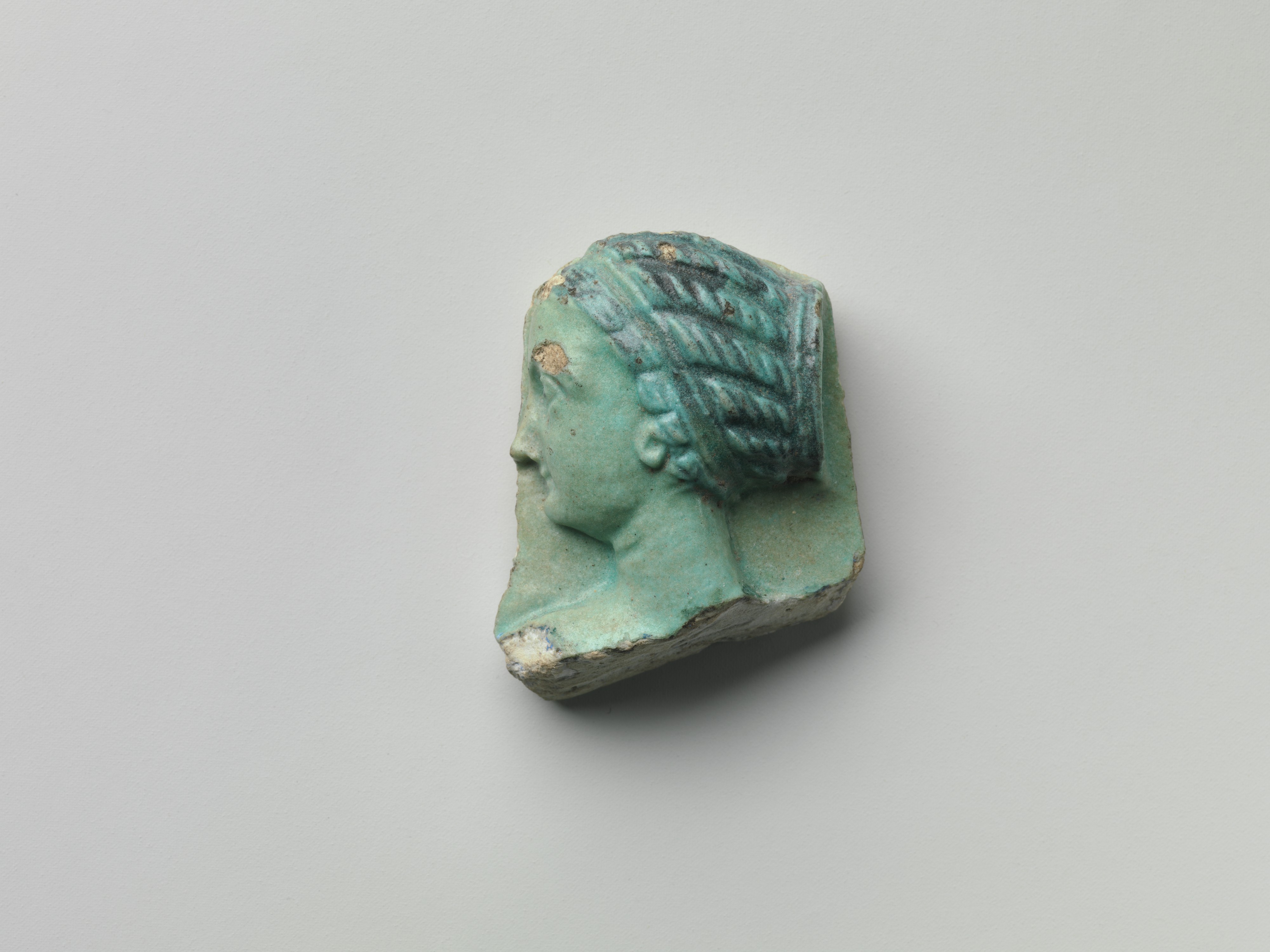
Heritage Analysis: Fragment of a Vase Depicting Arsinoe II
Context and Provenance
The fragment of a faience vase depicting Arsinoe II, dating from the Ptolemaic period (circa 270–246 BCE), represents a singular convergence of political propaganda, spiritual devotion, and aesthetic mastery. As a medium, faience—a glazed non-clay ceramic material—was reserved in ancient Egypt for objects of ritual and elite significance, its luminous blue-green surface evoking the life-giving waters of the Nile and the celestial realm. This fragment, likely part of a ceremonial vessel or offering jar, bears the portrait of Arsinoe II, the deified queen of Ptolemy II Philadelphus, whose image was used to consolidate dynastic power and religious authority. For Katherine Fashion Lab, this artifact offers a profound lexicon of symbolic power, historical adornment, and spiritual meaning, providing a strategic foundation for a 2026 high-end luxury narrative that marries ancient wisdom with contemporary exclusivity.
Symbolic Power and Dynastic Authority
Arsinoe II was not merely a queen; she was a living goddess, syncretized with the Egyptian deities Isis and Hathor. Her depiction on this vase fragment is a calculated exercise in symbolic power. The faience medium itself, with its association with rebirth and the sun god Ra, imbues the object with an aura of immortality. The queen’s profile, rendered with idealized features, is framed by the traditional uraeus (cobra) and vulture headdress—motifs of sovereignty and protection. This visual language was designed to project unassailable authority, blending Hellenistic portraiture with Egyptian iconography to appeal to both Greek and native populations. For luxury brand strategy, this demonstrates how materiality and imagery can encode power. Katherine Fashion Lab can translate this into a 2026 collection by using faience-inspired glazed finishes on accessories or collar motifs that echo the uraeus, signaling protection and prestige. The strategic use of cobalt and turquoise glazes—colors historically associated with royalty and the divine—can become signature brand markers, evoking the same reverence and exclusivity as the original artifact.
Historical Adornment and Material Mastery
The fragment’s faience construction reveals a sophisticated understanding of material transformation. Ancient artisans crushed quartz or sand, mixed it with natron and copper oxides, and fired it to create a vitreous surface that mimicked precious stones like turquoise and lapis lazuli. This technique was a form of alchemy, turning base materials into objects of luxury. The vase’s function as a container for oils, unguents, or ritual libations further ties it to adornment—both of the body and the sacred space. The queen’s depiction, with her elaborate wig and diadem, serves as a template for historical adornment: hair, headdress, and jewelry were not decorative but talismanic, believed to channel divine energy. For Katherine Fashion Lab’s 2026 strategy, this suggests a focus on transformative materials and ritualistic design. Consider a capsule line of faience-glazed metal cuffs or ceramic pendants that reference the fragment’s texture and color. The brand could also explore “alchemical” finishes—surfaces that shift in light or patina over time, echoing the faience’s luminous quality. This aligns with the luxury market’s growing appetite for artisanal rarity and tactile storytelling, where each piece feels like a relic of a lost civilization.
Spiritual Meaning and Divine Connection
Arsinoe II’s deification was not merely political; it was deeply spiritual. After her death, Ptolemy II established a cult in her honor, and faience vessels like this fragment were used in temple rituals and funerary contexts. The vase likely held sacred oils or Nile water, substances believed to carry the queen’s divine essence. The fragment’s survival suggests it was part of a larger ritual cycle—perhaps broken intentionally as an offering or damaged through centuries of burial. This spiritual dimension offers a powerful narrative for luxury branding: the idea that objects can be vessels of meaning rather than mere commodities. For 2026, Katherine Fashion Lab can position its products as modern talismans, designed to empower the wearer with the queen’s attributes of wisdom, fertility, and protection. Limited-edition pieces could be accompanied by ritual care instructions—a nod to ancient practices—or integrated into a “cult of the client” membership program that offers exclusive access to heritage-inspired events. The use of sacred geometry in patterns, such as the lotus or the ankh, can further embed spiritual resonance, appealing to consumers seeking authenticity and transcendence in luxury goods.
Strategic Implications for 2026 High-End Luxury
The fragment of Arsinoe II’s vase is not a static relic but a blueprint for a 2026 luxury strategy that prioritizes heritage authority, material innovation, and narrative depth. Katherine Fashion Lab can leverage the following actionable insights:
1. Material as Metaphor: Faience’s synthetic yet precious nature mirrors the contemporary luxury consumer’s desire for sustainable opulence. The brand can develop a proprietary “Katherine Faience” finish—a glazed ceramic or resin composite—used in jewelry, bag hardware, or even fragrance bottles. This creates a tangible link to the artifact while signaling technical mastery.
2. Iconographic Language: The uraeus, diadem, and lotus motifs from the fragment can be abstracted into a brand monogram or signature pattern. This visual vocabulary should be used sparingly to maintain exclusivity, appearing only on limited-edition pieces or in flagship store interiors. The goal is to create a symbolic economy where informed clients recognize the reference.
3. Ritualized Experience: The vase’s ritual function suggests a service model. Katherine Fashion Lab could offer “consecration” experiences—private appointments where clients learn the history of their purchase and participate in a small ceremony, such as anointing a scarf with a custom fragrance. This elevates the transaction into a spiritual act, justifying premium pricing and fostering loyalty.
4. Color Psychology: The faience’s turquoise and cobalt hues are timeless yet distinctive. For 2026, the brand should anchor its color palette around these shades, using them in packaging, campaigns, and seasonal collections. These colors evoke royalty, protection, and the infinite, aligning with the high-end consumer’s search for stability and meaning in a volatile world.
Conclusion
The fragment of a vase depicting Arsinoe II is far more than an archaeological curiosity; it is a masterclass in the fusion of power, adornment, and spirituality. For Katherine Fashion Lab, this artifact provides a rich heritage narrative that can be translated into a 2026 luxury strategy defined by material alchemy, symbolic depth, and ritual engagement. By embracing the faience’s legacy—its luminous surface, its divine associations, and its role in dynastic authority—the brand can position itself as a custodian of ancient wisdom, offering clients not just products, but portals to a transcendent past. In an era where luxury increasingly demands authenticity and transformation, this heritage analysis offers a clear, strategic path to differentiation and enduring value.