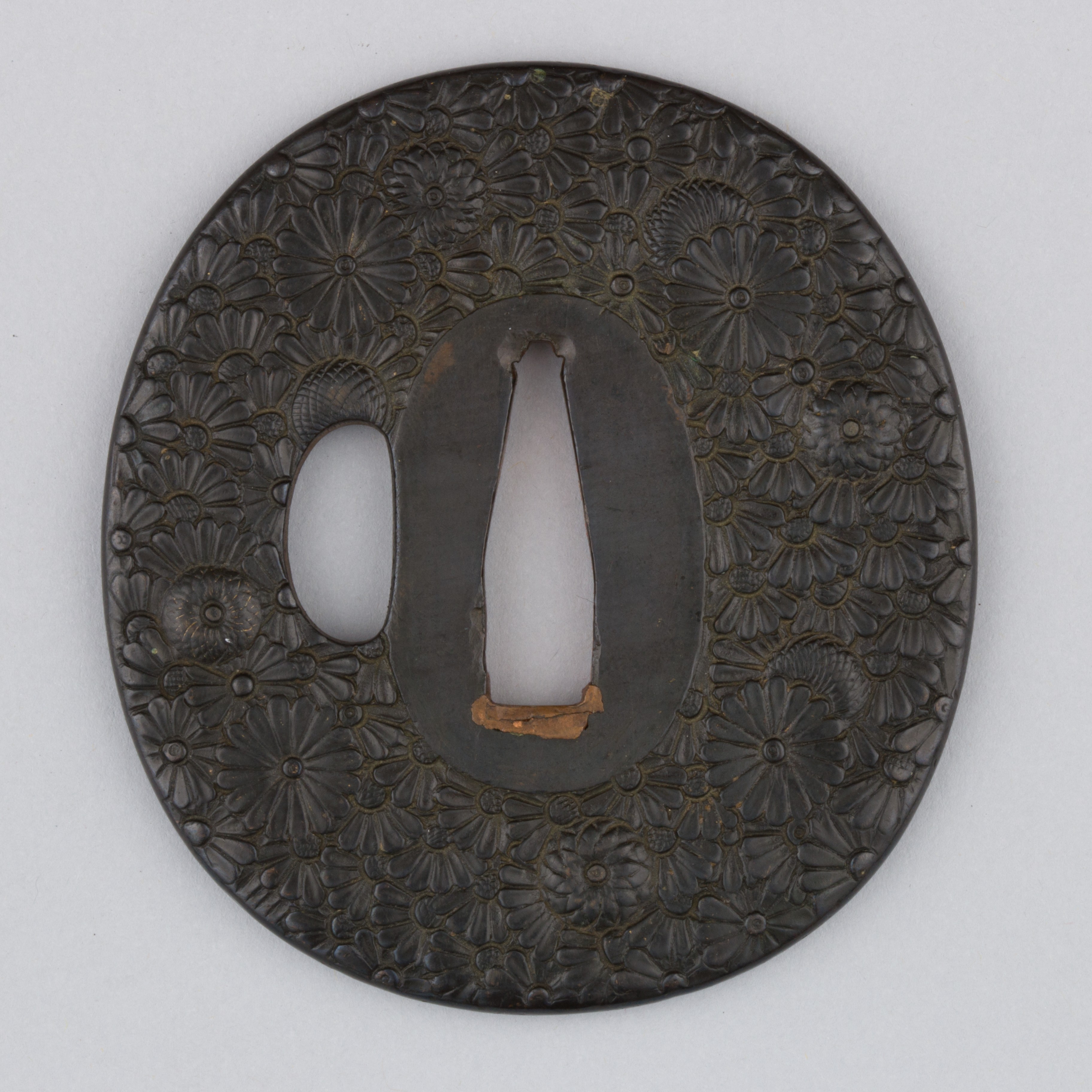
Heritage Analysis: The Japanese Sword Guard (Tsuba) as a Source of Strategic Luxury Design
This paper presents a strategic heritage analysis of the Japanese tsuba, or sword guard, as a subject of study for Katherine Fashion Lab. The tsuba, specifically those crafted in the copper-gold alloy shakudō and copper, represents a pinnacle of historical adornment, symbolic power, and spiritual meaning. For a high-end luxury brand seeking differentiation in 2026, the tsuba offers a profound lexicon of design principles, material philosophy, and narrative depth that transcends mere ornamentation. This analysis will deconstruct the tsuba’s cultural DNA to inform a 2026 luxury strategy rooted in authenticity, craftsmanship, and symbolic resonance.
Historical Adornment: The Tsuba as Functional Art
The tsuba was never merely a functional component of the Japanese sword (katana). Historically, it served as a handguard to protect the wielder’s hand, but its role evolved into a canvas for personal expression and status signaling among the samurai class. During the Edo period (1603–1868), when peace reduced the need for martial utility, the tsuba became a primary vehicle for artistic identity. Master metalsmiths, often working within hereditary schools, transformed these small plates into miniature masterpieces. The medium of shakudō—a meticulously crafted alloy of copper and gold—was particularly prized. Its signature deep blue-black patina, achieved through a chemical process called rokushō patination, created a lustrous, almost lacquer-like surface that served as a dark, velvety backdrop for inlaid gold, silver, or copper motifs. This technique, known as zōgan (inlay), allowed for extraordinary detail, from insects and flowers to mythological beasts.
For Katherine Fashion Lab, the tsuba’s historical context underscores a crucial lesson: luxury adornment must be intentional. The tsuba was not mass-produced; each piece was a bespoke commission that reflected the wearer’s lineage, rank, and personal philosophy. This model of bespoke, narrative-driven design is directly translatable to a 2026 high-end strategy, where clients increasingly seek objects that tell a story of heritage and individuality rather than generic opulence.
Symbolic Power: The Language of Motifs
The symbolic vocabulary of the tsuba is rich with layered meanings, each motif chosen to convey a specific virtue or aspiration. Common themes include:
- Dragons (ryū): Representing power, wisdom, and control over water. A dragon tsuba signified the wearer’s authority and spiritual strength.
- Chrysanthemums (kiku): A symbol of the Imperial family, longevity, and rejuvenation. Its use denoted loyalty and refined taste.
- Pine, Bamboo, and Plum (shō-chiku-bai): The "Three Friends of Winter," representing resilience, integrity, and renewal. This triad was a subtle code for perseverance in adversity.
- Skulls and Demons (oni): Memento mori motifs that acknowledged the transience of life and the warrior’s acceptance of mortality.
These symbols were not decorative whims; they were strategic communications. The samurai used the tsuba as a non-verbal language to project his inner character to allies and adversaries alike. For Katherine Fashion Lab, this principle of symbolic coding is paramount. In 2026, luxury consumers are hyper-aware of brand semiotics. By integrating motifs like the chrysanthemum or dragon into product design—whether through embroidery, hardware, or print—the brand can create a layer of exclusivity and meaning that resonates with culturally literate clients. The key is to avoid superficial appropriation; instead, the motifs should be recontextualized with respect to their origins, perhaps through collaborations with Japanese metalwork artisans or through limited-edition pieces that explicitly reference the tsuba’s philosophy.
Spiritual Meaning: Wabi-Sabi and the Aesthetics of Imperfection
Central to the tsuba’s spiritual dimension is the Japanese concept of wabi-sabi, the appreciation of imperfection, transience, and the beauty of natural patina. The shakudō alloy is a physical manifestation of this philosophy. Over time, the copper-gold surface oxidizes and develops a unique, deep patina that is never uniform. This aging process is not a flaw but a celebration of time. The tsuba’s value increases with age, as the patina deepens and the narrative of use becomes visible. Similarly, the yobitsugi (repair) technique, where cracks are filled with gold lacquer, elevates damage into a feature—a concept now globally known as kintsugi.
This spiritual framework offers a powerful counter-narrative to the fast-fashion and disposable luxury trends of the past decade. For Katherine Fashion Lab’s 2026 strategy, embracing wabi-sabi means designing for longevity and encouraging a relationship with the object that evolves over time. This could be achieved through:
- Patina-driven materials: Using raw copper, bronze, or naturally oxidizing metals in hardware or accessories that will develop a unique character with wear.
- Repair as luxury service: Offering a "kintsugi" repair program for damaged items, turning imperfections into bespoke enhancements.
- Seasonal narratives: Releasing collections that celebrate the cycle of seasons, with materials and colors that shift, reflecting the Japanese aesthetic of mono no aware (the pathos of things).
This strategy aligns with the 2026 luxury consumer’s growing demand for sustainability through durability and emotional connection—where an item’s story deepens with age, rather than being discarded.
2026 High-End Luxury Strategy: From Artifact to Brand Architecture
Translating the tsuba’s heritage into a coherent luxury strategy requires a multi-layered approach. Katherine Fashion Lab can leverage the following pillars:
Pillar One: Material Alchemy and Exclusivity
The shakudō process is a lost art in many circles, requiring specific knowledge of alloy ratios and patination. By partnering with Japanese metalwork masters, the brand can create a signature material—a proprietary alloy or patina—that becomes a hallmark of its collections. This material exclusivity is a proven driver of value in the luxury sector, akin to Hermès’ use of specific leathers or Cartier’s proprietary gold alloys. The narrative of the material—its origin, its crafting process, its spiritual symbolism—becomes a core part of the brand story.
Pillar Two: The "Tsuba Collection" as a Narrative Ecosystem
Rather than a single product, the tsuba can inspire a capsule collection that includes ready-to-wear, accessories, and jewelry. Each piece would be named after a specific tsuba motif (e.g., "Dragon’s Breath" for a dragon motif, "Chrysanthemum Code" for a floral pattern). The collection would be supported by a digital heritage dossier—an immersive online or in-store experience that explains the symbolism, the artisan collaborators, and the spiritual philosophy behind each design. This transforms a purchase into an acquisition of cultural capital.
Pillar Three: Bespoke Commissioning Service
In the spirit of the samurai’s bespoke tsuba, Katherine Fashion Lab can offer a private client atelier where clients co-create pieces with artisans. The client selects motifs, materials (including shakudō-inspired alloys), and finishes. This service positions the brand at the apex of luxury personalization, mirroring the historical relationship between the samurai and his metalsmith. For 2026, this model addresses the desire for hyper-personalization and exclusivity that mass luxury cannot satisfy.
Pillar Four: Spiritual Marketing and Authenticity
The brand’s communication strategy should emphasize cultural fluency over cultural appropriation. This means hiring or consulting with Japanese heritage experts, producing content that respectfully explains the tsuba’s history, and ensuring that any use of motifs is done with permission and understanding. The 2026 luxury consumer is highly educated and skeptical of inauthentic "borrowing." Katherine Fashion Lab must position itself as a custodian of craft, not a commercial exploiter. This authenticity will build trust and long-term brand loyalty.
Conclusion: The Tsuba as a Strategic Blueprint
The Japanese tsuba is far more than a historical artifact; it is a strategic blueprint for a luxury brand seeking depth, meaning, and differentiation. Its lessons in symbolic power, material alchemy, spiritual philosophy, and bespoke craftsmanship are directly applicable to Katherine Fashion Lab’s 2026 high-end strategy. By embracing the tsuba’s principles—intentional design, narrative-driven motifs, appreciation of patina, and cultural authenticity—the brand can create a collection that resonates with the discerning, values-driven luxury consumer of the near future. The tsuba teaches us that true luxury is not about volume or visibility, but about the quiet, profound power of an object that carries the weight of history, the depth of symbolism, and the beauty of time itself.