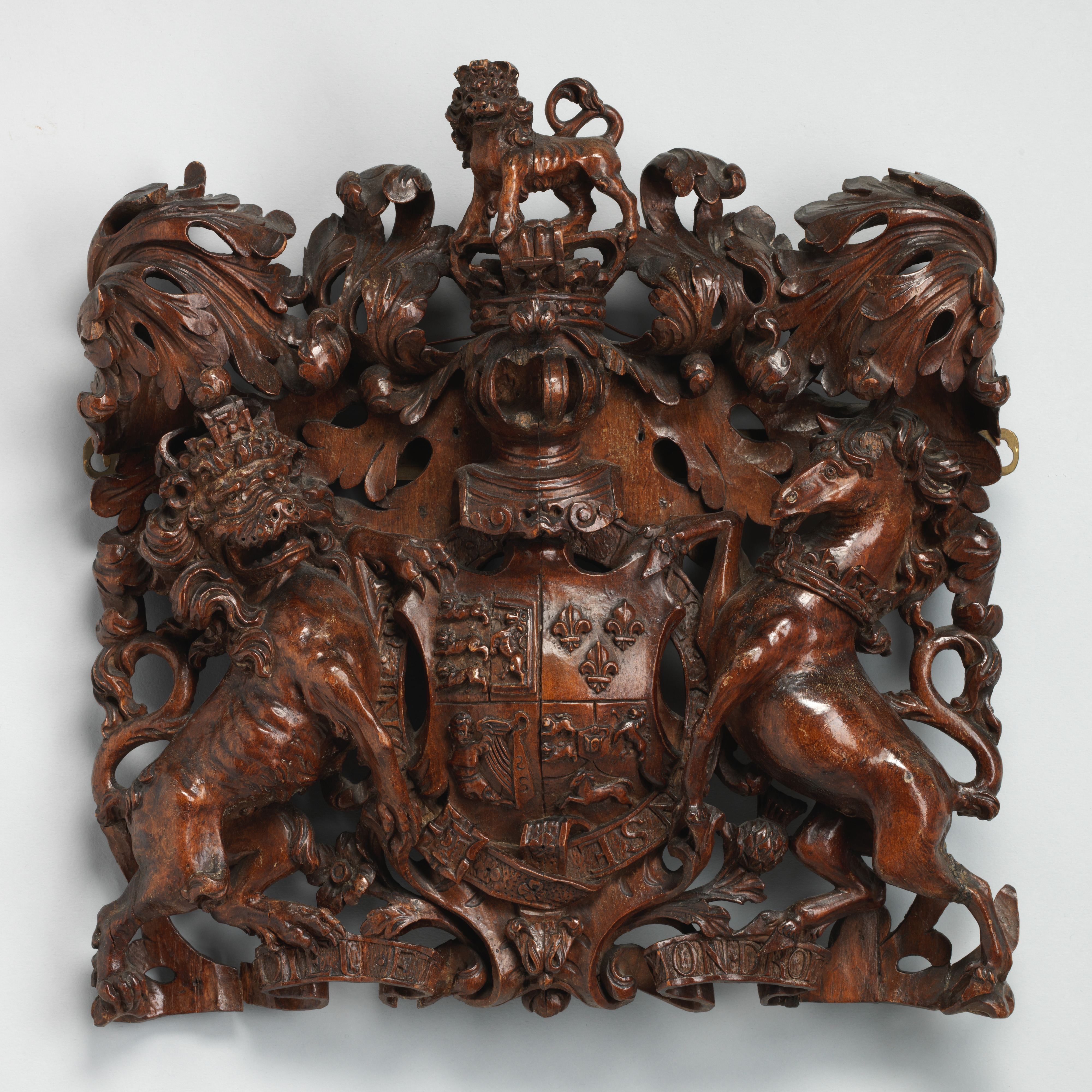
The Armorial Panel: A Confluence of Heraldic Grandeur and Sculptural Precision
Within the curated archives of Katherine Fashion Lab, the standalone study of the limewood Armorial Panel represents a profound exercise in decoding the semiotics of power, identity, and craftsmanship. This artifact, transcending its traditional architectural or ceremonial context, is re-contextualized as a masterclass in three-dimensional textile thinking. Its origin in Global Heritage—a deliberate curation choice—liberates it from a single national narrative, allowing us to examine it as a universal testament to the human impulse to adorn, declare, and immortalize status through intricately worked surfaces. The choice of limewood, a material beloved by master carvers for its fine, even grain and yielding yet durable nature, is the first clue to its couture relevance. It behaves not as mere wood, but as a sculptural fabric, a medium to be draped, pleated, folded, and embellished in the pursuit of symbolic communication.
Material as Medium: Limewood's Couture Properties
In haute couture, the selection of material precedes and dictates the design narrative. Limewood, in this analysis, is our premier toile or foundational fabric. Its pale, luminous tone provides a neutral canvas, akin to the finest ivory silk shantung or a heavy-weight duchesse satin underskirt. The wood’s low density and resistance to splitting allowed the unknown artisan—our "couturier"—to execute breathtaking feats of technical bravura. The deep undercutting of shields, the delicate tracery of mantling (the decorative foliage surrounding the helm), and the intricate scrollwork are analogous to the most demanding couture techniques: the meticulous découpé of lace appliqué, the structured drapé of a woolen bustle, or the precise broderie of seed pearls on a bodice. Each chip of the chisel was a stitch; each sanded curve, a pressed seam. The material’s inherent stability ensures that these dramatic, often fragile-looking forms possess a resilient architecture, mirroring the way a gown by Balenciaga or McQueen uses internal structures—horsehair, tulle, corsetry—to create ethereal silhouettes that defy their own weight.
Heraldry as Hierarchical Branding: The Semiotics of Adornment
The panel’s primary function was to display coats of arms—a medieval and Renaissance system of symbolic identification that is the direct progenitor of modern luxury branding. Each shield, helm, crest, and supporter is a curated logo, a complex visual language encoding lineage, alliances, territorial claims, and moral virtues. At Katherine Fashion Lab, we interpret this heraldic assemblage not as archaic history, but as a sophisticated exercise in identity construction through wearable semiotics.
The arrangement of multiple shields suggests marriage (impaling), inheritance (quartering), or the claiming of titles. This is a sartorial strategy of accumulation, not unlike the layering of symbolic accessories in a contemporary look: a family signet ring, a heirloom brooch, a monogrammed bag. The fantastical beasts acting as supporters—lions, griffins, unicorns—are more than decoration; they are symbolic avatars, projecting desired attributes of courage, purity, or ferocity onto the armiger. In couture, we see this mirrored in the use of animal motifs in embroidery, the predatory sleekness of a fur collar, or the mythological references in a Met Gala ensemble. The mantling, flowing organically from the helm, is perhaps the most directly sartorial element. Frozen in a perpetual state of wind-swept drama, it translates the fluidity of cloth—a knight’s surcoat or a lady’s veil—into fixed form, a permanent record of dynamic movement, much like a Fortuny pleat or a Galliano gown captured mid-twirl.
Form and Silhouette: The Architecture of Display
As a standalone study, we must consider the panel’s totality as a silhouette. It is not a flat emblem but a deeply layered, multi-planar construction. The central shield often projects forward, the mantling recedes and erupts, and crests break the upper boundary. This creates a dynamic play of light and shadow, a chiaroscuro effect that is the very essence of sculptural drapery. The couture parallel is explicit: the built-upon foundation of a corset (the shield), the cascading layers of tulle and silk (the mantling), and the startling, vertical accent of a headpiece or exaggerated shoulder (the crest). The panel’s composition obeys a rigorous hierarchy and symmetry, yet within that structure exists a controlled chaos of organic forms. This balance between strict order and expressive flourish is the hallmark of both great heraldic design and great couture, where a disciplined canvas (the body, the wooden panel) is transformed through regulated extravagance.
Patina and Provenance: The Narrative of Wear
The surface of the limewood, its patina accrued over centuries, contributes a final, crucial layer to its couture analysis. This is not the sterile finish of a new object, but the soft glow of aged silk, the gentle cracking of vintage leather, the slight tarnishing of antique metallic thread. This patina is the visual record of time, a narrative of survival and endurance that adds immeasurable value. In fashion, we actively seek this narrative through vintage pieces, artisanal dyeing techniques that mimic age, or deconstruction that suggests a cherished history. The panel’s standalone status invites us to focus on these micro-textures—the smoothness of a raised crest worn by careful polishing, the darker grain in a recess—as one would study the beadwork on a Schiaparelli jacket or the fading of a print on a Fortuny gown. Its provenance, though broadly "Global Heritage," whispers of specific hands: the carver’s, the gilder’s (if it was ever gilded), the generations of caretakers. This chain of authorship and stewardship mirrors the atelier system of couture, where a garment passes from première main to embroiderer to finisher, accumulating intangible value at each station.
In conclusion, the Armorial Panel, through the lens of Katherine Fashion Lab, is revealed as a seminal work of applied art whose principles are inextricably linked to the highest ideals of couture. It is a study in structured identity, material virtuosity, and symbolic storytelling. Its limewood surface is a canvas for a language of power written in form and shadow, a language that continues to inform how we, today, construct and project identity through the deliberate, artful adornment of surfaces. It stands not as a relic, but as a timeless manifesto on the inseparable union of craft, symbol, and self.