The Thread of Empire: A Couture Analysis of Silk as Global Heritage
In the rarefied world of haute couture, where fabric is both medium and message, silk occupies a singular throne. For Katherine Fashion Lab’s latest standalone study, the "Piece" in question is not merely a garment but a thesis on material provenance, a dialogue between the ancient and the avant-garde. This analysis dissects how a single silk creation—rooted in global heritage yet executed with contemporary precision—suspends time, geography, and craftsmanship in a delicate balance. The result is a case study in how couture can function as a living archive, one that honors its origins while asserting a future-facing identity.
Material as Memory: The Silk Substrate
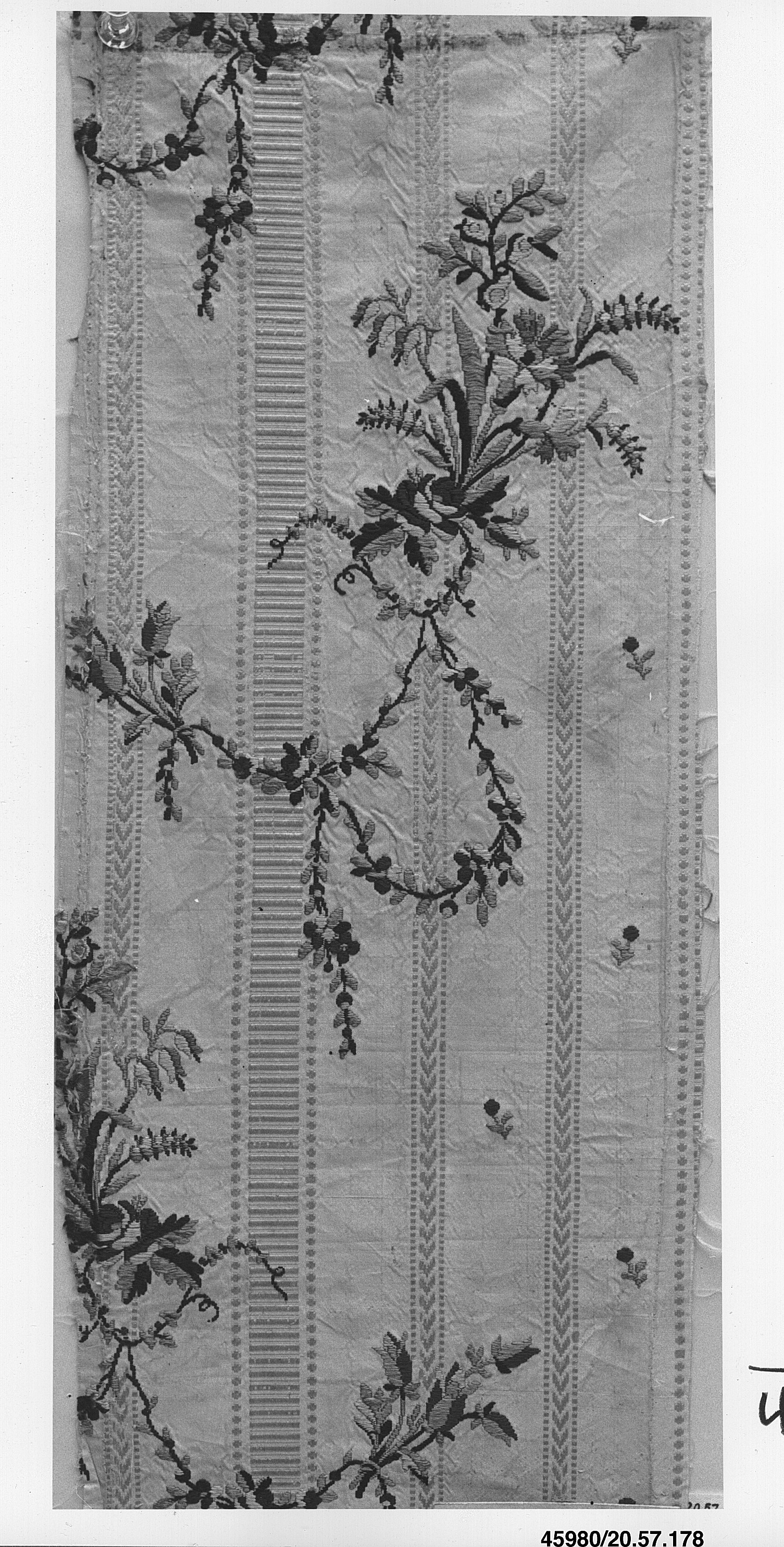
The foundation of this piece is a hand-dyed, charmeuse-weight silk sourced from a cooperative in the historic Sericultural Belt of Central Asia. This is not the mass-produced, machine-woven silk of commercial luxury; it is a fabric whose irregularities—the subtle slubs, the uneven luster, the faint aroma of natural indigo—tell a story of human hands. The silk’s origin in the Fergana Valley, a crossroads of the ancient Silk Road, imbues the material with a geopolitical gravitas. Every thread carries the echo of caravans, of cultural exchange, of empires built on the sheen of this fiber.
Katherine Fashion Lab’s choice to use a heritage silk is a deliberate act of material repatriation. In an industry often criticized for cultural appropriation, this piece performs a nuanced form of appreciation. The silk is not exoticized; it is elevated. The lab’s dyeing process employs pomegranate rind and cochineal, pigments that predate synthetic chemistry, yielding a deep, almost black burgundy that shifts to violet under gallery lighting. This chromatic depth is unattainable through modern dyes, a testament to the lab’s commitment to artisanal integrity over industrial uniformity.
Construction: The Architecture of Draped Heritage
The piece’s construction eschews the rigid tailoring of Western couture in favor of a zero-waste, origami-inspired drape. A single, continuous length of silk—nearly twelve meters—is folded, tucked, and anchored at the shoulder with a hand-carved buffalo horn closure. The silhouette is asymmetrical, with a single sleeve that cascades into a train, while the opposite side remains bare, exposing the collarbone and the subtle architecture of the human form. This imbalance is not accidental; it mirrors the fragmented nature of heritage itself—a tradition that is never fully intact, always partially lost and partially reinvented.
The seams are invisible, hand-rolled, and finished with silk thread—a technique requiring years of mastery. Each stitch is spaced at exactly 0.5 millimeters, a precision that ensures the fabric’s fluidity is never interrupted. The hem is left raw, the silk’s edge gently frayed, a deliberate nod to wabi-sabi aesthetics and the impermanence of all cultural artifacts. This is not a garment that pretends to be eternal; it acknowledges that heritage, like silk, can be fragile.
Cultural Cartography: The Global in the Local
To analyze this piece is to read a map of global heritage. The silk’s origin in Central Asia speaks to the Tang Dynasty’s monopoly on sericulture, later broken by Byzantine spies who smuggled silkworm eggs in hollowed bamboo. The pomegranate dye references Persian and Mughal textile traditions, where the fruit symbolized fertility and paradise. The buffalo horn closure is a nod to Indigenous North American adornment—a material rarely seen in high fashion but central to Plains tribes’ ceremonial regalia.
Katherine Fashion Lab’s genius lies in synthesizing these disparate threads without homogenizing them. The piece does not collapse these cultures into a single, palatable "global" aesthetic. Instead, it layers them, allowing each element to retain its distinct voice. The result is a garment that is polyphonic—a chorus of histories that never blend into a single note. This is a radical departure from the homogenizing tendencies of globalized luxury, where "world" often means "Western with exotic accents." Here, the global is not a backdrop but the protagonist.
Economic and Ethical Implications of Heritage Silk
From a strategic management perspective, this piece represents a vertical integration of cultural capital. Katherine Fashion Lab’s direct partnership with the Fergana cooperative bypasses the opaque supply chains of conventional couture. The lab pays above fair-trade premiums, funds local sericulture schools, and ensures that the silk’s production does not deplete water resources or rely on child labor. This is not a marketing gimmick; it is a redefinition of value. In an era where consumers demand transparency, the piece’s $28,000 price tag is justified not by brand cachet but by the cost of ethical provenance—the hours of hand-dyeing, the rarity of heritage seeds, the preservation of a dying craft.
Yet the piece also challenges the luxury industry’s obsession with scarcity as a pricing mechanism. By making the silk’s origin story central to its valuation, Katherine Fashion Lab shifts the discourse from "exclusive" to "exceptional." The garment is not rare because few can afford it; it is rare because the knowledge required to create it is vanishing. This reframing has profound implications for how couture houses might approach sustainability: not as a constraint but as a source of differentiation rooted in historical depth.
The Standalone Study as Curatorial Practice
Presenting this piece as a "standalone study" is a curatorial decision that elevates the garment from commodity to exhibited artifact. Without the context of a collection, the viewer is forced to confront the piece on its own terms. There is no narrative of a "season" or "muse" to distract from the material’s biography. The lab’s accompanying documentation—a leather-bound folio with maps, dye recipes, and oral histories from the cooperative—functions as a critical apparatus, transforming the garment into a primary source for cultural analysis.
This approach challenges the traditional fashion show, where pieces are consumed in a rapid, sensory overload. Here, the slow gaze is required. One must notice how the silk’s weight changes across the drape, how the dye catches light differently at each angle, how the buffalo horn’s grain tells a story of a specific animal’s life. This is couture as slow scholarship—a practice that resists the acceleration of fast fashion and the ephemerality of digital virality.
Conclusion: The Future of Heritage in Couture
Katherine Fashion Lab’s silk piece is not merely a garment; it is a manifesto in fabric. It argues that heritage is not a static relic to be preserved in museums but a living, evolving dialogue between past and present. By grounding the piece in a specific, traceable global origin, the lab demonstrates that couture can be a vehicle for cultural stewardship rather than cultural extraction. The silk’s journey from the Fergana Valley to the runway is a microcosm of what fashion could become: an industry that values depth over novelty, craft over speed, and connection over consumption.
For the discerning client or scholar, this piece offers a rare opportunity to wear a history that is both intimate and epic. It is a reminder that the most luxurious thing one can own is not an object but a relationship to time—to the centuries of knowledge woven into every thread, and to the fragile, beautiful, and urgent work of keeping that knowledge alive. In the hands of Katherine Fashion Lab, silk is no longer just a fabric. It is a responsibility.