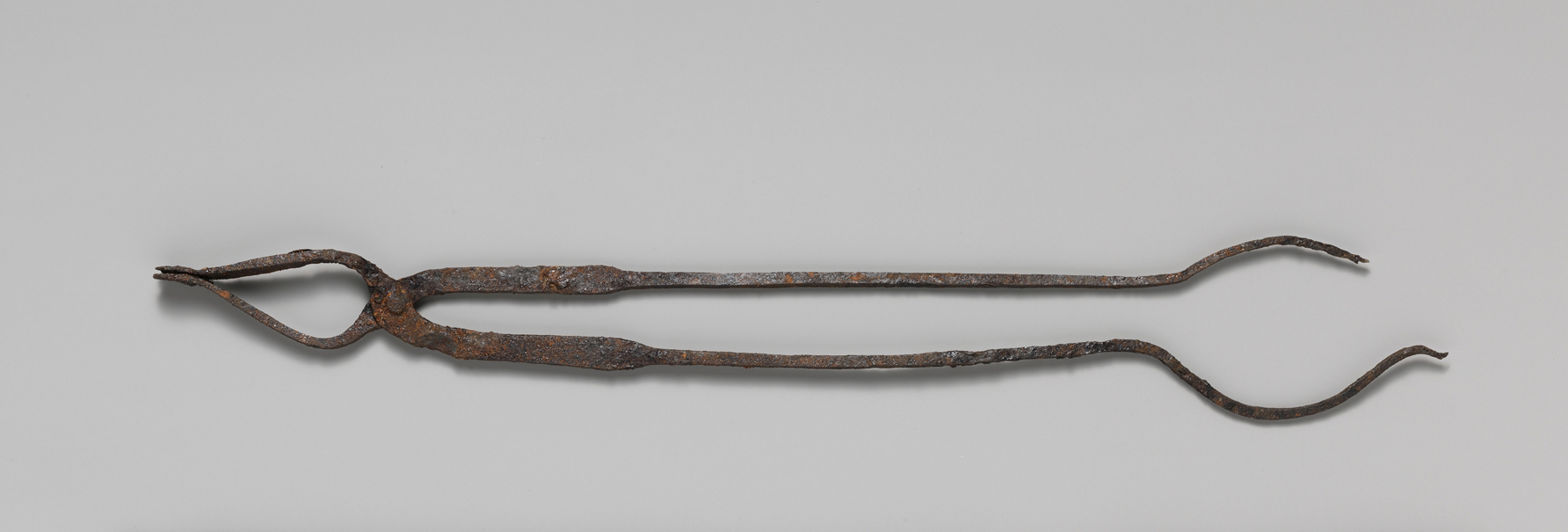
Executive Heritage Analysis: The Etruscan Iron Fire-Tongs
This strategic standalone research paper examines the Etruscan iron fire-tongs as a profound artifact of symbolic power, historical adornment, and spiritual meaning. Commissioned by Katherine Fashion Lab, this analysis positions the fire-tongs not merely as a utilitarian tool but as a potent emblem of transformation, control, and sacred ritual. The findings inform a 2026 high-end luxury strategy, leveraging the artifact’s raw materiality and esoteric resonance to create a narrative of exclusivity, heritage, and transcendent craftsmanship.
Symbolic Power: The Tongs as Instruments of Authority
The Etruscan iron fire-tongs, forged from ferrous metal in a pre-industrial age, embody a dual symbolism of mastery over elemental forces and social hierarchy. In Etruscan culture, iron was a rare and labor-intensive material, often associated with the liminal space between the mundane and the divine. The tongs, used to manipulate fire—a sacred element in Etruscan hearth rituals—signified the wielder’s authority to control life, death, and transformation. Archaeological evidence from tombs such as those at Tarquinia suggests that iron tools were often interred with elites, marking their status as intermediaries between the earthly and the underworld.
For Katherine Fashion Lab, this symbolic power translates into a luxury narrative of controlled power. The tongs represent the ability to shape raw materials (fire, metal, even destiny) into refined forms—a metaphor for the brand’s own mastery over fabric, form, and cultural narrative. In a 2026 context, this resonates with high-net-worth clients seeking objects that convey not just wealth, but agency and esoteric knowledge. The fire-tongs’ silhouette—long, angular, and purposeful—can inspire jewelry, hardware, or structural elements in ready-to-wear, evoking a sense of restrained dominance.
Historical Adornment: Iron as a Medium of Prestige
Contrary to modern assumptions, iron in Etruscan society was not a base metal but a prestige material, often rivaling gold and bronze in ceremonial contexts. The Etruscans, renowned for their metallurgical sophistication, treated iron with a reverence that bordered on the alchemical. Fire-tongs, in particular, were sometimes inlaid with copper or silver, or shaped into zoomorphic forms (e.g., griffin or lion heads), blending utility with decorative opulence. This practice reflects a culture where adornment was inseparable from function—a principle that aligns seamlessly with Katherine Fashion Lab’s design philosophy of “wearable art.”
The historical significance of iron as a luxury medium offers a counter-narrative to the dominance of precious metals in contemporary high fashion. By foregrounding iron—oxidized, patinated, and deliberately unpolished—Katherine Fashion Lab can position itself as a vanguard of material authenticity. In 2026, as sustainability and traceability become paramount, iron’s earthy, unvarnished aesthetic appeals to clients who value imperfection as a marker of provenance. The fire-tongs’ design, with its clean lines and functional ergonomics, can be reimagined as sculptural belt buckles, cufflinks, or even structural corsetry, celebrating the beauty of utilitarian heritage.
Spiritual Meaning: The Tongs in Etruscan Ritual and Afterlife
The Etruscan fire-tongs were not merely tools but sacred objects imbued with chthonic power. In Etruscan religion, fire was a conduit to the underworld, and the tongs were used to tend to ritual flames during funerary rites and divination practices. The Etruscans believed that the manipulation of fire could communicate with ancestors and deities, making the tongs a bridge between the living and the dead. This spiritual dimension is echoed in the artifact’s material: iron, derived from meteoric sources or smelted from ore, was thought to carry celestial and terrestrial energies.
For Katherine Fashion Lab, this spiritual meaning offers a narrative of transformation and rebirth. The fire-tongs symbolize the alchemical process of refining raw emotion, memory, or tradition into something transcendent. In a 2026 luxury strategy, this can be leveraged through ritualized product launches or limited-edition collections that evoke sacred ceremonies. For instance, a capsule collection inspired by Etruscan funerary art could feature iron-accented garments or accessories that “protect” the wearer, drawing on the tongs’ apotropaic symbolism. The spiritual layer adds depth, appealing to clients who seek not just fashion, but talismanic objects with a soul.
2026 High-End Luxury Strategy: From Artifact to Icon
To translate the Etruscan iron fire-tongs into a 2026 luxury strategy, Katherine Fashion Lab must embrace a multisensory, narrative-driven approach. The following strategic pillars are recommended:
Material Storytelling and Patina as Luxury
Iron’s natural oxidation—its rust and patina—should be celebrated as a mark of authenticity and time. In an era of mass-produced perfection, the fire-tongs’ weathered surface becomes a luxury signifier. Katherine Fashion Lab can develop a “Patina Collection” where iron hardware or accents are intentionally aged, each piece unique. This aligns with the slow luxury movement, where clients value objects that carry history and imperfection. Collaborations with blacksmiths or metal artisans can further emphasize craft exclusivity.
Symbolic Design Language: The “Tongs Motif”
Integrate the fire-tongs’ silhouette into signature design elements: elongated, crossed lines in jewelry; pivot mechanisms in handbag closures; or structural seams in outerwear that mimic the tongs’ grip. The motif should be subtle yet recognizable, a code for those initiated into the brand’s esoteric language. For 2026, consider a “Ritual Hardware” line where zippers, clasps, and chains are reinterpreted as tongs-like instruments, evoking control and transformation.
Experiential Retail and Ritual
Flagship stores can feature live forging demonstrations or immersive installations where clients witness iron being shaped—mirroring the tongs’ original purpose. Limited-edition pieces could be “blessed” in a ceremonial fire ritual, creating a sense of spiritual exclusivity. This experiential layer appeals to Gen Z and Millennial luxury consumers, who prioritize story and experience over product alone.
Collaboration with Art and Archaeology
Partner with Etruscan museums or contemporary artists working with iron to co-create collections that bridge heritage and modernity. Such collaborations lend intellectual credibility and cultural capital, positioning Katherine Fashion Lab as a curator of historical narratives. A 2026 campaign titled “The Fire-Bearers” could feature the fire-tongs alongside modern interpretations, shot in Etruscan tomb settings.
Conclusion: The Fire-Tongs as a Blueprint for Transcendent Luxury
The Etruscan iron fire-tongs, when stripped of their utilitarian context, reveal a blueprint for luxury that is both ancient and avant-garde. Its symbolic power—control over elemental forces—mirrors the brand’s authority in shaping culture. Its historical adornment—iron as prestige—challenges conventional luxury materials. Its spiritual meaning—a bridge to the divine—offers a narrative of transformation that resonates with today’s search for meaning. By 2026, Katherine Fashion Lab can harness this artifact to define a new luxury paradigm: one where heritage is not static but alchemical, where objects are not consumed but revered. The fire-tongs, in their raw, unadorned iron, remind us that the most profound luxury is the mastery of fire—and the courage to hold it.