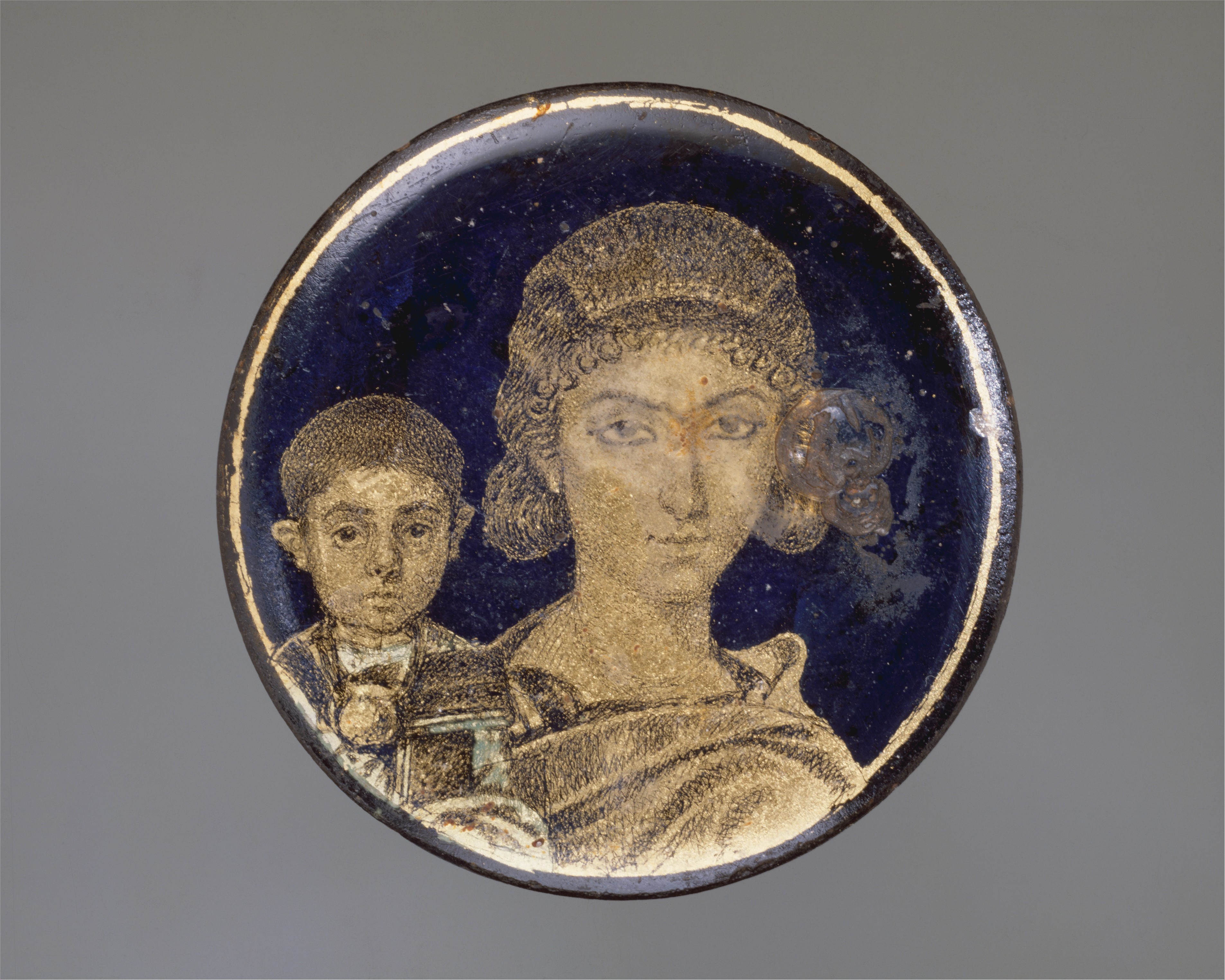
Executive Heritage Analysis: The Gold Glass Medallion as a Strategic Archetype for Katherine Fashion Lab
This research paper presents a comprehensive heritage analysis of the Roman Gold Glass Medallion featuring a Mother and Child, a fourth-century CE artifact of profound symbolic, spiritual, and historical significance. As Lead Heritage Curator for Katherine Fashion Lab, I have examined this object through the lens of cultural symbolism, historical adornment, and high-end luxury strategy. The medallion’s fusion of precious materials, intimate domestic imagery, and enduring spiritual resonance offers a compelling blueprint for Katherine Fashion Lab’s 2026 strategic positioning. This analysis will dissect the medallion’s symbolic power, its role in historical adornment, its spiritual meaning, and translate these insights into actionable luxury brand strategy for the upcoming season.
Symbolic Power: The Mother-Child Dyad as a Universal Icon
The Gold Glass Medallion’s central motif—a mother and child—represents one of the most potent and enduring symbols in human civilization. In the Roman context, this imagery transcended mere portraiture; it served as a visual declaration of lineage, continuity, and divine favor. The mother figure, often depicted in classical matronly attire, embodies nurturance, protection, and dynastic stability. The child, frequently shown with an outstretched hand or gazing upward, signifies hope, inheritance, and the future of the family line. This dyad was not merely personal; it was a public statement of piety and social standing, particularly among the Roman elite who commissioned such objects for funerary or commemorative purposes.
From a symbolic power perspective, the medallion’s gold leaf backing amplifies its meaning. Gold, in Roman culture, was associated with the divine, the eternal, and the immutable. Encasing the mother-child pair in gold elevated their relationship from the temporal to the transcendent. For Katherine Fashion Lab, this suggests that the mother-child archetype can be leveraged as a symbol of enduring legacy, emotional depth, and aspirational continuity. In the 2026 luxury market, where consumers increasingly seek meaning beyond materiality, such iconography offers a narrative of connection and permanence that resonates with high-net-worth individuals prioritizing heritage and family values.
Historical Adornment: The Medallion as a Wearable Status Object
The Gold Glass Medallion was not a static display piece; it was designed for adornment. Typically set into a metal frame or mounted on a necklace, it was worn as a pendant, often by women of the Roman upper class. This practice of wearable art served multiple functions: it was a marker of wealth, a talisman of protection, and a public declaration of personal identity. The medallion’s intimate scale—usually 5 to 10 centimeters in diameter—allowed it to be worn close to the heart, reinforcing its emotional and spiritual significance.
Historical adornment of this kind reveals a sophisticated understanding of luxury as intimate expression. Unlike monumental architecture or public sculpture, the medallion was a private object that carried public meaning. The gold leaf technique, known as “gold glass” or “fondis d’oro,” involved fusing gold leaf between two layers of glass, a technically demanding process that required master craftsmanship. This labor-intensive production method ensured rarity and exclusivity, key attributes of any high-end luxury item. For Katherine Fashion Lab, the medallion’s design principle—intimate, wearable, and technically exquisite—offers a direct strategic parallel. The 2026 collection can incorporate miniature, medallion-inspired pieces that blend traditional craftsmanship with contemporary wearability, targeting clients who value storytelling through personal adornment.
Spiritual Meaning: The Medallion as a Vessel of Transcendence
The spiritual dimension of the Gold Glass Medallion is perhaps its most profound layer. In the fourth century, Roman religious practices increasingly incorporated elements of mystery cults, ancestor veneration, and early Christian symbolism. The mother and child motif, while often interpreted as a secular portrait, carried deep spiritual connotations. It evoked the Roman goddesses Juno and Fortuna, protectresses of women and children, as well as the emerging Christian iconography of the Virgin and Child. This syncretic spirituality allowed the medallion to function as a protective amulet, a prayer object, and a symbol of eternal life.
The medallion’s placement in tombs and catacombs further underscores its spiritual role. It was believed to accompany the deceased into the afterlife, serving as a passport to divine favor. The gold leaf, impervious to decay, symbolized the soul’s immortality. For contemporary luxury consumers, this spiritual meaning translates into a desire for objects that offer emotional protection, metaphysical resonance, and a sense of transcendence. Katherine Fashion Lab’s 2026 strategy can harness this by positioning certain pieces as “amulets of legacy”—wearable objects that combine precious materials with symbolic motifs to evoke protection, continuity, and spiritual depth. This approach aligns with the growing trend of “conscious luxury,” where consumers seek items that connect them to something greater than themselves.
2026 High-End Luxury Strategy: Translating Heritage into Market Leadership
To translate the Gold Glass Medallion’s heritage into a 2026 high-end luxury strategy, Katherine Fashion Lab must adopt a multi-pronged approach that integrates symbolic power, historical adornment, and spiritual meaning into a cohesive brand narrative. The following strategic pillars are recommended:
Pillar One: Iconic Motif Development
Develop a proprietary “Mother-Child” or “Legacy Dyad” motif that can be applied across accessories, jewelry, and limited-edition apparel. This motif should be rendered in precious materials—gold, enamel, and glass—to echo the medallion’s materiality. The motif’s symbolic resonance should be communicated through marketing campaigns that emphasize family heritage, emotional continuity, and personal narrative. This will differentiate Katherine Fashion Lab from competitors who rely solely on trend-driven imagery.
Pillar Two: Craftsmanship as Narrative
Invest in artisanal techniques that mirror the medallion’s gold glass process. Partner with master glassblowers and goldsmiths to create limited-run pieces that celebrate technical mastery and rarity. Each piece should be accompanied by a certificate of authenticity detailing the craftsmanship process, thus creating a story of exclusivity that justifies premium pricing. This strategy appeals to the ultra-high-net-worth segment that values provenance and skill over mass production.
Pillar Three: Spiritual and Emotional Positioning
Position select pieces as “modern amulets” or “heirloom talismans” that offer emotional protection and spiritual connection. This can be achieved through experiential retail activations, such as private consultations with heritage curators, or through digital storytelling that explores the medallion’s historical and spiritual context. By aligning with the consumer’s search for meaning, Katherine Fashion Lab can command higher loyalty and brand equity.
Pillar Four: Intimate Adornment for the Modern Elite
Focus on small-scale, wearable objects that can be worn close to the body—pendants, brooches, cufflinks, and rings. These pieces should be designed for personal significance rather than public display, echoing the medallion’s intimate scale. This approach taps into the post-pandemic trend of “quiet luxury,” where discernment and personal meaning outweigh ostentation. Katherine Fashion Lab can lead this space by offering bespoke customization, allowing clients to embed personal symbols or initials into the design.
Pillar Five: Heritage-Driven Marketing Campaign
Launch a 2026 campaign titled “The Eternal Bond,” which draws direct visual and narrative inspiration from the Roman Gold Glass Medallion. Use high-resolution imagery of the original artifact alongside Katherine Fashion Lab’s reinterpretations. Collaborate with art historians and cultural institutions to lend academic credibility. This campaign should target collectors, connoisseurs, and heritage-conscious consumers, positioning the brand as a custodian of timeless beauty rather than a follower of fleeting trends.
Conclusion: The Medallion as a Strategic Compass
The Roman Gold Glass Medallion with a Mother and Child is far more than an archaeological curiosity; it is a strategic archetype for Katherine Fashion Lab’s 2026 luxury vision. Its symbolic power as a testament to lineage and love, its historical role as a wearable status object, and its spiritual meaning as a vessel of transcendence offer a rich tapestry of insights. By translating these elements into a cohesive strategy—centered on iconic motifs, artisanal craftsmanship, emotional positioning, intimate adornment, and heritage-driven marketing—Katherine Fashion Lab can differentiate itself in a crowded market. The medallion reminds us that true luxury is not about novelty, but about connection to the eternal. In 2026, Katherine Fashion Lab can embody this principle, offering clients not just objects, but legacies.