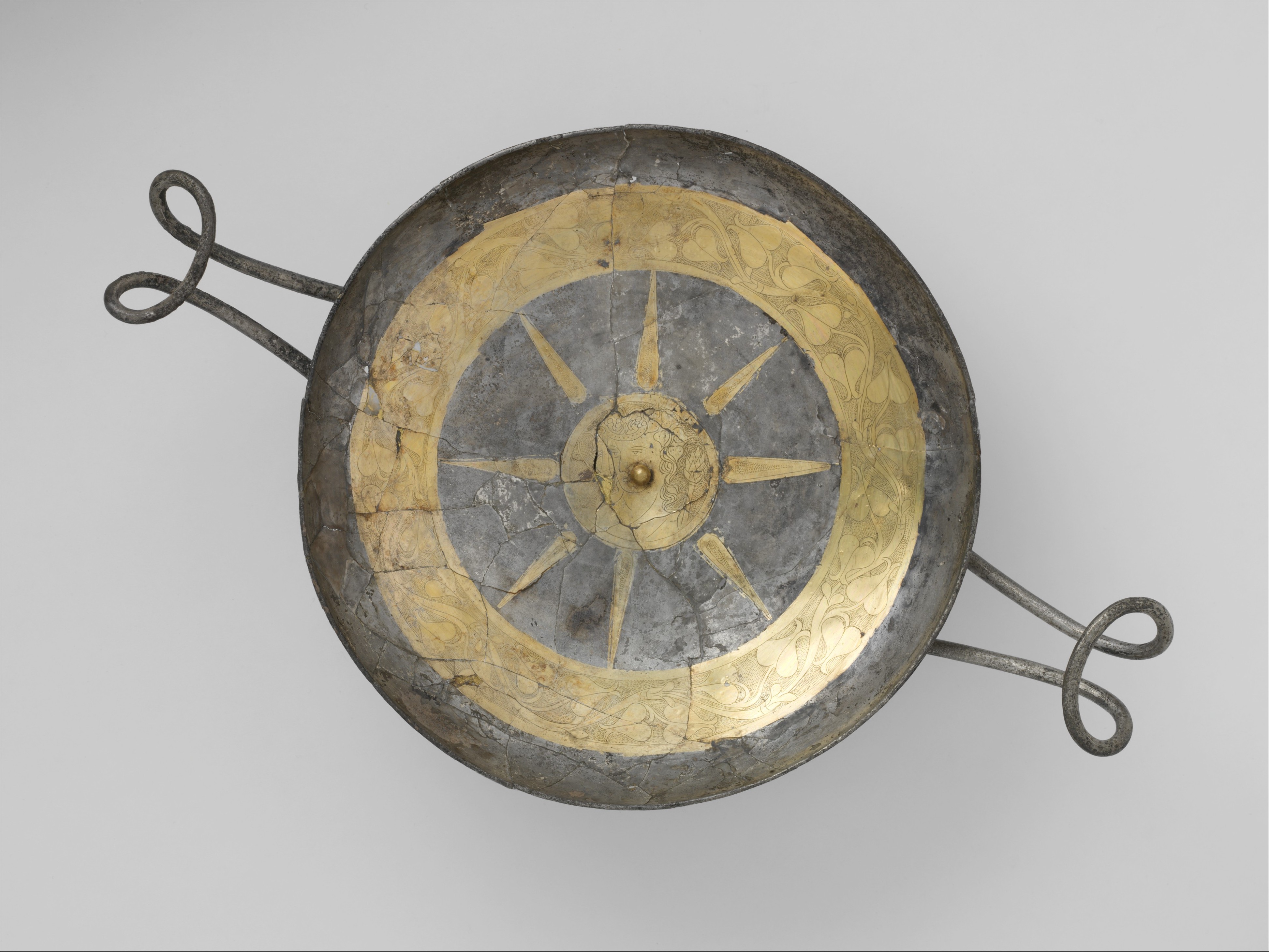
Heritage Analysis: The South Italian Silver-Gilt Cup as a Strategic Artefact for Katherine Fashion Lab
This strategic standalone research paper examines a singular artefact—a South Italian, Greek-crafted silver-gilt cup (one of a pair)—through the dual lens of historical semiotics and forward-facing luxury strategy. For Katherine Fashion Lab, such objects are not mere relics but active repositories of coded meaning, offering a profound template for brand narrative, material innovation, and symbolic capital. This analysis deconstructs the cup’s inherent language of power, adornment, and spirituality, projecting its core principles onto a 2026 high-end luxury strategy that prioritizes intellectual depth, ceremonial craft, and metaphysical value.
Decoding the Artefact: A Nexus of Material, Form, and Symbolic Power
Crafted in the Greek colonies of Magna Graecia (circa 4th-3rd century BCE), this cup exists at a critical cultural and commercial crossroads. Its medium—silver overlaid with gold (gilding)—is a deliberate statement of hierarchical value and aesthetic alchemy. Silver, mined from the famed Laurion veins, represented substantial economic wealth, while gold was the immutable metal of the gods, signifying eternity and divine favor. The gilding technique, where a micro-layer of gold transforms the base silver, is an act of transfiguration. It speaks directly to the luxury strategist’s core mandate: the elevation of the material into the realm of the symbolic. The cup’s function within the symposium (a ritualized drinking feast) further amplifies its role. It was not a utilitarian vessel but an instrument of social performance, facilitating communion, facilitating debate, and displaying the owner’s xenia (guest-friendship) and cultural sophistication. Its power is thus tripartite: economic (precious metals), social (ritual use), and cultural (Hellenic identity in a foreign land).
Historical Adornment and the Body of the Object
The adornment of this cup is its primary text. We must consider the object itself as a “body” to be dressed. Any repoussé work, engraved motifs, or figural scenes are not mere decoration but a curated skin of meaning. Common iconography from this period includes Dionysian revelry (tying the cup’s use to the god of wine and ecstasy), mythological narratives, or vegetal friezes symbolizing abundance and the natural cycle. The precise craftsmanship required for this miniature relief work—the chasing, engraving, and meticulous gilding—parallels the haute couture ethos of hand-work, precision, and surface narrative. The cup’s adornment serves to ritualize the act of drinking, transforming it from a physical need into a theatrical, culturally coded event. For Katherine Fashion Lab, this presents a foundational principle: adornment is narrative, and craft is the language of that narrative. The wearer, like the symposiast, becomes a participant in a performed story through the objects they engage with.
Spiritual Meaning and the Vessel as Metaphor
Beyond social display, the cup carries a profound spiritual and metaphysical charge. In numerous ancient cosmologies, the cup or chalice is a universal symbol of receptivity, containment, and the receiving of spiritual or intoxicating essence. In the Greek context, it could be a vessel for kukeon (a ritual potion) or wine as the blood of Dionysus, facilitating a state of enthousiasmos (the god within). The gilding, with gold’s solar and incorruptible qualities, further sanctifies this transformation. The artefact, therefore, operates on a continuum from the profane to the sacred, holding within its form the potential for altered states—whether social, intellectual, or spiritual. This spiritual metaphor is critical for modern luxury, which increasingly seeks to fill a void of meaning. The object is not a product but a vessel for experience, memory, and personal transformation. It invites the consumer into a ritual, not merely a transaction.
Strategic Projection: A 2026 Luxury Framework for Katherine Fashion Lab
Translating this heritage analysis into a 2026 high-end luxury strategy requires moving from archaeology to active alchemy. The silver-gilt cup provides a master blueprint for a collection or brand pillar we might term "Ritual Objects for Modern Symposiums."
Pillar 1: Symbolic Material Alchemy
Emulate the transformative gilding process through innovative material juxtapositions. Develop proprietary techniques where a "base" material is sanctified by a "noble" one—e.g., organic linen fused with microscopic gold leaf filaments, recycled steel electroplated with palladium in ceremonial patterns, or algae-based leather accented with platinum. Each piece must tell the story of its transfiguration, emphasizing the alchemical journey from raw to refined.
Pillar 2: Adornment as Encrypted Narrative
Move beyond seasonal prints to embedded narratives. Using laser-etching, micro-embroidery, or intelligent material weaving, encode garments and accessories with modern mythologies—abstracted astronomical charts, biometric data patterns, or glyphs from constructed languages. Like the cup’s iconography, these should be discernible to the initiated, creating a community of those who can "read" the collection. Adornment becomes a membership token.
Pillar 3: The Ceremonial Vessel & Spatial Ritual
Expand beyond apparel into objects for modern ritual. Design limited-edition carafes, chalice-inspired stemware, or incense holders that complement a clothing collection, creating a full ecosystem for contemporary ceremony (the dinner party, the solitary meditation, the communal gathering). Furthermore, retail spaces must become neo-symposiums—venues for dialogue, performance, and consumption of ideas, not just goods. The act of acquisition should feel like an initiation into a deeper narrative.
Pillar 4: The Metaphysical Value Proposition
In 2026, luxury’s final frontier is the metaphysical. Katherine Fashion Lab must articulate not just the material and craft value, but the spiritual utility of its objects. How does a coat become a "vessel of protection"? How does a ring facilitate "connection"? This requires a rigorous, poetic brand language derived directly from archetypes like the cup—containment, transformation, communion. Marketing must evoke the enthousiasmos, the divine inspiration that objects can catalyze in the modern life.
In conclusion, the South Italian silver-gilt cup is a potent strategic asset. It teaches that true luxury is an orchestrated system of symbolic power, where material alchemy, narrative adornment, and spiritual metaphor converge to create objects of profound cultural resonance. For Katherine Fashion Lab in 2026, the mandate is clear: to become not a fashion house, but a laboratory for modern ritual, crafting the sacred vessels for the symposiums of our time. The past’s most refined objects have always been those that held more than they contained; our future strategy must be built on precisely the same principle.