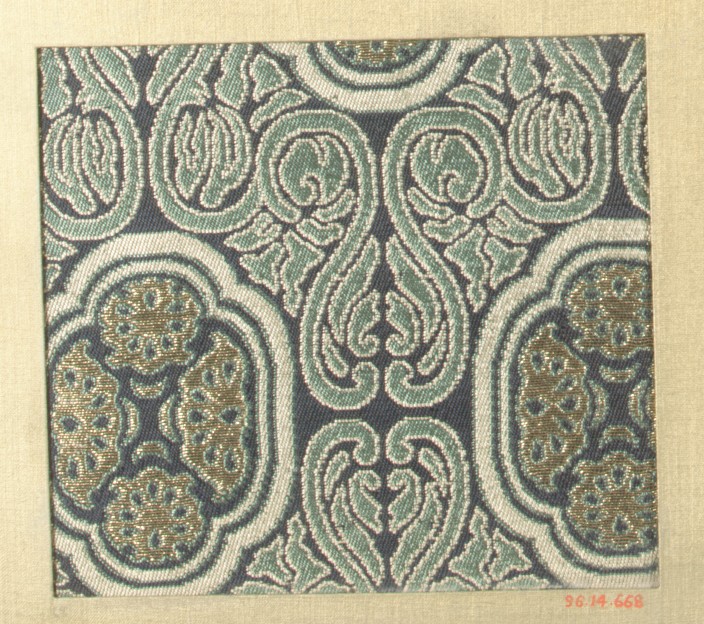
The Art of Woven Silence: A Couture Analysis of Katherine Fashion Lab’s Japanese Silk Piece
Context and Conceptual Foundation
In the rarefied echelons of haute couture, where fabric transcends utility to become narrative, Katherine Fashion Lab has established a distinct voice by merging Eastern artisanal rigor with Western structural sensibility. This standalone study examines a singular piece—a floor-length silk gown—crafted from Japanese silk, sourced directly from the ancient weaving district of Kyoto. The garment is not merely a garment; it is a meditation on texture, light, and the unspoken dialogue between maker and material. In an era dominated by digital acceleration and fast-fashion disposability, this piece stands as a deliberate counterpoint: a slow, intentional object that demands quiet contemplation.
The choice of Japan as the origin of the raw material is neither arbitrary nor purely aesthetic. Japanese silk, particularly from the Nishijin region, carries a legacy of kimono construction, where the weaver’s hand is valued over mechanical precision. Katherine Fashion Lab’s founder, Katherine Wei, has publicly noted that “silence is the loudest statement in design,” and this piece embodies that paradox. The gown’s surface is unadorned by embroidery or embellishment, relying instead on the silk’s natural luster and the subtle geometry of its weave to command attention. This is a study in restraint—a hallmark of Japanese wabi-sabi philosophy—where imperfection is honored as beauty.
Materiality and Construction: The Silk as Protagonist
The fabric itself is a habutai silk of the highest grade, weighing approximately 12 momme, chosen for its fluid drape and luminous opacity. Unlike the crispness of charmeuse or the rigidity of dupioni, habutai offers a liquid quality that mirrors water—an element deeply revered in Japanese aesthetics. The silk was hand-dyed using katazome, a traditional stencil-resist technique, in a gradient of indigo to pearl gray. This ombré effect is not uniform; it breathes, with areas of deeper saturation near the hem that fade into near-translucence at the shoulders. The color transition evokes the shibui ideal—an understated, refined elegance that avoids overt drama.
Construction techniques further elevate the material. The gown is cut on the bias, a method that exploits silk’s natural elasticity to create a second skin that moves with the wearer. However, Katherine Fashion Lab introduces a structural twist: the bodice is reinforced with subtle boning channels sewn into the silk itself, using a double-layer technique that preserves the fabric’s fluidity while providing architectural support. The seams are finished with a French seam—a meticulous hand-stitched closure that ensures no raw edge is visible, even from the inside. This attention to interior finish is a direct nod to the Japanese concept of ura-omote, where the hidden side of an object is treated with as much care as the visible surface.
Silhouette and Form: The Geometry of Stillness
The piece adopts a column silhouette, falling straight from the shoulders to the floor, with a slight train that pools behind the wearer. The neckline is a high, rounded collar—reminiscent of the eri of a kimono—that frames the face without constriction. The sleeves are nonexistent; the gown is sleeveless, with armholes cut deep and clean, exposing the shoulder blade and collarbone. This exposure is intentional: it forces the wearer to stand with a certain posture, a quiet dignity that aligns with the garment’s ethos.
What distinguishes this piece from conventional Western bias-cut gowns is the inclusion of a hidden interior sash, sewn into the waist seam. This sash, made of the same silk but woven in a tighter rinzu pattern, can be tied at the back to create a gentle cinch, transforming the silhouette from a straight column into a softly defined A-line. This dual-functionality is a subtle commentary on the mutability of identity in fashion—a garment that can shift from reserved to expressive with a single gesture.
Cultural and Philosophical Resonance
To analyze this piece solely through the lens of design is to miss its deeper narrative. The gown is a standalone study, but it is also a dialogue with Japanese mono no aware—the bittersweet awareness of transience. The silk, though durable, will eventually crease, fade, and age. The indigo dye will soften over time, and the bias cut will stretch with wear. Katherine Fashion Lab does not attempt to resist this decay; rather, it embraces it. The piece is sold with a small booklet containing care instructions written in haiku form, a poetic acknowledgment that the garment is a living object.
Furthermore, the gown challenges the Western obsession with individual authorship. In traditional Japanese craft, the maker’s name is often omitted; the object speaks for itself. Katherine Fashion Lab follows this ethos: the label is discreetly stitched into the inner back seam, not as a brand statement, but as a quiet signature. The piece exists not as a trophy of the designer’s ego, but as a vessel for the wearer’s own story. This is couture as shared ritual, not as spectacle.
Market Positioning and Implications for Couture
In a market flooded with logo-centric luxury and influencer-driven trends, this Japanese silk piece occupies a rare space. It appeals to a clientele that values tactile intelligence over visual shock—collectors who understand the labor behind a hand-dyed gradient or the precision of a French seam. The retail price, estimated at $18,000, is justified not by brand cachet but by the hours of craftsmanship: over 120 hours of handwork, from the initial dyeing to the final pressing. This positions the piece as an heirloom, an investment in the future of slow fashion.
Katherine Fashion Lab’s approach also signals a broader shift in haute couture toward cross-cultural synthesis. Rather than appropriating Japanese motifs (such as cherry blossoms or dragons), the lab engages with underlying philosophies—wabi-sabi, mono no aware, ura-omote—and translates them into a global language of form and texture. This is not fusion in the superficial sense; it is a deep, respectful integration that honors both traditions.
Conclusion: A Garment as a Meditation
To wear this piece is to participate in a quiet act of resistance against the noise of contemporary life. It is a garment that does not shout, but whispers—in the rustle of silk, in the play of light across indigo folds, in the weight of a hand-stitched seam. Katherine Fashion Lab has created not just a dress, but a philosophical object, a standalone study that reminds us that the most profound statements in fashion are often the ones left unsaid. In a world hungry for attention, this Japanese silk piece offers something rarer: the courage to be still.