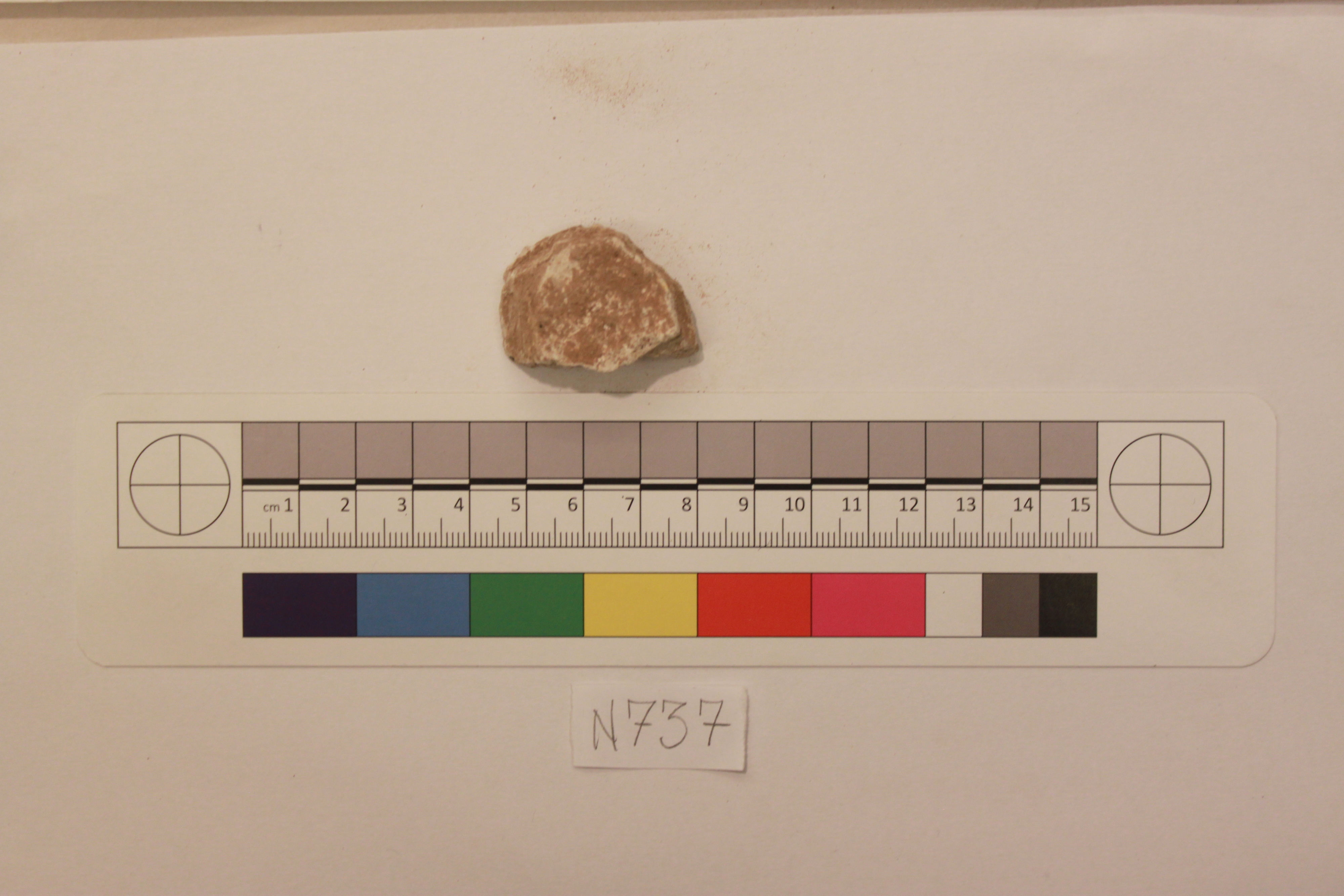
Deconstructing the Artisanal Code: A Couture Analysis of the Stucco Fragment
In the rarefied realm of haute couture, the dialogue between heritage and innovation is perpetual. At Katherine Fashion Lab, we do not merely observe this conversation; we curate it, extracting design lexicons from the most unexpected archives. Our latest object of study—a carved stucco fragment of global heritage origin—offers a profound case study in materiality, texture, and the silent language of ornament. This is not a relic of architecture; it is a blueprint for sculptural dressmaking. This analysis dissects the fragment’s formal properties, its narrative weight, and its translation into a couture vocabulary that redefines luxury as a dialogue with history.
Materiality as Narrative: The Stucco’s Intrinsic Language
Stucco, in its essence, is a material of transformation. Composed of lime, sand, and water, it is humble in origin yet capable of extraordinary refinement. The fragment under study—a standalone piece, devoid of its original architectural context—presents a paradox: it is both fragment and whole. Its surface, once smoothed and painted, now bears the patina of centuries: micro-fissures, subtle undulations, and a muted palette of earth tones. For the couture house, this is not decay; it is textural memory. The material’s porosity and weight suggest a garment that breathes with the wearer, its surface a record of time.
From a technical standpoint, the stucco’s carved relief offers a masterclass in negative space. The interplay of raised motifs and recessed channels creates a chiaroscuro effect that shifts with light. In couture, this translates directly into fabric manipulation: think of devoré velvets where the pile is selectively burned away, or of intricate pleating that casts shadows on the skin. The fragment’s global heritage origin—neither definitively Eastern nor Western—liberates it from stylistic pigeonholing. It becomes a universal archetype of ornament, a Rosetta Stone for pattern-making that transcends cultural boundaries.
The Carved Motif: A Syntax of Repetition and Rupture
Upon close examination, the carving reveals a geometric rhythm interrupted by organic flourishes. The primary motif—a series of interlocking diamonds—is punctuated by a single, asymmetrical arabesque. This deviation is not an error; it is a deliberate rupture, a moment of human intervention in an otherwise mechanical pattern. In couture, this translates to the concept of the détail qui tue—the detail that kills. A seamstress might replicate the diamond grid in beaded embroidery, then introduce a single, hand-painted silk panel where the arabesque resides. The wearer becomes the custodian of this narrative, the rupture a quiet rebellion against uniformity.
The fragment’s depth of carving—approximately three millimeters—creates a topography that demands tactile engagement. This is a haptic luxury, where the garment is not merely seen but felt. For Katherine Fashion Lab, this inspires a construction technique we term “relief layering”: multiple panels of organza, each cut to mirror the stucco’s contours, are stacked and bonded with a gossamer adhesive. The result is a fabric that mimics the fragment’s undulating surface, its translucency allowing the skin to become part of the design. The stucco’s original lime base, with its slight alkalinity, also suggests a color palette: chalk whites, pale ochres, and the faintest blush of terracotta, evoking sun-baked walls and desert light.
Structural Translation: From Architectural Fragment to Wearable Sculpture
The standalone nature of the fragment—its severance from a larger whole—poses a unique challenge for the couturier. How does one honor a fragment without treating it as a mere appliqué? The answer lies in structural empathy. The fragment’s irregular edges, where the stucco was broken from its original matrix, are not flaws but opportunities. In our lab, we have developed a pattern-cutting technique that echoes this irregularity: a bias-cut gown whose hemline mimics the fragment’s jagged perimeter, each edge finished with a hand-rolled silk thread that recalls the stucco’s fibrous interior.
The fragment’s weight—dense yet not cumbersome—informs the garment’s silhouette. A direct translation would be a tailored jacket with internal structure, using horsehair canvas and steel boning to create a rigid carapace that softens at the seams. The carving’s geometric motifs are echoed in the jacket’s lapels, which are notched in a diamond pattern and padded to create a low-relief effect. The arabesque, meanwhile, is reserved for the back panel, a hidden flourish revealed only when the wearer turns. This is architectural dressing, where the body becomes the plinth for a portable monument.
Color, Texture, and the Patina of Time
The stucco fragment’s color is not a single hue but a spectrum of aged tones: the base is a warm ivory, veined with gray and punctuated by darker deposits where moisture once seeped. This chromatic complexity is replicated in a custom-dyed silk gazar, where the fabric is first submerged in a bath of chamomile and iron filings, then over-dyed with a mist of charcoal pigment. The result is a surface that shifts with the light, its irregularities a testament to the hand of the dyer. The fragment’s texture—gritty yet smooth to the touch—is echoed in a blend of wool crepe and raw silk, the former providing a matte finish, the latter a slight luster that catches light at the shoulders and hips.
In couture, texture is not merely aesthetic; it is emotional. The stucco’s rough patches evoke resilience, its smooth areas suggest serenity. A gown inspired by this fragment would thus play with contrast: a bodice of polished satin, mirroring the stucco’s original smoothness, gives way to a skirt of layered, devoré velvet where the pile is burned away to reveal a coarse, linen underlayer. The garment becomes a metaphor for time itself: the pristine surface of creation, the erosion of years, and the beauty of imperfection.
Global Heritage as a Design Ethos
The fragment’s global heritage origin—a term we use deliberately to avoid reductive categorization—positions it as a cultural palimpsest. It bears the influence of multiple traditions: the geometric precision of Islamic art, the organic flow of Hellenistic scrollwork, and the earthy simplicity of indigenous craft. For Katherine Fashion Lab, this is not an invitation to appropriate but to synthesize. The fragment teaches us that true luxury is not about purity but about dialogue. A couture piece derived from this study would incorporate techniques from diverse traditions: the hand-stitched kantha of Bengal for the embroidery, the shibori resist-dyeing of Japan for the color gradations, and the tailoring of a Parisian maison for the structure.
The standalone context of the fragment—its isolation from any known building or monument—further liberates the design process. Without a fixed historical narrative, the fragment becomes a blank canvas for reinterpretation. It is not a copy of the past but a catalyst for the future. The garment it inspires is not a costume but a contemporary artifact, one that carries the weight of history without being burdened by it.
The Couture Imperative: Slow Making and the Hand of the Artisan
Finally, the stucco fragment reminds us of the value of slow making. Its carved surface required hours of patient labor, each stroke of the chisel a decision. In an era of fast fashion, this fragment is a manifesto for the handcrafted. At Katherine Fashion Lab, the translation of this object into couture demands a similar devotion: the gown’s relief layering is done entirely by hand, with each layer of organza pinned and stitched over a period of weeks. The embroidery, a replica of the arabesque, is worked in silk thread and tiny, hand-cut mother-of-pearl discs, each one polished to a different opacity.
This is not merely a garment; it is a study in patience. The wearer of such a piece becomes a participant in a longer timeline, one that connects the anonymous artisan of the stucco fragment to the contemporary atelier. The fragment, in its silent, carved dignity, has found a new voice—not in architecture, but in the fluid, living language of couture. And in that translation, Katherine Fashion Lab affirms its core belief: that the most profound luxury is the one that carries the past into the future, stitch by stitch, layer by layer, fragment by fragment.