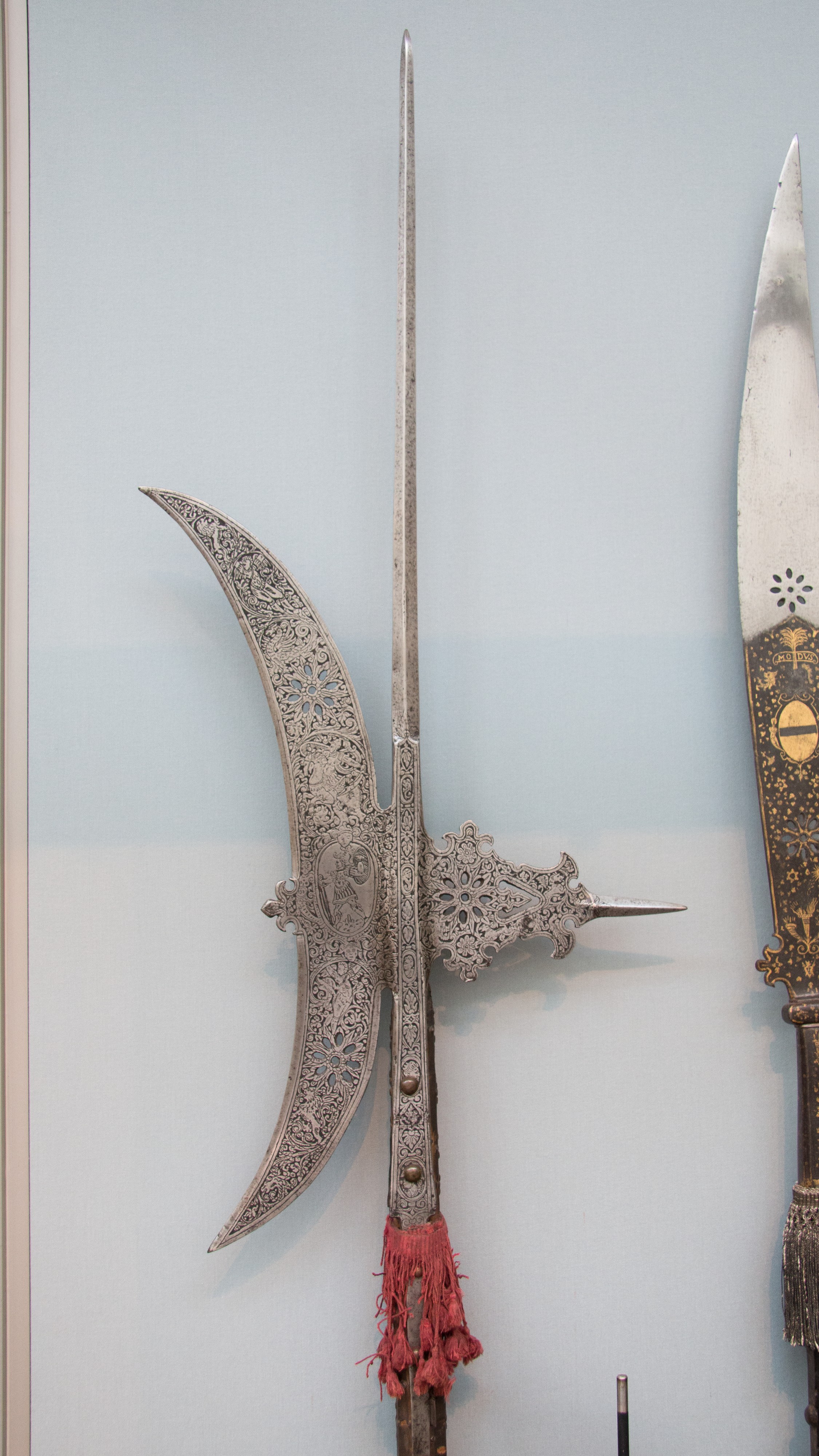
Heritage Analysis: The Italian Halberd as a Symbol of Power and Adornment
This strategic heritage analysis examines the Italian halberd—a polearm weapon combining a spear point, axe blade, and hook—through the lens of symbolic power, historical adornment, and spiritual meaning. Produced primarily during the 15th and 16th centuries, the Italian halberd served as both a functional battlefield implement and a potent emblem of authority, status, and divine protection. For Katherine Fashion Lab, this artifact offers a rich lexicon of motifs and narratives that can inform a 2026 high-end luxury strategy centered on heritage, craftsmanship, and symbolic resonance. The analysis proceeds through three core dimensions: symbolic power, historical adornment, and spiritual meaning, concluding with actionable strategic recommendations.
Symbolic Power: The Halberd as an Emblem of Authority and Command
The Italian halberd, particularly in its use by the Swiss Guard and Italian city-state militias, was not merely a weapon but a visual declaration of sovereign authority. Its long shaft and imposing head—often measuring over two meters in total length—demanded physical space and commanded psychological deference. In Renaissance Italy, the halberd was carried by ceremonial guards, palace sentinels, and civic officials during processions, diplomatic receptions, and judicial ceremonies. The weapon’s dual functionality—capable of both cutting and thrusting—symbolized the ruler’s capacity for both decisive action and measured restraint.
From a strategic perspective, the halberd’s symbolic power derives from its verticality and duality. The vertical shaft connects earth and sky, evoking the axis mundi—a cosmic axis that situates the bearer at the center of temporal and spiritual authority. This architectural quality aligns with luxury branding’s reliance on hierarchy and exclusivity. For Katherine Fashion Lab, the halberd’s silhouette can inspire elongated, sculptural forms in garments and accessories—such as tailored coats with dramatic shoulder lines or jewelry that mimics the weapon’s angular head. The duality of the halberd—combining spear (precision) and axe (force)—offers a narrative of balanced power, which can be translated into collections that juxtapose delicate embroidery with robust tailoring, or fine metals with raw textiles.
Historical Adornment: Craftsmanship and Ornamentation as Status Signals
Italian halberds of the Renaissance period were often adorned with intricate decorative elements that transcended mere functionality. The steel heads were frequently etched, gilded, or inlaid with brass, featuring motifs such as scrolling vines, heraldic beasts, and religious iconography. The wooden shafts were sometimes wrapped in velvet or silk, and fitted with brass ferrules and pommels. These embellishments served dual purposes: they demonstrated the wealth and taste of the patron, and they elevated the weapon from a tool of violence to an object of art. The textile wrappings—often in crimson, gold, or azure—were not only visually striking but also provided grip and protection against moisture.
This convergence of utility and ornamentation is a hallmark of high-end luxury. The halberd’s adornment was not superfluous; it was integral to its identity as a status object. For Katherine Fashion Lab, this principle can inform a material strategy that emphasizes tactile contrasts and historical finishes. Consider the following applications:
1. Textile Integration: The use of silk, velvet, and metallic threads in halberd wrappings suggests a return to opulent, handcrafted fabrics. For 2026, collections could feature double-faced velvet with embroidered heraldic patterns, or metal-thread brocades that recall etched steel. The interplay of matte and lustrous surfaces—analogous to steel and brass—can be achieved through laser-cut leathers and polished hardware.
2. Hardware as Adornment: The brass fittings of the halberd—ferrules, rivets, and finials—can inspire a new line of detachable embellishments for luxury accessories. Think of collar pins, belt buckles, and bag clasps shaped like miniature halberd heads, cast in brass or sterling silver. These elements reinforce the brand’s commitment to artisanal metalwork and historical reference.
3. Color Palette: The halberd’s palette—oxidized steel, aged brass, deep wood tones, and vibrant textile hues—offers a sophisticated, earthy spectrum. This can anchor a Fall/Winter 2026 collection with shades of graphite, bronze, burgundy, and olive, accented with gilded details.
Spiritual Meaning: Protection, Sacrifice, and Transcendence
In Italian Renaissance culture, the halberd was imbued with spiritual significance, particularly within the context of the Swiss Guard serving the Papal States. The weapon was seen as a tool of divine protection—both for the sovereign and the faithful. Its blade was often engraved with crosses, saints’ names, or prayers, transforming it into a talisman against evil. The act of wielding the halberd in ceremonial contexts was a form of ritualized defense, echoing the archangel Michael’s role as a warrior protector. The halberd also appeared in funerary art, where it symbolized the deceased’s martial virtue and hope for resurrection.
This spiritual dimension offers Katherine Fashion Lab a powerful narrative for meaning-driven luxury. Modern high-end consumers increasingly seek brands that provide not only aesthetic pleasure but also a sense of purpose and protection. The halberd’s symbolism can be leveraged through the following strategies:
1. Protective Motifs: Incorporate engraved or embossed symbols—such as crosses, shields, or stylized halberd heads—into linings, labels, and hardware. These subtle details act as “invisible armor” for the wearer, aligning with the trend toward talismanic fashion.
2. Ritualistic Presentation: The halberd’s role in processions and ceremonies suggests a new approach to brand experiences. For 2026, consider limited-edition “ceremonial” collections unveiled through private, invitation-only events that mimic Renaissance court rituals—complete with choreographed presentations, incense, and symbolic lighting.
3. Transcendence through Craft: The halberd’s transformation from raw materials (steel, wood, textile) into a sacred object mirrors the luxury brand’s own alchemy. Emphasize artisanal processes such as hand-forging, wood carving, and silk weaving in marketing narratives. This positions the brand as a guardian of heritage and a creator of objects that transcend mere commerce.
2026 High-End Luxury Strategy: The Halberd as a Blueprint for Heritage-Driven Design
Based on the above analysis, Katherine Fashion Lab can operationalize the halberd’s heritage into a cohesive luxury strategy for 2026. The following framework integrates symbolic power, historical adornment, and spiritual meaning into actionable pillars:
Pillar 1: The “Axis Mundi” Silhouette
Develop a signature silhouette inspired by the halberd’s verticality. This could manifest as a floor-length cape with a structured, spear-like collar, or a belted coat with a dramatic, asymmetrical hem that mimics the weapon’s blade. The silhouette should evoke authority and grace, suitable for both red-carpet and corporate settings.
Pillar 2: The “Armor of Grace” Collection
Create a limited-edition capsule collection that directly references the halberd’s adornment. Key pieces include a gilded brass necklace shaped like a halberd head, a silk scarf printed with heraldic patterns, and a leather belt with etched steel buckle. Each piece should be numbered and accompanied by a certificate of authenticity detailing its historical inspiration.
Pillar 3: The “Ritual of Protection” Campaign
Launch a multimedia campaign that explores the halberd’s spiritual meaning. Partner with a contemporary artist to create a short film depicting a modern-day “guardian” wearing Katherine Fashion Lab designs. The campaign should emphasize themes of protection, legacy, and transcendence, with taglines such as “Armed with Heritage” or “Wear Your Shield.”
Pillar 4: Material Innovation Lab
Invest in R&D to develop proprietary materials that echo the halberd’s textures. For instance, a brass-infused leather that develops a natural patina over time, or a steel-threaded silk that shimmers like etched metal. These materials should be exclusive to Katherine Fashion Lab, reinforcing the brand’s commitment to uniqueness and craft.
In conclusion, the Italian halberd is far more than a historical weapon; it is a multidimensional artifact that embodies power, beauty, and transcendence. By strategically integrating its symbolic, ornamental, and spiritual dimensions, Katherine Fashion Lab can create a 2026 luxury offering that resonates with discerning consumers seeking authenticity, protection, and timeless elegance. The halberd’s legacy—forged in steel and silk—offers a blueprint for a brand that stands as both a guardian of tradition and a pioneer of modern luxury.