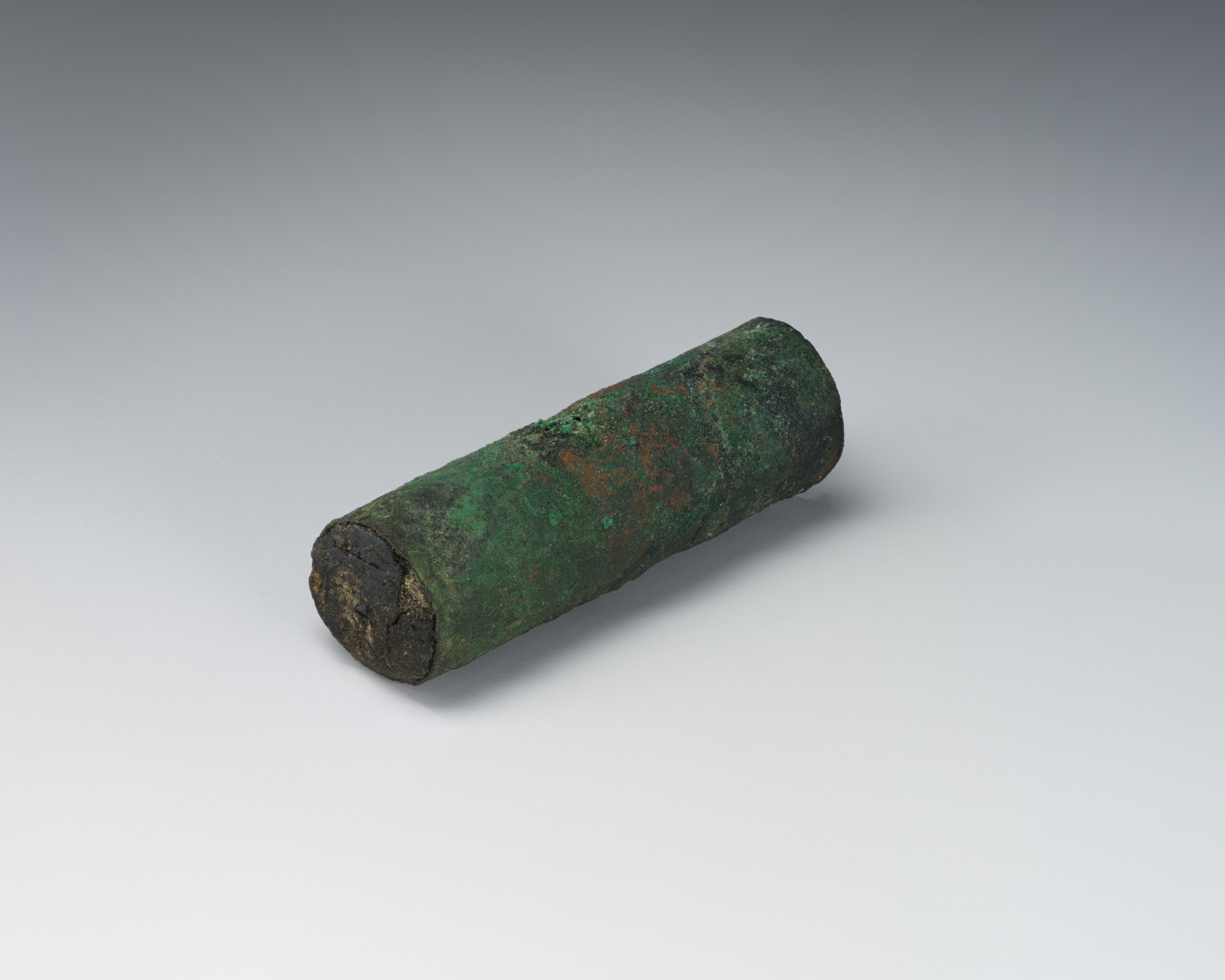
Executive Heritage Analysis: The Sasanian Amulet Case
This report presents a strategic heritage analysis of a Sasanian amulet case, crafted from copper, bitumen, and exhibiting a green patina, for the purpose of informing Katherine Fashion Lab’s 2026 high-end luxury strategy. The study examines the object’s symbolic power, historical adornment, and spiritual meaning, translating these elements into actionable insights for contemporary luxury positioning. The Sasanian Empire (224–651 CE), a pre-Islamic Persian dynasty, was renowned for its sophisticated metallurgy, intricate iconography, and deeply embedded Zoroastrian spiritual traditions. This amulet case, as a wearable object of protection, embodies a confluence of material, symbolic, and ritualistic significance that resonates powerfully with modern luxury consumers seeking authenticity, narrative depth, and spiritual resonance.
Symbolic Power: The Amulet as a Conduit of Cosmic Protection
Within the Sasanian worldview, the amulet case was not merely a decorative accessory but a functional tool for mediating between the mortal and divine realms. Copper, the primary medium, held profound symbolic weight. In Zoroastrian cosmology, copper was associated with the planet Venus and the goddess Anahita, who presided over fertility, healing, and protection. The use of copper thus imbued the amulet case with apotropaic properties, warding off evil spirits, the evil eye, and malevolent forces. The bitumen, a natural asphalt used as an adhesive and sealant, added a layer of sanctity. Bitumen was sourced from the Dead Sea region and was considered a material of the underworld, linking the amulet to chthonic powers and the ancestors. The green patina, a natural oxidation product, was not seen as decay but as a sign of divine blessing and longevity. In Sasanian art, green symbolized paradise, renewal, and the eternal cycle of life and death.
For Katherine Fashion Lab, this symbolic architecture offers a powerful template for luxury storytelling. The amulet case’s function as a protective device can be translated into a brand narrative that emphasizes safeguarding heritage, personal identity, and spiritual well-being. High-end consumers in 2026 are increasingly seeking products that offer psychological and emotional protection—a shield against the anxieties of modern life. By referencing the Sasanian amulet’s role as a cosmic mediator, Katherine Fashion Lab can position its collections as talismanic, offering not just aesthetic beauty but metaphysical security. The copper-bitumen-patina triad can be reimagined as a material philosophy: copper as vitality, bitumen as grounding, and patina as timelessness. This triad could inform limited-edition pieces where materials are sourced for their symbolic resonance, such as recycled copper alloys, organic bitumen-infused resins, and lab-grown patinas that mimic natural aging, thereby appealing to eco-conscious luxury buyers.
Historical Adornment: Wearable Power and Status
The Sasanian amulet case was an object of both personal adornment and social distinction. Archaeological evidence indicates that such cases were worn suspended from necklaces, belts, or sewn onto garments, often in proximity to the heart or abdomen—the body’s spiritual and vital centers. The size and material quality of the case signified the wearer’s social rank; elite individuals possessed larger, more intricately decorated examples, while commoners used simpler versions. The amulet’s placement on the body was deliberate: it served as a constant visual and tactile reminder of divine protection, reinforcing the wearer’s identity as a member of a specific lineage, profession, or religious community. The copper surface was often engraved with geometric patterns, stylized animals (such as the ram, symbolizing strength, or the peacock, symbolizing immortality), or Zoroastrian symbols like the faravahar (the winged disc representing the soul’s journey).
This historical context provides Katherine Fashion Lab with a blueprint for designing jewelry and accessories that function as adorned armor. In 2026, luxury consumers are moving away from overt logos toward subtle, coded symbolism that communicates insider knowledge and personal narrative. The amulet case’s tradition of engraved motifs can inspire a line of customizable pendants, bracelets, or belt buckles, where clients select symbols that represent their own protective desires—be it strength, fertility, or spiritual guidance. The use of copper, with its warm, mutable color, offers a distinct alternative to gold or silver, appealing to collectors seeking rarity. Furthermore, the bitumen element can be reinterpreted as a matte, dark inlay, creating a striking contrast against polished copper. This material combination, reminiscent of ancient techniques, can be marketed as “archaeo-luxury,” a trend that merges historical craftsmanship with modern design. The green patina, often artificially induced in contemporary jewelry, can be positioned as a signature finish, symbolizing the brand’s commitment to authentic aging and sustainable beauty.
Spiritual Meaning: The Amulet as a Ritual Object
At its core, the Sasanian amulet case was a ritual object, activated by prayers, incantations, and the placement of sacred contents inside. The case often contained miniature scrolls inscribed with Zoroastrian hymns, verses from the Avesta, or names of protective deities. The act of wearing the amulet was a continuous ritual, a physical affirmation of faith and cosmic order. The copper’s conductivity was believed to enhance the transmission of spiritual energy, while the bitumen seal ensured the contents remained pure and untouched by profane forces. The green patina, formed over decades of wear, was seen as the object’s own spiritual biography—a record of the owner’s life and devotion.
For Katherine Fashion Lab’s 2026 luxury strategy, this spiritual dimension offers a profound opportunity to create objects that are not merely worn but experienced. The brand can develop a line of “ritual accessories” designed to be personalized with hidden compartments, allowing clients to insert their own meaningful objects—a small photograph, a pressed flower, a written intention. This transforms the product into a vessel for personal devotion, aligning with the growing consumer interest in mindfulness, self-care, and holistic well-being. The act of sealing the compartment could be marketed as a ceremonial moment, perhaps accompanied by a digital or physical ritual guide. The green patina, in this context, becomes a metaphor for the wearer’s own journey, with each mark and color shift telling a story. Katherine Fashion Lab can offer a “patina care kit” that encourages clients to interact with their pieces over time, deepening their emotional attachment. This approach elevates the product from a commodity to a heirloom, fostering brand loyalty across generations.
2026 High-End Luxury Strategy: Translating Heritage into Market Leadership
To capitalize on the Sasanian amulet case’s heritage, Katherine Fashion Lab must adopt a multi-pronged strategy that integrates symbolic, historical, and spiritual insights into a cohesive luxury narrative. The following strategic pillars are recommended:
Narrative-Driven Product Development
Launch a limited-edition collection titled “The Sasanian Ward,” featuring copper-based jewelry and accessories. Each piece should include a hidden compartment, inspired by the amulet case, and be engraved with a Sasanian-inspired symbol chosen by the client from a curated library. The collection’s price point should reflect its ritualistic value, positioning it as an investment in personal protection and heritage. Use storytelling in marketing materials that details the amulet’s original function, the symbolism of copper and bitumen, and the spiritual meaning of patina. This narrative can be reinforced through collaborations with Zoroastrian scholars or art historians, lending authenticity and depth.
Material Innovation as Brand Signature
Develop proprietary material treatments that evoke the amulet’s patina. For example, a “Sasanian Green” finish that mimics natural oxidation but is stabilized for durability. Offer clients the option to choose between a pristine polished surface or a pre-patinated finish, each with its own symbolic meaning. The bitumen element can be reimagined as a sustainable, bio-based resin that is ethically sourced, aligning with luxury consumers’ environmental values. This material innovation can be patented, creating a unique selling proposition that competitors cannot replicate.
Experiential Retail and Ritual Marketing
Design retail spaces that evoke a Sasanian treasury, with dim lighting, copper accents, and interactive displays explaining the amulet’s history. Offer a “Ritual Workshop” where clients can select their amulet’s contents and symbols, guided by a brand consultant trained in heritage narration. This experience can be extended online through a virtual consultation platform, allowing global clients to participate. The purchase process itself should feel like a rite of passage, with each piece packaged in a copper-toned box sealed with a bitumen-like wax, reinforcing the object’s sacred status.
Pricing and Exclusivity
Position the collection at the ultra-luxury tier, with prices starting at $5,000 for simple pendants and escalating to $50,000 for bespoke, fully customizable pieces. Exclusivity can be enhanced by limiting production to 500 pieces per year, each with a unique serial number and a certificate of authenticity detailing the amulet’s historical inspiration. This scarcity model appeals to collectors and investors, who view such pieces as both art and asset. Additionally, offer a “Heritage Concierge” service for repeat clients, providing updates on the piece’s patina evolution and invitations to exclusive cultural events, such as lectures on Sasanian art or private viewings of museum collections.
Cultural Stewardship and Brand Legacy
To mitigate risks of cultural appropriation, Katherine Fashion Lab should establish a Sasanian Heritage Fund, donating a percentage of each sale to archaeological preservation and Zoroastrian community initiatives. This positions the brand as a steward of cultural heritage, building trust and goodwill among discerning consumers. The fund’s activities can be documented in an annual report, reinforcing the brand’s commitment to ethical luxury. This approach ensures that the amulet case’s legacy is honored, not exploited, and that Katherine Fashion Lab is seen as a curator of history, not merely a commercial entity.
In conclusion, the Sasanian amulet case offers Katherine Fashion Lab a rich tapestry of symbolic power, historical adornment, and spiritual meaning. By translating these elements into a 2026 high-end luxury strategy focused on narrative, material innovation, experiential retail, and cultural stewardship, the brand can differentiate itself in a crowded market, appealing to consumers who seek depth, authenticity, and protection in their luxury purchases. The amulet case, once a humble object of personal faith, becomes a blueprint for a new kind of luxury—one that is as meaningful as it is beautiful.