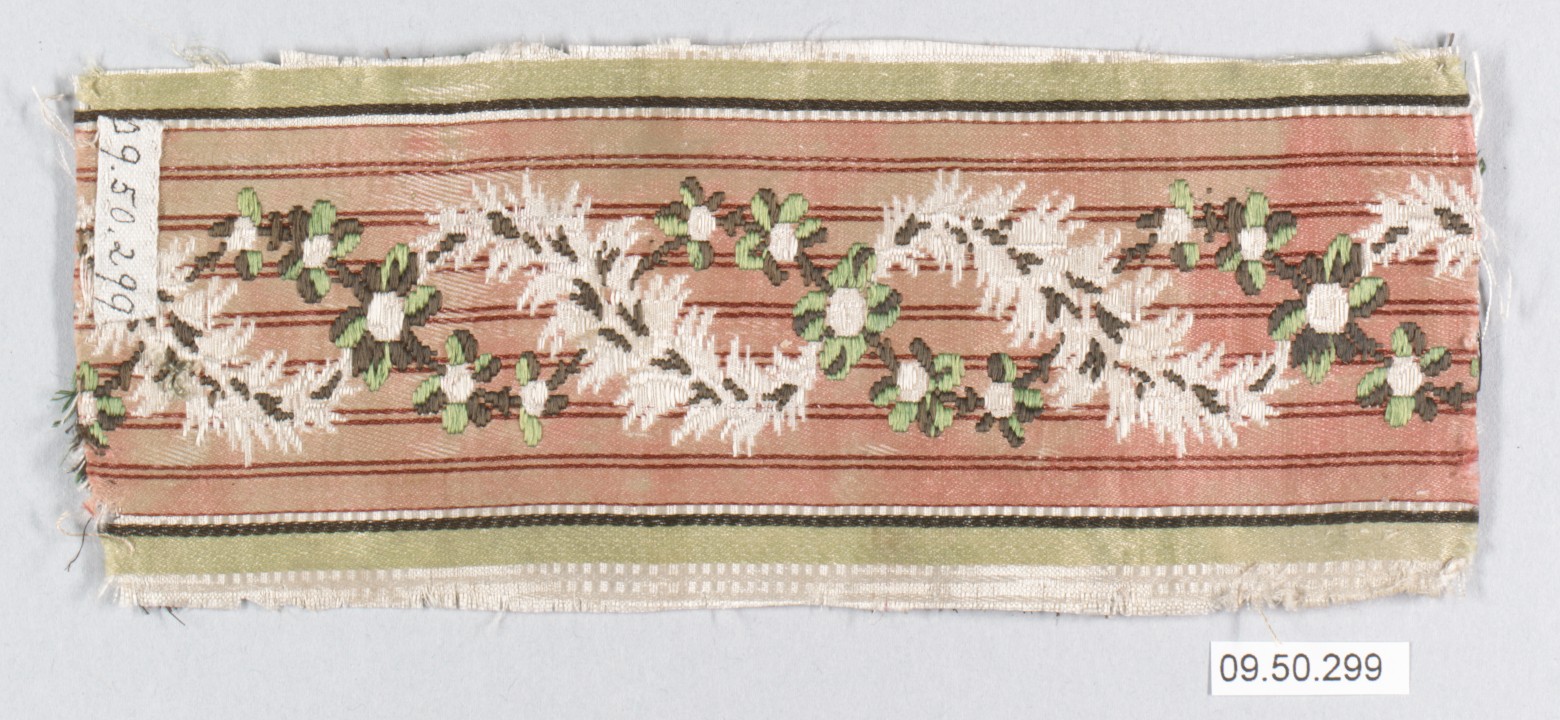
The Ribbon Reimagined: A Couture Analysis of Structure and Heritage
In the rarefied world of haute couture, the ribbon has historically been relegated to the role of a decorative afterthought—a trim, a tie, a fleeting accent. Katherine Fashion Lab’s latest standalone study, however, dismantles this hierarchy, elevating the ribbon from mere ornament to the foundational architecture of a garment. This analysis, rooted in a profound appreciation for global heritage and executed in the singular medium of silk, offers a masterclass in how a single, humble element can be transformed into a vehicle of narrative, technique, and sculptural innovation. The Lab’s approach is not merely a collection of designs; it is a rigorous investigation into the tensile strength, drape, and symbolic resonance of silk ribbon, challenging the very boundaries of what constitutes a constructed textile.
Heritage as a Silent Thread: Global Traditions in Silk Ribbon
The foundation of this study lies in its deliberate engagement with global heritage. Katherine Fashion Lab does not appropriate; it synthesizes. The silk ribbon, in its myriad historical contexts, becomes a lexicon of cultural memory. From the intricate ribbon embroidery of Eastern European folk costumes, where bands of silk were stitched into geometric narratives of protection and status, to the delicate sashes of Japanese kimono obi, which signal formality and seasonal change, the ribbon carries centuries of coded meaning. The Lab’s research team meticulously cataloged these traditions, not to replicate them, but to extract their core principles: the use of ribbon as a line of demarcation, as a symbol of ritual, and as a tool for dimensional embellishment.
This global dialogue is most evident in the collection’s structural silhouettes. One piece, a column gown, references the Mughal-era patka—a ceremonial sash worn by nobility. Here, the silk ribbon is not applied as trim but is woven into the very warp and weft of the garment’s surface. The ribbons are layered, folded, and interlocked to create a mosaic of light and shadow, echoing the intricate pietra dura inlay work of Mughal architecture. Another design, a sculpted bustier, draws upon the Spanish mantilla and its use of ribbon to frame and contain. The Lab’s interpretation uses wide, stiffened silk ribbons that are corseted into a lattice, creating a second skin that is both protective and revealing—a modern dialogue with the historical concept of the ribbon as a boundary between the private and the public self.
Material Mastery: The Alchemy of Silk
The choice of silk is not arbitrary; it is the study’s central protagonist. Silk ribbon, in its raw form, possesses a paradoxical dual nature: it is simultaneously exquisitely delicate and surprisingly strong. Katherine Fashion Lab exploits this tension to its fullest. The analysis reveals a deep understanding of how different weaves of silk ribbon—from the matte finish of duchesse satin to the shimmering translucency of organza—dictate the garment’s behavior. A single-width ribbon may be used for fine, calligraphic lines, while a multi-strand ribbon, braided or twisted, becomes a rope-like structural element capable of supporting significant weight.
The Lab’s technical innovation lies in its “ribbon weaving” technique, a proprietary process that treats each ribbon as an individual yarn. Rather than cutting and sewing, the ribbons are interlaced on a custom loom, creating a fabric that is both pliable and rigid. This allows the designer to engineer the garment’s drape with surgical precision. In one piece, a cascade of ombré-dyed silk ribbons falls from the shoulder, each ribbon dyed individually to create a gradient effect that mimics the movement of water. The ribbons are not stitched down; they are held in place by the tension of the weave itself, allowing them to flutter and breathe with the wearer’s movement. This is not decoration; it is a living architecture of silk.
Structural Grammar: The Ribbon as Building Block
This study redefines the ribbon’s role from surface to structure. In traditional couture, a garment’s shape is achieved through darts, seams, and boning. Here, the ribbon itself becomes the boning, the seam, and the surface. The Lab’s analysis categorizes three primary structural applications of silk ribbon:
1. Tensile Architecture: Using the ribbon’s inherent strength to create tension points. A strapless gown, for example, is constructed entirely from parallel bands of silk ribbon that are tensioned vertically and horizontally, creating a corset-like effect without a single bone. The ribbons are anchored at the hem and neckline, distributing the garment’s weight evenly across the body. The result is a piece that is surprisingly lightweight yet structurally robust.
2. Modular Construction: The ribbon is used as a modular unit, like a brick in a wall. Small, folded ribbon rosettes or loops are assembled into a larger textile. This technique, reminiscent of French passementerie, is elevated through precision. Each rosette is hand-stitched to its neighbor, creating a honeycomb of silk that is both tactile and visually complex. The density of the rosettes can be varied to create areas of opacity and transparency, effectively painting with ribbon.
3. Linear Drape: The ribbon is used as a continuous line, tracing the body’s contours. A bias-cut gown, typically reliant on the fabric’s natural give, is reinterpreted using bias-cut silk ribbons that are sewn together edge-to-edge. This creates a garment that drapes with the fluidity of a liquid but is composed of hundreds of individual, parallel lines. The seams between the ribbons become a deliberate design element, adding a subtle ribbed texture that catches the light.
Color and Light: The Painterly Palette of Silk
Color in this study is not merely applied; it is engineered. The Lab’s palette draws from the global heritage of silk dyeing, from the deep indigos of Japanese shibori to the vibrant saffron and madder roots of Indian traditions. However, the use of ribbon introduces a unique optical effect: because each ribbon has a distinct edge and surface, light interacts with the garment in a fragmented, almost pointillist manner. A single gown may appear to change color as the wearer moves, as the edges of adjacent ribbons catch and reflect light differently.
For one centerpiece garment, a “ribbon aurora” cape, the Lab used a gradient of over 150 individually dyed silk ribbons, ranging from a pale, icy blue at the shoulders to a deep, midnight violet at the hem. The ribbons are not dyed in a single bath; each is hand-dipped to ensure a seamless transition. The cape’s construction, a loose weave of ribbons that are free at one end, allows the layers to shift and overlap, creating a shimmering, aurora-like effect that is both ethereal and grounded in rigorous craft.
Conclusion: A New Lexicon for Couture
Katherine Fashion Lab’s standalone study on the silk ribbon is a definitive statement on the power of constraint and focus. By limiting itself to a single material and a single motif, the Lab has unlocked a universe of possibilities. This is not a nostalgic homage to heritage; it is a forward-looking, analytical deconstruction that repositions the ribbon as a primary structural and narrative element. The garments produced are not merely clothes; they are sculptural explorations of tension, light, and memory. For the discerning connoisseur of couture, this study offers a rare glimpse into the alchemy of pure technique, proving that the most profound innovations often emerge from the most humble beginnings. The ribbon, once a trim, has become the entire garment—and in doing so, it has rewritten its own history.