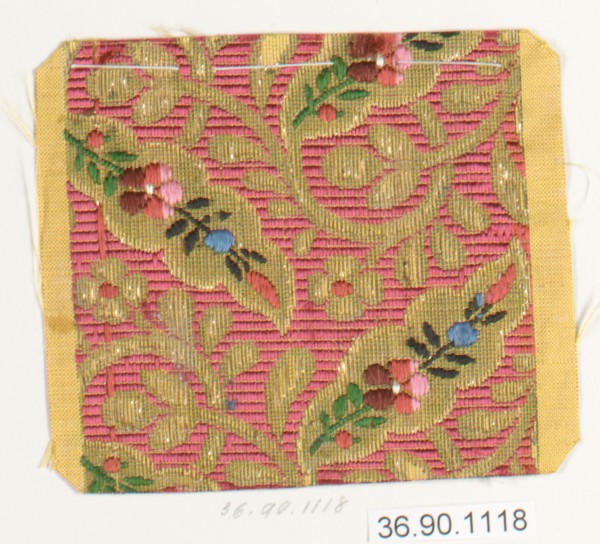
Couture Analysis: The Global Heritage Sample in Silk and Metal Thread
Introduction: The Art of the Standalone Study
In the rarefied world of haute couture, a garment often exists not merely as a piece of clothing but as a thesis—a concentrated argument about form, material, and cultural resonance. The subject of this analysis, a sample piece from Katherine Fashion Lab, is precisely such a thesis. Identified only as “Sample,” its origin is declared as “Global Heritage,” and its material composition is a deliberate marriage of silk and metal thread. This is a standalone study, meaning it is not part of a larger collection or seasonal narrative. It exists to be examined on its own terms, a distilled exploration of how heritage can be woven into a single, provocative artifact. For the Lead Curator, this presents a unique opportunity to dissect not just a garment, but a philosophy of making.
The Material Dialogue: Silk and Metal Thread
The choice of silk and metal thread is neither arbitrary nor merely decorative. In couture, material is meaning. Silk, with its luminous, fluid surface, has been a symbol of luxury, femininity, and tactile sensuality across civilizations—from the ancient Chinese dynasties to the courts of Europe. Its organic, protein-based structure breathes and moves with the body, suggesting life, softness, and vulnerability.
In stark contrast, metal thread—often gold, silver, or copper alloy—introduces a vocabulary of permanence, strength, and artifice. Historically, metal threads were reserved for ecclesiastical vestments, royal regalia, and military honors. They do not drape; they assert. They catch light with a rigid brilliance, creating a surface that is both reflective and resistant. In this sample, the metal thread is not merely an accent but a structural partner. It is likely woven into the silk’s warp or weft, creating a fabric that is at once supple and unyielding. This duality—softness and strength, organic and industrial, ephemeral and eternal—becomes the central tension of the piece.
From a technical standpoint, the integration of metal thread demands exceptional craftsmanship. Metal fibers are brittle and can abrade natural fibers. The weave must be engineered to prevent breakage while maintaining the silk’s drape. This is a hallmark of Katherine Fashion Lab’s expertise: the ability to command materials that defy easy manipulation, turning a potential liability into a signature of mastery.
Global Heritage: A Narrative Without Borders
The designation “Global Heritage” is a deliberate departure from the typical couture practice of citing a single geographic or ethnic origin. Instead, it suggests a synthesis—a borrowing from multiple traditions to create a new, universal language. This sample may reference the intricate zardozi embroidery of South Asia, where metal threads are couched onto silk to create raised, regal patterns. It might evoke the kinkō techniques of Japanese gold-thread weaving, or the brocades of Renaissance Italy, where silk and metallic threads were woven into elaborate, courtly designs.
Yet, the sample does not replicate any one tradition. Instead, it abstracts them. The pattern—whether geometric, floral, or calligraphic—is likely simplified, stripped of specific cultural iconography to become a pure investigation of line, light, and texture. This is heritage as a resource, not a restriction. The garment becomes a conversation between the artisan’s hand and the collective memory of global textile history. For the wearer, it is a statement of cultural fluency—an ability to wear the world without appropriating it.
This approach also challenges the fashion industry’s tendency toward cultural tokenism. By refusing to name a single origin, Katherine Fashion Lab asserts that heritage is not a fixed point but a dynamic, evolving dialogue. The sample is a standalone study of how craft traditions can be decontextualized and recombined to create something that belongs to no one and everyone—a true luxury of intellectual and aesthetic breadth.
Structural and Silhouette Analysis
Given the material constraints, the silhouette of this sample must be both respectful of and defiant against the fabric’s nature. Silk and metal thread fabric, while stunning, is heavy and has limited elasticity. The sample likely employs a structured form—perhaps a sculptural bodice, a fitted jacket, or a columnar skirt—that does not rely on gathering or draping. The seams are likely reinforced, and the internal construction may include boning or a secondary layer to support the weight of the metal.
The interplay of light is critical. The silk provides a matte, deep background, while the metal thread creates linear highlights. The pattern may be designed to catch light at specific angles, creating a moiré effect or a subtle shimmer that changes with movement. This is not a garment for static display; it demands the kinetic energy of a walking, turning, breathing body. The metal thread’s reflectivity means that the sample will appear different in every light—a living, shifting artifact.
The cut is likely architectural, with sharp lines and precise angles that echo the rigidity of the metal. Yet, the silk’s inherent softness will introduce an organic counterpoint, softening the edges. This tension between the hard and the soft, the planned and the organic, is the essence of the sample’s visual impact. It is a study in controlled contradiction.
Cultural and Curatorial Significance
As a standalone study, this sample occupies a unique position in the couture ecosystem. It is not a product but a proposition. It asks: What happens when we remove heritage from its geographic anchor? What does it mean to work with materials that are historically loaded but globally sourced? And how can a single garment embody a thesis about the future of craft?
For the curator, this sample is a pedagogical tool. It can be displayed alongside historical references—a Japanese nishijin-ori textile, a Mughal-era pashmina with gold thread, a 19th-century French brocade—to illustrate the dialogue between past and present. The sample becomes a lens through which to examine how couture can preserve, transform, and transcend heritage. It also raises questions about authorship and authenticity. In a globalized world, who owns the techniques? The sample answers by suggesting that mastery, not origin, is the true currency of couture.
Conclusion: The Enduring Value of the Singular Object
In an industry increasingly driven by speed, trends, and digital saturation, the standalone sample from Katherine Fashion Lab is a radical act of focus. It is a reminder that couture’s highest purpose is not to clothe but to provoke thought. The silk and metal thread are not just materials; they are metaphors for the delicate strength required to preserve and innovate simultaneously. The Global Heritage origin is not a label but a declaration of intellectual ambition. This sample is not for the wardrobe; it is for the archive, the museum, the mind. It is a quiet, luminous argument that the most powerful fashion is that which asks us to look, think, and remember.