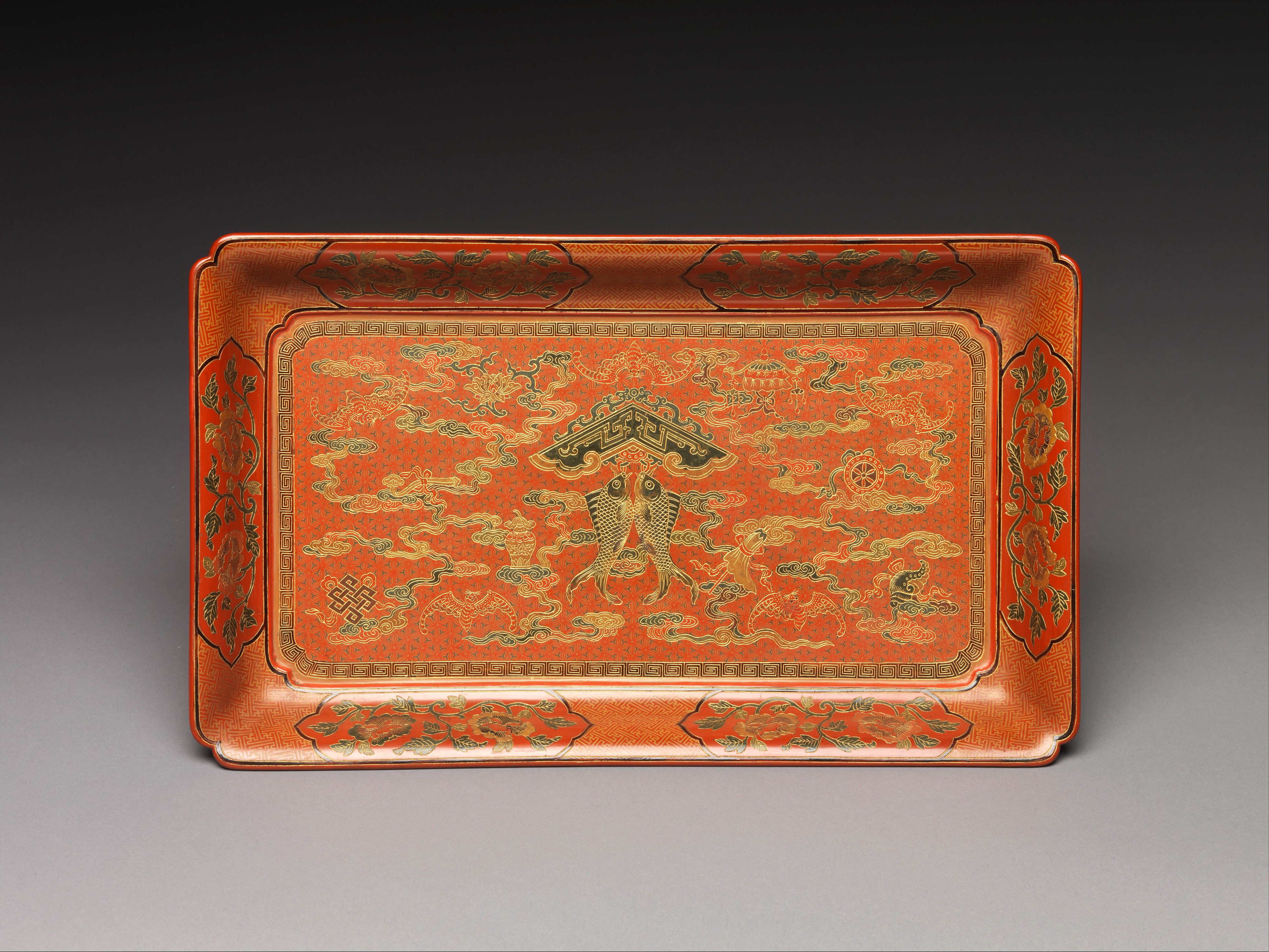
Heritage Analysis: Rectangular Tray with Fish Chime, Treasures, and Clouds
This strategic standalone research paper examines a Chinese polychrome lacquer rectangular tray, adorned with a fish chime, treasures, and clouds, executed in filled-in and engraved gold decoration. As Lead Heritage Curator for Katherine Fashion Lab, I analyze this artifact through the intersecting lenses of symbolic power, historical adornment, spiritual meaning, and 2026 high-end luxury strategy. The tray, a masterpiece of Ming or Qing dynasty craftsmanship, serves as a profound cultural repository, offering actionable insights for luxury brand positioning in an era demanding authenticity, narrative depth, and cross-cultural resonance.
Symbolic Power: The Language of Auspiciousness and Authority
The tray’s iconography is a deliberate lexicon of Chinese symbolic power, rooted in Confucian, Daoist, and Buddhist traditions. The fish chime (yuqing) is a central motif, combining the fish (yu) symbolizing abundance and surplus with the chime (qing) representing celebration and harmony. In Chinese, “fish” is a homophone for “surplus,” making the fish chime a potent emblem of prosperity and good fortune. Historically, such motifs were reserved for imperial courts and high-ranking officials, signifying not just wealth but moral authority—the ruler’s mandate to ensure societal abundance. The treasures (babao), including the pearl, coin, and lozenge, reinforce this theme of cosmic wealth, while the clouds (yun) denote celestial blessings and the transformative power of qi (life force).
For Katherine Fashion Lab, this symbolic architecture offers a blueprint for brand authority. In 2026 luxury, power is no longer overt but encoded in subtle, culturally literate design. A luxury collection could reinterpret the fish chime as a pendant or clasp, repositioning wealth as a spiritual rather than material asset. The tray’s polychrome lacquer—layered reds, greens, and golds—mirrors the stratification of status; each color carries hierarchical weight. Red, for instance, symbolizes life and luck; gold, imperial permanence. A 2026 strategy might deploy a “chromatic hierarchy” in product lines, where color placement signals exclusivity, echoing the tray’s visual order.
Historical Adornment: Craftsmanship as Cultural Capital
The tray’s medium—polychrome lacquer with filled-in and engraved gold decoration—represents the pinnacle of Chinese decorative arts, particularly during the Ming dynasty (1368–1644) and early Qing period. The filled-in technique (tianqi) involves carving recessed designs into lacquer layers and filling them with gold or colored pigments, a painstaking process requiring months of labor. This method, known as “qiangjin” (engraved gold), was historically reserved for tribute items and imperial gifts, positioning the tray as a diplomatic and artistic asset. The rectangular form itself is significant: unlike circular trays symbolizing heaven, the rectangle represents earth and stability, grounding the celestial motifs in terrestrial authority.
Historical adornment in Chinese culture was never purely aesthetic; it was a social currency that communicated lineage, education, and spiritual alignment. The tray’s intricate clouds, for example, are not mere decoration but a visual meditation on the Daoist concept of wuwei (effortless action), where the artisan’s hand becomes invisible. For Katherine Fashion Lab, this historical context underscores the value of artisanal provenance. In 2026, high-end luxury consumers increasingly seek “unseen labor”—craftsmanship that cannot be mass-produced. A strategic partnership with master lacquer artisans in Fujian or Jiangxi could produce limited-edition accessories, each bearing a “craft code” that traces its creation to specific workshops, thus transforming the tray’s historical adornment into a contemporary luxury asset.
Spiritual Meaning: The Cosmic and the Personal
Spiritually, the tray functions as a microcosm of the Chinese universe. The clouds are not merely atmospheric but portals to the Dao, representing the interpenetration of yin and yang. The fish chime resonates with the Buddhist concept of the “endless knot,” symbolizing the interconnectedness of all phenomena. The treasures evoke the Eight Auspicious Symbols of Buddhism, each offering protection and blessings. Together, these motifs create a talismanic object intended to harmonize the owner’s environment—a practice rooted in feng shui, where objects are placed to optimize qi flow.
This spiritual dimension is critical for 2026 luxury, where consumers increasingly prioritize mindful consumption. A 2026 Katherine Fashion Lab strategy could reposition the tray’s motifs as “wearable talismans,” integrating them into jewelry or home accessories that serve as daily reminders of balance and intention. For example, a “Cloud and Chime” capsule collection could feature modular pieces that allow the wearer to assemble motifs based on personal spiritual needs—prosperity, harmony, or protection. This approach transforms the tray from a static artifact into a dynamic, participatory luxury experience, aligning with the growing demand for objects that offer both beauty and meaning.
2026 High-End Luxury Strategy: From Artifact to Archetype
To leverage this heritage for 2026, Katherine Fashion Lab must adopt a strategic archetype framework. The rectangular tray is not a product to be copied but an archetype to be distilled into brand DNA. The following actionable pillars emerge:
1. Narrative-Driven Exclusivity
The tray’s history as a tribute object offers a model for hyper-exclusive releases. In 2026, luxury brands will compete not on volume but on stories. Katherine Fashion Lab could launch a “Tribute Collection” where each piece references a specific historical context—for instance, a handbag adorned with a fish chime motif tied to a Ming dynasty court ceremony. This narrative depth creates what I term “cultural equity,” where the object’s value is validated by its historical authenticity. Pricing should reflect this, with items positioned as investment-grade artifacts rather than seasonal fashion.
2. Material Alchemy and Sustainability
The polychrome lacquer technique, while labor-intensive, aligns with 2026 sustainability imperatives. Lacquer is derived from the sap of the Toxicodendron vernicifluum tree, a renewable resource. Katherine Fashion Lab can pioneer a neo-lacquer innovation—combining traditional qiangjin with bio-based resins to create a sustainable luxury material. This positions the brand as a custodian of heritage while addressing modern environmental concerns. A 2026 “Earth and Gold” line could use recycled gold for engraved details, marrying the tray’s opulence with circular economy principles.
3. Spiritual Commerce and Experiential Retail
The tray’s spiritual function suggests a retail strategy beyond transactional sales. Katherine Fashion Lab could develop feng shui consultations as part of the luxury purchase experience, where clients select motifs based on their personal birth charts or home layouts. Flagship stores could feature “qi rooms” with lacquer installations that change with the seasons, mirroring the tray’s cosmic symbolism. This transforms the brand into a lifestyle curator, not just a fashion house—a critical differentiator in the saturated 2026 market.
4. Digital Heritage and NFT Integration
Finally, the tray’s engraved gold decoration offers a metaphor for blockchain provenance. Each motif could be minted as an NFT that verifies the piece’s authenticity and cultural lineage. For example, a “Cloud” NFT could unlock digital content about the Daoist symbolism of the tray, creating a bridge between physical and digital luxury. In 2026, this dual-ownership model—physical object plus digital certificate—will be standard for high-end heritage brands.
Conclusion: The Tray as a Strategic Compass
The rectangular tray with fish chime, treasures, and clouds is far more than a decorative artifact; it is a strategic compass for Katherine Fashion Lab’s 2026 luxury positioning. Its symbolic power teaches us that authority is best expressed through subtle, culturally resonant codes. Its historical adornment reminds us that craftsmanship is the ultimate form of capital. Its spiritual meaning offers a blueprint for mindful luxury that resonates with modern consumers. By translating these elements into a coherent brand strategy—narrative exclusivity, sustainable alchemy, spiritual commerce, and digital integration—Katherine Fashion Lab can transcend the ephemeral trends of fashion and claim a permanent place in the heritage of luxury. This tray, once a vessel for treasure, now becomes a vessel for brand legacy.