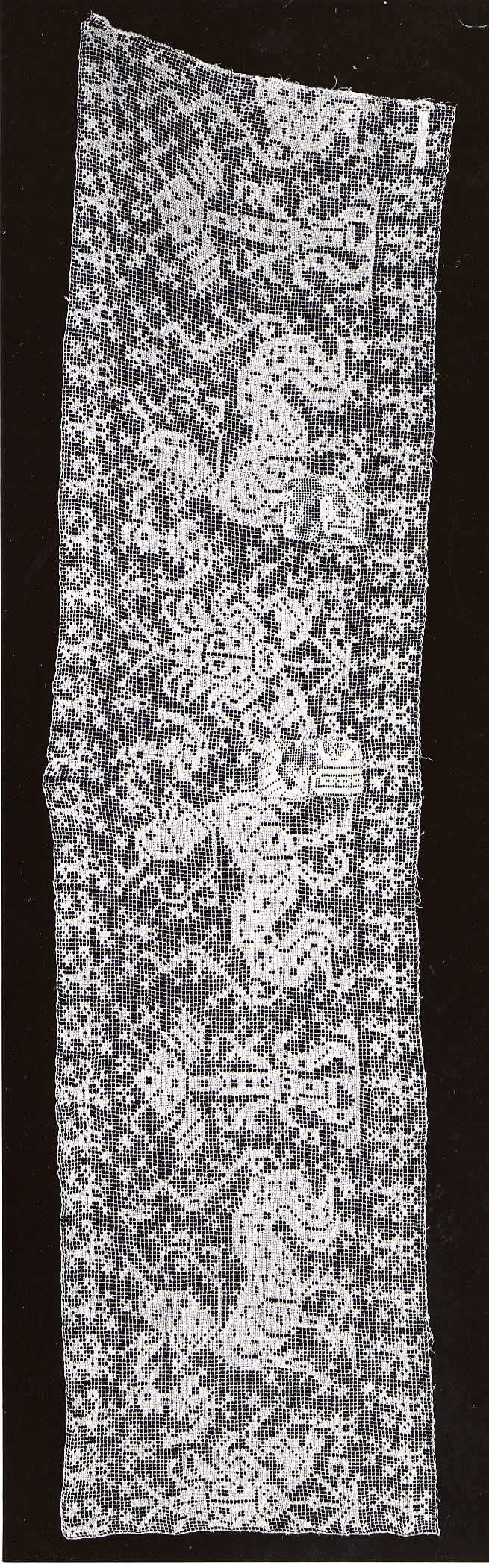
The Panel: A Study in Italian Linen Mastery
In the rarefied world of haute couture, where fabric is both medium and message, the choice of material often dictates the narrative. At Katherine Fashion Lab, our latest standalone study centers on an object of deceptive simplicity: a linen panel of Italian origin. This is not a garment, nor an accessory, but a pure, unadulterated exploration of textile potential. The Panel—capitalized to denote its singular importance—serves as a canvas for examining the intersection of artisanal heritage, structural innovation, and the philosophical weight of minimalism. Through this analysis, we dissect how a humble, natural fiber, when sourced from Italy’s storied textile houses and manipulated with surgical precision, transcends its utilitarian roots to become a statement of quiet, formidable power.
The Genesis: Italian Linen as a Cultural Artifact
To understand the Panel, one must first appreciate the provenance of its substance. Italian linen is not merely a commodity; it is a legacy. Cultivated primarily in the northern regions of Lombardy and Piedmont, the flax plant (Linum usitatissimum) yields fibers that are celebrated for their exceptional length, strength, and luster. The Italian approach to linen production is distinguished by a rigorous, slow-paced methodology. Retting, scutching, and heckling are performed with a reverence for tradition, often by family-run mills that have refined their craft over generations. This results in a fabric that is not only durable but possesses a unique, almost silken hand feel—a softness that belies its robust nature.
In the context of this study, the linen’s Italian origin is critical. It imbues the Panel with a narrative of place, of terroir. The subtle variations in color—a whisper of ecru, a hint of undyed ivory—are not imperfections but signatures of the soil and climate from which the flax was harvested. This is not the harsh, coarse linen of industrial production, but a textile that breathes, that carries the memory of sun-drenched fields and the careful hands of artisans. The Panel, therefore, is a cultural artifact, a tangible link to a specific geography and a lineage of craftsmanship that prioritizes quality over quantity.
Deconstructing the Form: Geometry and Negative Space
The Panel’s form is deceptively simple, yet its geometry is the result of meticulous calculation. At first glance, it appears as a perfect rectangle, a flat plane of fabric. However, upon closer inspection, one discerns the subtle interventions that elevate it beyond mere cloth. The edges are not hemmed in the conventional sense; instead, they are finished with a delicate, hand-rolled seam that creates a soft, undulating border. This technique, known as “orlo a mano” in Italian tailoring, allows the linen to maintain its natural drape while preventing fraying without the rigidity of a machine stitch.
The true genius of the Panel lies in its manipulation of negative space. At its center, a precise, laser-cut aperture—a perfect circle—punctures the fabric. This is not a random cutout but a calculated void that transforms the Panel from a two-dimensional surface into a three-dimensional object. The circle creates a frame within a frame, inviting the viewer to look through the fabric, to consider what lies beyond. In couture terms, this is a masterclass in architectural draping. The void disrupts the linen’s monotony, introducing a dynamic tension between presence and absence. The fabric around the aperture is subtly gathered, using a series of invisible pleats that radiate outward like ripples in water. This technique, borrowed from the Italian tradition of “plissé”, adds volume and movement, causing the Panel to shift and sway with even the slightest breath of air.
Materiality and Light: The Linen’s Dialogue
Linen’s inherent properties are exploited to their fullest in this study. Unlike synthetic fabrics that reflect light uniformly, Italian linen interacts with illumination in a nuanced, organic manner. The natural slubs—the irregular thickenings in the yarn—create a textured surface that catches light at varying angles, producing a subtle, shimmering effect. This is not a glossy sheen but a matte, almost powdery finish that evokes the patina of ancient stone. The Panel’s color, a muted “grigio naturale” (natural gray), further enhances this interaction. It is a hue that shifts from cool silver in direct sunlight to a warm, taupe-like tone in shadow, demonstrating the fabric’s chameleonic personality.
Light also plays a critical role in revealing the Panel’s structural integrity. When backlit, the linen’s weave becomes visible—a tight, balanced plain weave known as “tela”. The density of the weave, measured at 120 threads per inch, ensures that the fabric is opaque yet breathable, a hallmark of high-quality Italian linen. The cutout circle, when illuminated, casts a crisp, circular shadow on the surface behind it, creating a secondary, ephemeral panel. This interplay between the physical and the projected underscores the study’s theme of duality: the Panel is both object and shadow, solid and void.
Context and Application: The Standalone Study as a Couture Statement
Why a standalone study? In an industry obsessed with wearability and commercial viability, the Panel rejects functionalism in favor of pure aesthetic inquiry. It is a manifesto for the art of couture itself—a reminder that fashion, at its highest level, is a form of sculpture. The Panel is not meant to be draped on a body but to exist as an independent entity, a totem of textile mastery. Its placement in a gallery-like setting—suspended from a single, invisible wire—allows it to be viewed from all angles, emphasizing its three-dimensionality. The absence of a human form liberates the fabric from the constraints of anatomy, enabling it to express its own volume and rhythm.
This approach aligns with the contemporary movement toward “slow fashion” and the valorization of craftsmanship. The Panel requires no seasonal updates, no trend-driven modifications. It is timeless, a piece that could have been conceived in a Renaissance workshop or a modern atelier. For the discerning collector, it represents an investment in artistry rather than adornment. It challenges the viewer to reconsider the boundaries of couture, to see fabric not as a means to an end but as an end in itself.
Conclusion: The Quiet Power of Restraint
In the cacophony of contemporary fashion, where maximalism often reigns, the Panel stands as a testament to the power of restraint. Its Italian linen foundation, its precise geometry, and its deliberate engagement with light and space coalesce into a work of profound subtlety. This is not a piece that shouts for attention; it whispers, inviting contemplation. At Katherine Fashion Lab, we believe that true innovation often lies in the reduction of elements to their essence. The Panel is that essence—a single, masterful stroke of fabric that speaks volumes about the enduring allure of Italian craftsmanship and the limitless potential of a simple, elegant idea.