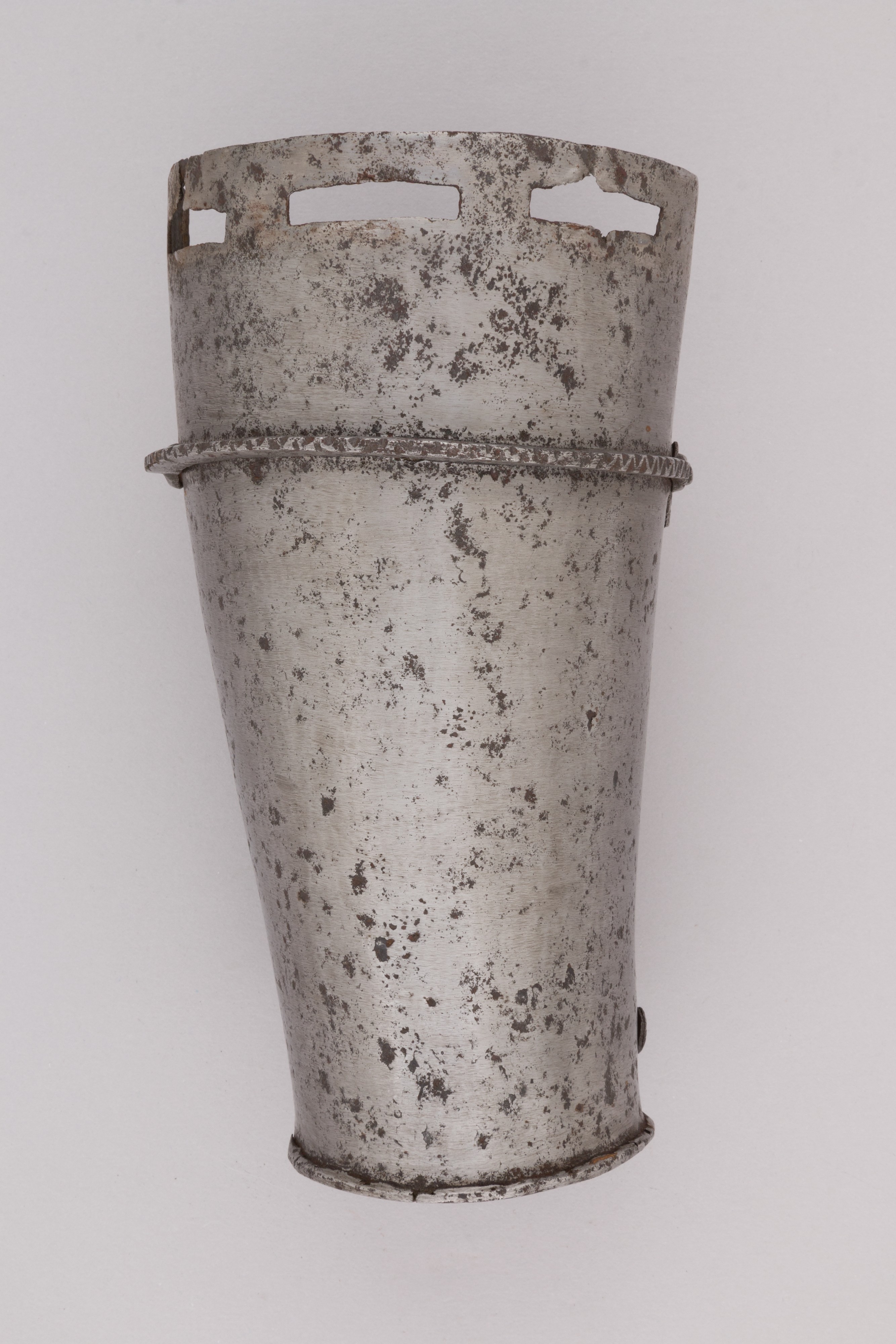
The Armor of the Arm: A Couture Analysis of Italian Steel Arm Defense
In the lexicon of luxury, few materials command the same visceral respect as steel. At Katherine Fashion Lab, our curatorial gaze turns to an object that transcends mere utility: the Italian arm defense, a standalone study in the fusion of martial necessity and aristocratic artistry. This piece, forged in the crucible of Renaissance Italy, is not simply a protective device; it is a sculptural declaration of power, a testament to the human form idealized through the lens of the armorer’s craft. To analyze it as couture is to strip away the battlefield context and elevate its design, materiality, and construction to the realm of high fashion—a silent, steel-encased narrative of identity and control.
The Materiality of Steel: From Function to Luxury Fabric
The choice of steel is the first and most profound statement. In contemporary couture, fabric is selected for drape, texture, and light interaction. Here, the steel of this Italian arm defense performs a similar role, but with a rigorous, unforgiving language. The metal is not a passive substrate; it is an active participant in the design. Its surface, polished to a mirror-like sheen, captures and distorts the environment, creating a dynamic interplay of light and shadow that shifts with every movement of the wearer. This is not a matte, utilitarian finish; it is a high-gloss, almost liquid reflection that speaks to the mastery of the metalsmith—a skill as refined as any haute couture atelier’s draping techniques.
The weight of the steel, its coolness against the skin, and its unyielding rigidity are integral to its aesthetic. Unlike silk or velvet, which yield to the body, this material imposes its own geometry. It demands that the wearer adapt—a corset-like discipline that transforms posture into a performance. The arm defense becomes an exoskeleton of confidence, a second skin that is simultaneously protective and performative. In the context of Katherine Fashion Lab, we recognize this as the ultimate luxury: a material that refuses to compromise, that commands respect through its sheer physical presence.
Anatomy of the Form: Sculpting the Arm as a Silhouette
Italian armorers of the 15th and 16th centuries understood the human body as a canvas for idealized proportion. This arm defense, designed to encase the forearm and upper arm, is a study in anatomical abstraction. It does not merely cover the limb; it redefines it. The articulated steel plates—the rerebrace, vambrace, and couter—are not arbitrary segments. They are architectural joints that mirror the elbow’s rotation, the bicep’s curve, and the wrist’s flexion. Each plate is contoured with a subtle convexity, creating a series of interlocking organic curves that suggest movement even in stillness.
The silhouette is both sharp and sinuous. The edges are rolled and flared, reminiscent of a tailored lapel or a sculpted collar, providing a visual frame that draws the eye along the length of the arm. The couter, the elbow guard, is often the most dramatic element—a pointed shell that extends outward like a wing or a fin, breaking the line of the arm with a deliberate, angular flourish. This is couture as architecture: the arm is no longer a limb but a structural element of a larger composition, a living column of steel that supports the torso’s narrative.
Ornamentation as Identity: The Language of Italian Craft
While the material and form establish the foundation, the ornamentation of this Italian arm defense elevates it from armor to art. Italian armorers were renowned for their decorative techniques, including etching, gilding, and embossing. In this piece, the steel surface may bear intricate patterns—arabesques, classical motifs, or even heraldic symbols—that are etched into the metal with acid or chased with a hammer. These are not mere embellishments; they are signifiers of lineage, status, and personal narrative.
Consider the gold inlay: a delicate line of precious metal tracing the edge of the vambrace, catching the light like a thread of metallic embroidery. This is the equivalent of a hand-embroidered monogram on a couture gown. It personalizes the object, transforming it from a generic piece of military equipment into a bespoke statement of identity. The choice of motifs—perhaps a laurel wreath symbolizing victory, or a geometric pattern reflecting mathematical precision—speaks to the intellectual and cultural aspirations of the wearer. In the context of Katherine Fashion Lab, we see this as a precursor to the modern designer’s use of logos and signature prints: a visual shorthand for exclusivity and sophistication.
Articulation and Movement: The Choreography of Steel
Perhaps the most overlooked aspect of this arm defense, yet the most critical in a couture analysis, is its articulation. The joints between the steel plates are not rigidly fixed; they are connected by rivets and leather straps, allowing for a range of motion that is both fluid and controlled. This mechanical engineering is the kinetic equivalent of a bias-cut silk gown, which moves with the body while maintaining its form. Each plate slides over the next in a synchronized dance, creating a rhythmic, metallic whisper as the wearer gestures.
This articulation is not merely functional; it is a design statement. The gaps between the plates create a visual rhythm—a series of parallel lines that break the solid surface into a more complex, layered composition. When the arm is bent, the plates overlap, creating a denser, more armored look; when extended, they separate, revealing the inner lining or the skin beneath. This dynamic transformation of silhouette is a hallmark of advanced design, where the garment changes with the wearer’s actions. In a standalone study, we appreciate how this arm defense becomes a living sculpture, its form never static, always in dialogue with the body’s choreography.
The Standalone Object: Decontextualizing the Arm Defense
Removed from the full suit of armor, this arm defense assumes a new identity. It is no longer a component of a larger martial ensemble but a standalone artifact of extreme craftsmanship. This decontextualization allows us to appreciate its design as an independent piece—a sleeve, if you will, that exists for its own sake. In the world of couture, such isolation is common: a single glove, a collar, or a bodice can become the focal point of an entire collection. Here, the arm defense functions similarly, drawing the eye to the limb as a site of power and elegance.
Katherine Fashion Lab recognizes this as a precursor to the modern accessory as statement piece. The arm defense, when worn alone against a simple garment—a black velvet gown, a white linen shirt—creates a jarring, avant-garde contrast. It is a deliberate collision of worlds: the medieval and the modern, the armored and the vulnerable, the functional and the purely aesthetic. This tension is the essence of high fashion. The steel arm no longer protects against a sword; it protects against the ordinary, the mundane, the unremarkable. It is a barrier of beauty, a shield of style.
Conclusion: The Arm as a Canvas for Couture
In concluding this analysis, we must view the Italian steel arm defense not as a relic of war, but as a masterclass in material, form, and identity. Its steel is a fabric, its articulation a cut, its ornamentation an embroidery of power. At Katherine Fashion Lab, we see in this object the DNA of couture itself: the relentless pursuit of perfection, the marriage of form and function, and the elevation of the human body into a canvas for artistic expression. The arm that wears this defense is no longer just an arm; it is a statement of lineage, a gesture of control, and a living testament to the enduring dialogue between the hand that fights and the hand that creates.