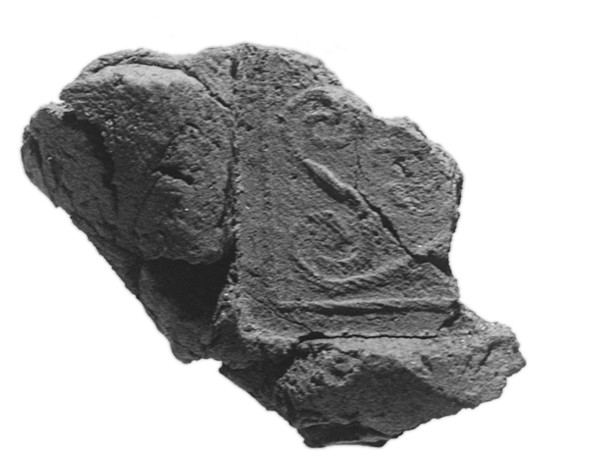
Executive Heritage Analysis: The Sealing Fragment as a Strategic Artifact
This research paper presents a comprehensive heritage analysis of an unfired clay sealing fragment from an ancient civilization, conducted as a strategic standalone study for Katherine Fashion Lab. The artifact, a modest yet potent relic of administrative and spiritual life, offers profound insights into symbolic power, historical adornment, and spiritual meaning. By deconstructing these layers, we derive actionable strategies for high-end luxury positioning in 2026, where authenticity, narrative depth, and material tactility will define market leadership. The fragment, though small in scale, embodies a microcosm of ancient authority—a blueprint for modern luxury branding.
Symbolic Power: The Seal as Authority and Identity
The sealing fragment functioned as a mark of authentication, ownership, and legal binding in ancient civilizations, from Mesopotamia to the Indus Valley. Its primary symbolic power lay in its ability to confer legitimacy. When pressed into soft clay, the seal’s unique design—often featuring deities, geometric patterns, or script—transformed an ordinary document or container into a sanctioned object. This act of imprinting was a declaration of control: the seal bearer, whether a merchant, priest, or ruler, asserted their presence and authority across time and space.
For Katherine Fashion Lab, this concept of imprint as identity offers a potent metaphor. In the 2026 luxury landscape, where consumers seek brands that stand for something beyond aesthetics, the sealing fragment teaches us that power is not loud but inscribed. The fragment’s unfired nature—its raw, unfinished state—further amplifies this symbolism. Unlike fired terracotta, which is permanent, unfired clay remains vulnerable, suggesting that authority is not static but negotiated. A luxury strategy that embraces this tension—between permanence and fragility, control and vulnerability—will resonate with discerning clients who value authenticity over perfection.
Strategically, Katherine Fashion Lab can adopt a "seal of provenance" concept for limited-edition collections. Each garment or accessory could bear a unique, hand-stamped clay tag (or a modern equivalent in metal or resin) that certifies its origin, craftsmanship, and limited availability. This transforms the product into a document of authority, much like the ancient seal. The fragment also inspires a visual language: asymmetrical patterns, cuneiform-inspired embroidery, and layered textures that mimic the clay’s impression. The symbolic power of the seal—authentication through touch—becomes a brand pillar.
Historical Adornment: The Body as a Canvas for Authority
While the sealing fragment was not a wearable item in its original context, its function as a tool of imprinting directly parallels the role of historical adornment. In ancient societies, jewelry, textiles, and body modifications served as portable seals of identity. A cylinder seal worn on a cord around the neck or wrist was both a practical tool and a status symbol, often carved from precious materials like lapis lazuli or hematite. The act of wearing the seal made the body a living document of authority—every gesture, every handprint, became an act of authentication.
This convergence of utility and ornamentation is a critical insight for Katherine Fashion Lab. The fragment suggests that adornment is not merely decorative but functional in its symbolism. For 2026, the luxury consumer will gravitate toward pieces that serve dual purposes: a necklace that functions as a seal, a cuff that carries a hidden message, or a jacket with interior pockets designed to hold a personal "seal" (a modern talisman). The fragment’s unfired clay texture—rough, porous, and earthy—offers a material direction. High-end luxury in 2026 will increasingly embrace raw, unpolished surfaces as a counterpoint to mass-produced perfection. Think of garments with organic, hand-finished edges, accessories with patina that evolves over time, and textiles that feel almost archaeological—linen, raw silk, or handwoven wool.
Historically, adornment also communicated spiritual and social hierarchies. The sealing fragment, often bearing the image of a deity or a royal emblem, served as a bridge between the earthly and the divine. When worn, it transformed the individual into a vessel of cosmic order. Katherine Fashion Lab can translate this by creating a "hierarchy of materials" within a collection: the most exclusive pieces use clay-derived pigments, hand-carved bone, or recycled ancient glass, while entry-level pieces use modern interpretations. This tiered approach mirrors the ancient practice where only the elite could afford seals of semi-precious stone.
Spiritual Meaning: The Clay as a Vessel of Transcendence
The spiritual dimension of the sealing fragment is deeply tied to the medium of clay itself. In many ancient cosmologies, clay was the primordial substance from which life was formed—humans were molded from earth by the gods. The act of sealing, therefore, was not just administrative but ritualistic. The impression left in the clay was a permanent record of a transaction, a prayer, or a decree, imbued with the belief that the seal’s design carried protective or propitiatory power. The unfired state of the fragment is particularly telling: it suggests a moment suspended in time, before the clay was hardened by fire, before the ritual was complete. This incompleteness holds spiritual potency—a reminder that all earthly authority is transient.
For the high-end luxury consumer in 2026, spirituality will be a key driver of purchase decisions, but not in a dogmatic sense. Instead, consumers will seek objects that embody mindfulness, impermanence, and connection to ancient traditions. The sealing fragment, with its tactile, earthy quality, offers a spiritual anchor. Katherine Fashion Lab can position its 2026 collection as a "ritual of imprinting"—each piece is a vessel for personal meaning, much like the ancient seal. The brand could offer a customization service where clients co-create a personal symbol (a monogram, a motif, a rune) that is then hand-stamped onto a garment or accessory, transforming it into a talisman. This process aligns with the ancient belief that the seal’s design carried protective energy—a concept that modern consumers will embrace as a form of wearable mindfulness.
The fragment’s unfired clay also speaks to the beauty of imperfection. In Japanese aesthetics, this is known as wabi-sabi; in the context of the sealing fragment, it is the acceptance of the clay’s fragility. A luxury strategy that celebrates the "unfinished" or the "unfired"—where seams are left raw, dyes are organic and uneven, and textures are deliberately rough—will appeal to a clientele tired of sterile perfection. The spiritual meaning here is one of presence over permanence: the object is not meant to last forever, but its moment of creation is sacred.
2026 High-End Luxury Strategy: From Fragment to Future
Based on this heritage analysis, Katherine Fashion Lab’s strategic positioning for 2026 should center on three pillars derived from the sealing fragment: Authentication, Materiality, and Ritual.
Authentication as Brand Equity
Just as the seal authenticated documents, Katherine Fashion Lab will authenticate experiences. Every piece in the 2026 collection will carry a unique "seal of origin"—a digital or physical mark that traces its provenance from raw material to final stitch. This could be achieved through blockchain-enabled tags or, more poetically, through physical clay stamps that accompany each garment, echoing the fragment’s function. The brand will become the arbiter of authenticity in a market flooded with counterfeits, positioning itself as the custodian of ancient wisdom in a modern context.
Materiality as Sensory Luxury
The unfired clay’s texture—rough, porous, and warm—will inspire a new material language. Katherine Fashion Lab will collaborate with artisans who work with raw earth pigments, unfired ceramics, and hand-spun fibers. The 2026 collection will feature tactile layering: garments that feel like clay against the skin, accessories that mimic the weight and grain of a sealing fragment. This sensory approach to luxury—where touch and smell (think of the scent of wet clay) are as important as sight—will differentiate the brand in a market dominated by visual marketing. The fragment teaches us that true luxury is felt, not just seen.
Ritual as Consumer Engagement
The spiritual dimension of the sealing fragment will be translated into a ritualized customer journey. Katherine Fashion Lab will host private "imprinting ceremonies" where clients, accompanied by a heritage curator, co-create their personal seal. This seal is then applied to a bespoke garment or accessory, making the purchase a meaningful rite. In-store experiences will mimic the archaeological process: clients will "excavate" their chosen piece from a bed of clay, dusting it off to reveal its design. This gamified ritual taps into the ancient human desire for discovery and personalization, creating deep emotional bonds with the brand.
In conclusion, the unfired clay sealing fragment is not a relic of the past but a strategic blueprint for the future of luxury. By embracing its lessons in symbolic power, historical adornment, and spiritual meaning, Katherine Fashion Lab can lead the 2026 market with a vision that is both ancient and avant-garde. The fragment’s lesson is clear: true authority is not shouted but imprinted, and the most profound luxury lies in the touch of the earth.