Saint Bavo: A Couture Analysis of Material and Presence
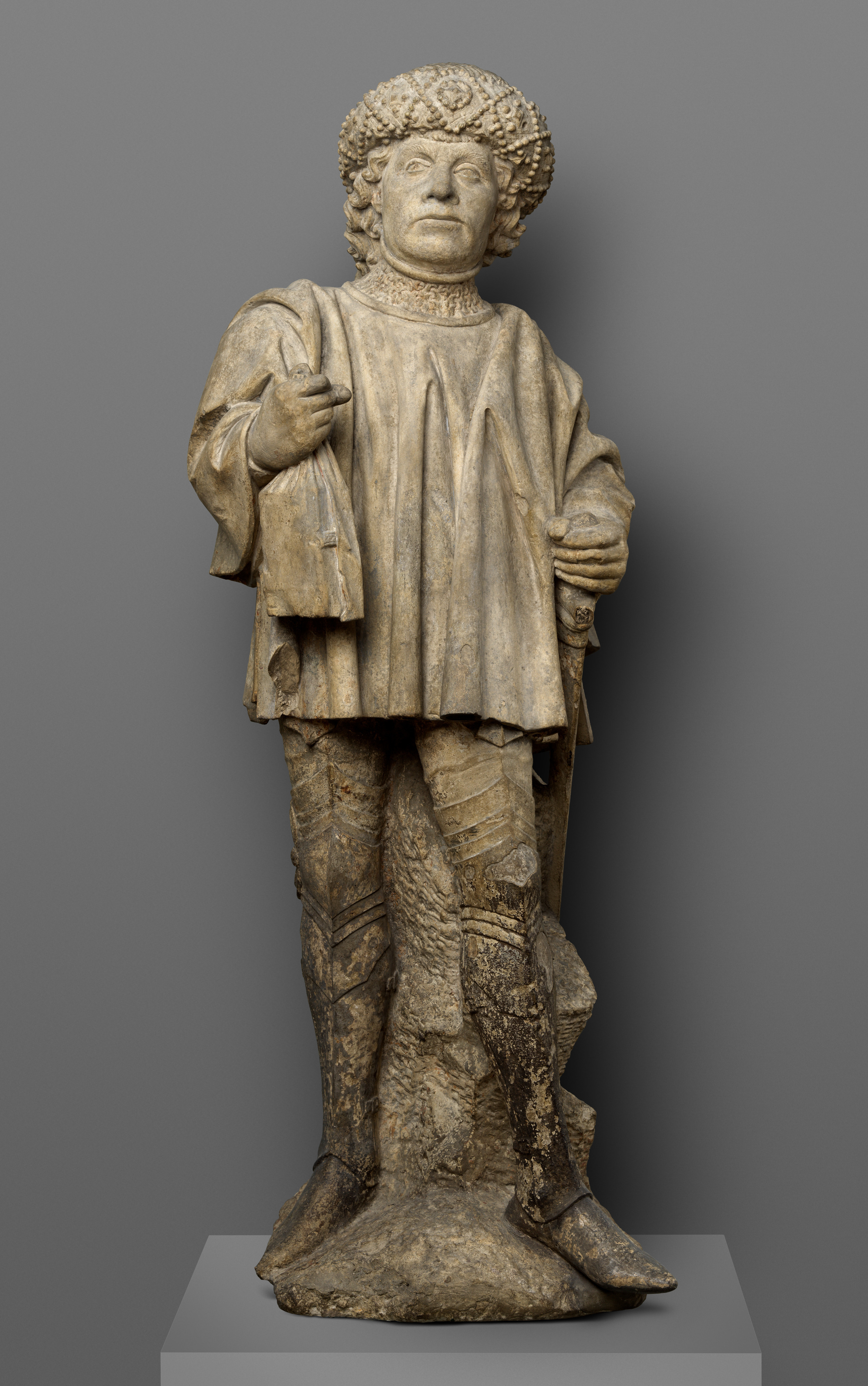
In the rarefied world of haute couture, the dialogue between fabric, form, and meaning is paramount. Yet, to confine couture analysis solely to the realm of textiles is to overlook the profound sculptural language that underpins all great fashion. At Katherine Fashion Lab, we dissect not merely garments but the very architecture of presence. Our subject today is not a gown, but a standalone study of Saint Bavo, a North Netherlandish limestone sculpture bearing traces of its original polychromy. This object, devoid of the ephemeral nature of silk or wool, offers a masterclass in the enduring principles of couture: silhouette, texture, and the narrative weight of material.
The Material as Couture Fabric
Limestone, in the hands of a North Netherlandish carver, transcends its geological origins to become a textile of monumental stillness. Unlike the pliability of velvet or the fluidity of crepe, limestone demands a negotiation of permanence. The artist’s chisel acts as a needle, stitching not thread but shadow into the surface. The traces of paint—faint, spectral remnants of ochre, azurite, or vermilion—are the equivalent of a couture house’s archival dye-lot, a whisper of a once-vibrant palette that has since faded into the patina of time. This is not a flaw; it is a deliberate design choice of history. In contemporary couture, such a finish might be replicated through distressing techniques or layered washes that evoke the passage of centuries, as seen in the work of designers who embrace wabi-sabi aesthetics or deconstructionist philosophy.
The limestone’s weight is its primary couture attribute. It grounds the figure, lending Saint Bavo a gravitas that no lightweight organza could achieve. This is a garment of stone, a permanent armor of sanctity. The carver understood that the material’s density would dictate the language of the folds. Unlike a draped silk that falls by gravity, the limestone folds are carved from within—each crease a deliberate subtraction of material, a negative space that defines the positive form. This is the antithesis of the couturier’s additive process; here, the artist removes to reveal, much like a master pattern cutter who shears away excess to expose the body’s line.
Silhouette and Spiritual Architecture
Saint Bavo, as a standalone study, presents a silhouette that is both austere and commanding. The figure is typically rendered in a frontal stance, a posture of hieratic authority that recalls the rigid frontality of Romanesque sculpture yet is softened by the naturalistic tendencies of the North Netherlandish Gothic. The verticality of the composition is unmistakable—a direct line from the crown of the head to the base, unbroken by excessive ornamentation. This is a columnar silhouette, a term borrowed from fashion but perfectly applicable here. In the 14th and 15th centuries, such forms were not merely aesthetic; they were theological. The vertical axis connects the earthly to the divine, a spiritual spine that anchors the saint in his sanctity.
Compare this to the A-line or empire waist in modern couture. The stone drapery falls in heavy, parallel folds that mimic the pleats of a clerical garment, but with a weight that suggests the eternal rather than the seasonal. The torso is elongated, the shoulders slightly narrowed, creating a V-shaped tension that draws the eye upward. This is not a body of action but of contemplation. The hands, if present, are often clasped or holding an attribute—a falcon, a sword, or a model of a church—each gesture a couture accessory that completes the ensemble. The falcon, for instance, is not merely a prop but a textural counterpoint: the smooth, predatory curve of the bird’s beak against the rough-hewn folds of the saint’s mantle.
Texture and the Language of Surface
The limestone’s surface is a study in tactile contrast. The carver has rendered the saint’s face with a polished finish, the cheeks and brow smooth as aged ivory, while the hair and beard are chiseled with a vigorous, almost aggressive texture. This is the couture equivalent of a mixed-media garment: a bodice of matte satin paired with a skirt of raw, frayed tulle. The contrast creates visual tension and directs the viewer’s gaze. The traces of paint add a third layer of texture—not tactile but optical. The remnants of color, now barely visible, function like a faded print or a tarnished metallic thread, hinting at a former brilliance that has been subsumed by time.
In the drapery, the carver has employed a variety of stroke depths. The deepest folds are carved with a V-shaped groove, creating sharp shadows that mimic the creases of heavy wool. Shallower incisions suggest the ripple of lighter linen beneath. This gradation of depth is a hallmark of masterful couture tailoring, where the dart and pleat are calibrated to the millimeter. The hemline of the stone garment—where it meets the base—is not a straight edge but a series of undulating curves, as if the fabric were caught in a gentle breeze. This is a deliberate illusion of movement within the static medium, a paradox that elevates the work from mere representation to emotional resonance.
The Context of the Standalone Study
The designation of this work as a standalone study is crucial. Unlike a full altarpiece or a tomb effigy, this sculpture exists as an independent object, a concentration of essence. In couture terms, it is akin to a showpiece—a garment that is not intended for daily wear but for the runway, a distillation of the designer’s vision. The standalone study allows the viewer to focus solely on the saint’s presence, unencumbered by narrative context or architectural framing. This is a portrait in stone, a couture portrait that captures not the likeness but the ethos of the subject.
Saint Bavo, as a historical figure, was a nobleman who renounced his wealth to become a hermit. This narrative of renunciation is embedded in the sculpture’s economy of form. There is no excess, no superfluous ornament. The limestone is honest—it does not pretend to be marble or gold. The traces of paint are not a restoration but a memory, a ghost of the original polychromy that once made the saint vivid and immediate. In contemporary couture, this honesty is reflected in the raw edges of a Maison Margiela garment or the unfinished seams of a Rei Kawakubo creation. The standalone study is a confession of materiality: it says, “I am stone. I am paint. I am time.”
Conclusion: The Eternal Couture of Stone
At Katherine Fashion Lab, we recognize that the principles of couture are not bound by season or fabric. The North Netherlandish limestone Saint Bavo is a testament to the enduring power of material and form. Its silhouette speaks of spiritual aspiration, its texture of the labor of creation, and its traces of paint of the inevitable passage of time. This is not a garment to be worn but a garment of being—a couture analysis that transcends the runway and enters the realm of the eternal. In every chisel mark, every shadow, every faint hint of color, we see the blueprint of haute couture: the relentless pursuit of presence through the poetry of material.