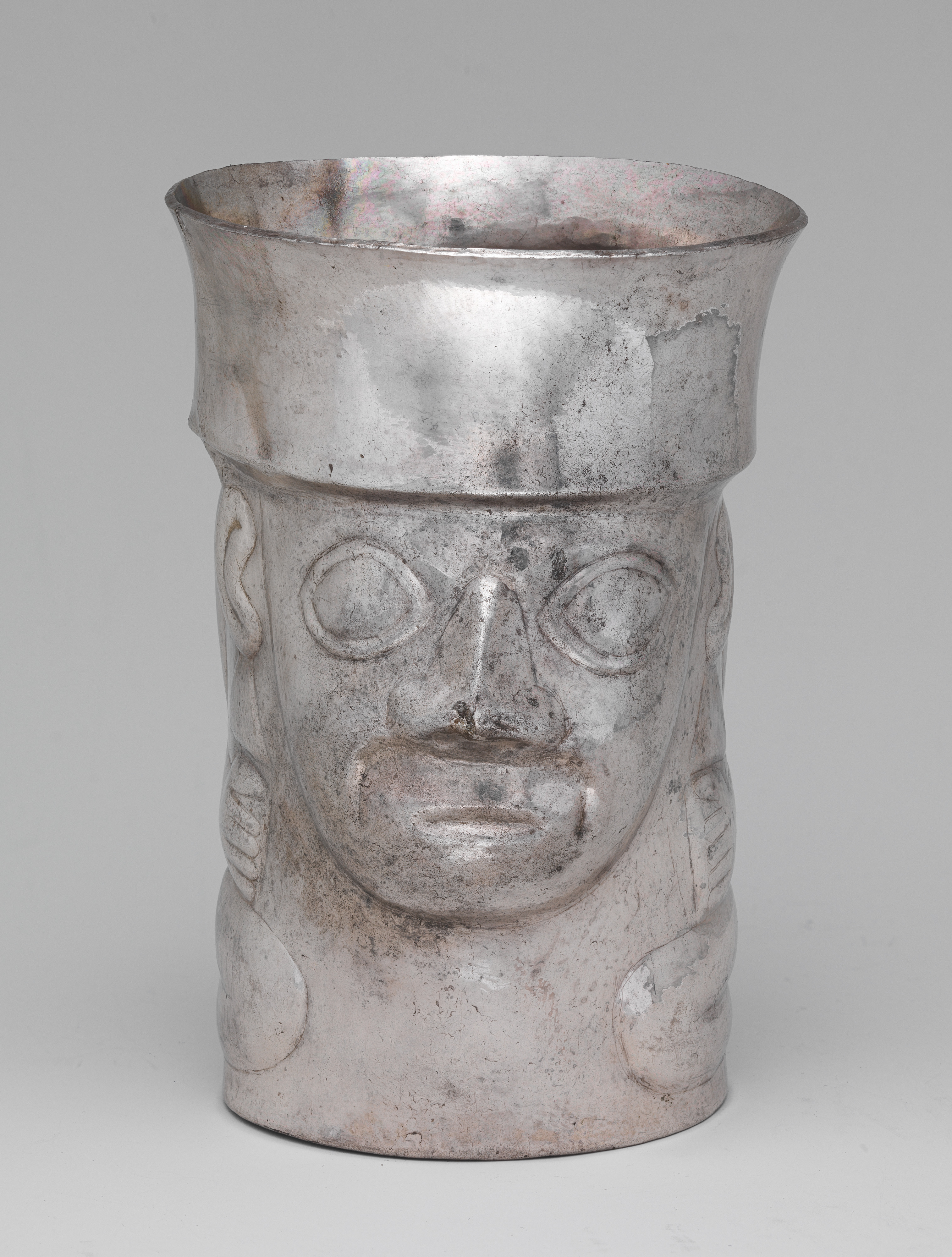
Executive Summary: The Chimú Beaker as a Strategic Artifact of Power
This heritage analysis examines a silver beaker from the Chimú culture (c. 900–1470 CE) of pre-Columbian Peru, focusing on its symbolic power, historical adornment, and spiritual meaning. The artifact, a ceremonial vessel crafted from silver, embodies the intersection of metallurgical mastery and sociopolitical authority within the Chimú Empire. For Katherine Fashion Lab, this analysis serves as a strategic foundation for a 2026 high-end luxury strategy, leveraging the beaker’s narrative of exclusivity, ritualistic value, and material transcendence. By decoding the beaker’s cultural DNA, we propose a positioning that aligns heritage authenticity with contemporary luxury consumption—where objects are not merely accessories but vessels of ancestral power and status.
Symbolic Power: Metallurgy as a Language of Dominion
Silver as a Medium of Divine Authority
In Chimú society, silver was not a mere commodity; it was a sacred material associated with the moon, water, and fertility. The Chimú, who thrived in the arid coastal regions of northern Peru, viewed silver as a substance that could channel cosmic forces. The beaker’s form—a tall, flared vessel often used for consuming chicha (maize beer) during elite ceremonies—was deliberately designed to elevate the act of drinking into a ritual of governance. The reflective quality of silver, when polished, mimicked the shimmer of water and moonlight, reinforcing the ruler’s connection to lunar deities. For Katherine Fashion Lab, this symbolic power translates into a brand strategy that positions metal as a carrier of narrative. In 2026 luxury, the use of precious metals must evoke not just rarity, but a story of dominion—where the wearer or owner inherits the authority of ancient elites.
Iconography and Status Signaling
The beaker’s surface often features embossed or repoussé designs—geometric patterns, stylized animals (such as felines or birds), and anthropomorphic figures. These motifs served as a visual lexicon of Chimú power: felines represented strength and predation, while birds symbolized messengers between earth and sky. The intricate craftsmanship required to produce such vessels was reserved for the alaec (ruler) and his court, making each beaker a unique marker of social hierarchy. For Katherine Fashion Lab, this suggests a 2026 strategy of hyper-personalization. Limited-edition pieces that incorporate bespoke iconography—drawn from client heritage or brand mythology—can replicate the Chimú model of exclusive status signaling. The beaker teaches us that luxury is not in mass production but in the deliberate encoding of power through design.
Historical Adornment: The Body, the Vessel, and the Ritual
The Beaker as an Extension of the Elite Body
Historical adornment in Chimú culture was holistic: the body, clothing, and ceremonial objects formed a unified statement of identity. The silver beaker was not a separate artifact; it was an extension of the ruler’s hand during feasts and diplomatic gatherings. Drinking from a silver vessel was a performative act that reinforced the ruler’s role as mediator between the divine and the mortal. The vessel’s weight, temperature, and reflective surface engaged the senses, creating a multisensory experience of power. For Katherine Fashion Lab, this concept of adornment as performance offers a blueprint for 2026 luxury collections. Accessories—whether jewelry, handbags, or wearable tech—should be designed as ritual objects that transform the wearer’s presence. The tactile and visual qualities of materials (e.g., cold hammered silver, matte finishes) can evoke the same gravitas as the Chimú beaker.
Material Legacy and Craftsmanship
The Chimú were master metallurgists, employing techniques such as lost-wax casting, gilding, and alloying. The silver beaker’s durability and luster are testaments to their advanced knowledge of material science. This craftsmanship was not merely functional; it was a form of historical record. Each beaker carried the memory of its creation, the hands that shaped it, and the ceremonies it witnessed. For Katherine Fashion Lab, this emphasizes the value of artisanal provenance in luxury branding. In 2026, consumers increasingly seek transparency and connection to heritage. By partnering with contemporary silversmiths who revive Chimú techniques—or by explicitly referencing these methods in product storytelling—the brand can differentiate itself in a crowded market. The beaker’s legacy is a reminder that craftsmanship is a form of cultural capital.
Spiritual Meaning: Ritual, Sacrifice, and Transcendence
The Beaker in Ceremonial Context
Chimú spirituality was deeply intertwined with the cycles of nature and the need for cosmic balance. The silver beaker was often used in rituals involving the consumption of chicha, a fermented beverage that induced altered states of consciousness, believed to facilitate communication with ancestors and deities. The act of drinking from the beaker was a sacramental event—a moment when the ruler’s spirit merged with the divine. Archaeological evidence suggests that such vessels were also placed in tombs as grave goods, ensuring the deceased’s continued access to power in the afterlife. For Katherine Fashion Lab, this spiritual dimension offers a narrative of transcendence for luxury goods. In 2026, high-end consumers are not just buying products; they are seeking talismanic objects that confer meaning, protection, or legacy. The beaker’s role as a bridge between worlds can be adapted into a brand philosophy: each piece is a vessel for the wearer’s own story, a conduit for personal transformation.
Sacrificial Symbolism and Renewal
In some Chimú rituals, silver vessels were associated with human sacrifice, particularly of children or prisoners, as offerings to the moon goddess Shi. While this practice is ethically distant from modern luxury, its underlying symbolism—of sacrifice leading to renewal—is potent. The beaker’s silver, when polished, reflects light and seems to absorb darkness, embodying a cycle of death and rebirth. For Katherine Fashion Lab, this can be translated into a 2026 strategy of limited-release collections that evoke a sense of sacred scarcity. By framing each launch as a ritual event—with exclusive pre-orders, ceremonial packaging, and storytelling that honors the object’s spiritual weight—the brand can create a cult-like following. The beaker teaches that luxury is not just about possession but about participation in a larger cosmic order.
2026 High-End Luxury Strategy: From Artifact to Archetype
Positioning the Beaker as a Brand Archetype
For Katherine Fashion Lab, the Chimú silver beaker is not a historical relic to be copied but an archetype of power, adornment, and spirituality. The 2026 strategy should center on three pillars: exclusivity through material narrative, ritualistic consumer engagement, and heritage-driven craftsmanship. The beaker’s symbolic power suggests a product line that uses silver as a primary medium, with each piece telling a story of dominion (e.g., a “Ruler’s Cuff” or “Moon Vessel Bag”). Historical adornment informs a design philosophy where accessories are integrated into the wearer’s identity, not merely added. Spiritual meaning inspires marketing campaigns that treat product launches as sacred events, complete with digital ceremonies or physical pop-ups in spaces that evoke ancient temples (e.g., minimalist galleries with water and moonlight motifs).
Market Differentiation and Cultural Capital
In a luxury market saturated with references to European aristocracy, the Chimú beaker offers a distinctive non-Western heritage that appeals to global consumers seeking authenticity. By aligning with pre-Columbian aesthetics, Katherine Fashion Lab can tap into a growing demand for indigenous narratives in fashion—a trend that values ethical sourcing and cultural respect. The 2026 strategy should include collaborations with Peruvian artisans, educational content about Chimú history, and a portion of profits dedicated to preserving Andean metallurgy traditions. This builds cultural capital, positioning the brand as a steward of heritage rather than a mere appropriator. The beaker’s silver, sourced responsibly, becomes a symbol of both luxury and legacy.
Implementation Roadmap
To operationalize this strategy, Katherine Fashion Lab should:
- Launch a “Chimú Collection” in Q1 2026, featuring silver pieces with embossed motifs (feline, geometric) and limited to 100 units per design.
- Create a digital “Ritual Experience” for each purchase, including a certificate of authenticity with QR codes linking to Chimú art history.
- Host a private exhibition in New York or Paris, displaying original Chimú artifacts alongside modern interpretations, with expert talks on spiritual symbolism.
- Price pieces at $5,000–$50,000, reflecting the beaker’s status as a high-investment artifact.
This roadmap ensures that the beaker’s heritage is not diluted but amplified, offering a 2026 luxury experience that is both intellectually and emotionally resonant.
Conclusion: The Beaker as a Timeless Vessel of Luxury
The Chimú silver beaker is more than a historical object; it is a masterclass in how material, form, and ritual can encode power and meaning. For Katherine Fashion Lab, this analysis provides a strategic lens through which to view 2026 luxury—not as a trend but as a continuation of ancient practices of adornment and spirituality. By embracing the beaker’s symbolic power, historical depth, and spiritual resonance, the brand can craft a narrative that distinguishes itself in a competitive landscape. The beaker’s legacy is a reminder that true luxury is eternal, rooted in the human desire for transcendence. Katherine Fashion Lab, by channeling this heritage, can become a vessel itself—one that carries the past into the future.