Deconstructing the Fragment: A Couture Analysis of Katherine Fashion Lab’s Heritage Narrative
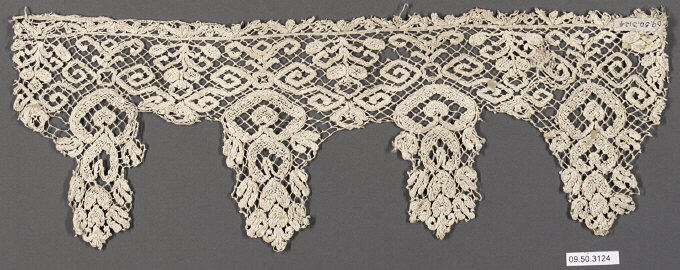
In the rarefied world of haute couture, where every stitch is a declaration of intent, Katherine Fashion Lab presents a compelling study in the art of the fragment. This standalone collection piece, rooted in a philosophy of Global Heritage, eschews the conventional pursuit of seamless perfection. Instead, it elevates the incomplete, the broken, and the reassembled into a sophisticated dialogue between memory and modernity. The subject—Fragment—is not a flaw but a deliberate narrative device, a visual lexicon that speaks to the transient nature of cultural artifacts and the enduring power of craftsmanship. Through the meticulous application of embroidered net, punto à tela, and punto à rammendo, the lab transforms a theoretical concept into a tangible, wearable artifact of global consciousness.
The Philosophical Underpinning: Fragment as Cultural Archive
To understand this piece, one must first appreciate the fragment as a form of cultural archaeology. The garment does not present a unified, monolithic identity; rather, it functions as a palimpsest, where layers of textile history are visible and tangible. The embroidered net serves as the foundational canvas—a transparent, ethereal structure that suggests both fragility and resilience. This net is not merely a substrate but a metaphor for the interconnectedness of global traditions. Each aperture in the mesh represents a space for potential narrative, a void waiting to be filled with the echoes of diverse heritages.
The choice of punto à tela, a traditional needlework technique that creates a dense, woven effect on a net ground, anchors the fragment in a European lineage of lace-making. Yet, the lab subverts this heritage by incorporating motifs and color palettes that reference non-Western textile traditions—perhaps the geometric precision of North African embroidery or the organic flow of East Asian silk work. This is not cultural appropriation but a respectful, scholarly curation. The fragment becomes a global artifact, a textile mosaic where the seams between cultures are left visible, celebrating the hybridity of contemporary identity.
Technical Mastery: Embroidered Net and the Art of Absence
The technical execution of the embroidered net is where Katherine Fashion Lab demonstrates its couture-level rigor. The net itself is a fine, hexagonal mesh, likely hand-loomed from silk or a fine synthetic blend to ensure both drape and structural integrity. The embroidery is applied in a manner that defies uniformity; some areas feature dense, almost opaque stitching, while others are left deliberately sparse, allowing the skin or underlayer to show through. This controlled interplay of density and transparency creates a visual rhythm, a fragmented landscape across the garment’s surface.
What distinguishes this work is the intentionality of the fragments. The embroidered motifs are not complete patterns but broken arcs, partial florals, and interrupted geometric sequences. They are textile quotations—snippets of a larger, lost manuscript. The netting acts as a sieve, filtering which memories are preserved and which are allowed to fade. This is a sophisticated commentary on the selectivity of heritage: we remember in fragments, and so does this garment. The punto à rammendo technique, traditionally used for invisible darning and repair, is here repurposed as a visible, expressive stitch. It mends the broken narrative, but the mends are left exposed—a deliberate art of visible repair that honors the history of the textile while acknowledging its incompleteness.
Punto à Tela and Punto à Rammendo: The Dialectic of Construction
The interplay between punto à tela and punto à rammendo forms the intellectual core of this analysis. Punto à tela, with its regular, grid-like structure, represents order, tradition, and the systematic preservation of craft. It is the architecture of heritage, providing a stable foundation upon which the fragment can be built. In contrast, punto à rammendo is improvisational, reactive, and deeply personal. It is the language of repair, a needlework technique that responds to damage or wear by creating new, often irregular, stitches that reinforce the original fabric.
In this piece, punto à rammendo is not used to hide flaws but to accentuate them. The lab applies this technique along the edges of the embroidered fragments, creating a tactile border that feels both raw and deliberate. These mended seams are executed in contrasting threads—perhaps a deep indigo against a cream net, or a metallic gold against a dark ground—making the repair a decorative feature. This is a radical redefinition of value: the broken is not discarded but integrated, and the act of mending becomes a creative act of storytelling. The garment thus embodies a dialectic of construction and deconstruction, where the fragment is not a failure but a necessary condition for new meaning.
Global Heritage as a Fluid Construct
The Global Heritage origin of this piece is not a static reference to a single tradition but a fluid, dynamic synthesis. The fragment does not claim to represent any one culture authentically; rather, it uses the visual language of multiple heritages to create a new, hybrid aesthetic. The embroidered net may recall the delicate lace of Burano, while the punto à rammendo stitches evoke the boro patching of Japan or the kantha embroidery of Bengal. Yet, these references are not literal reproductions. They are abstracted, broken down, and reassembled into a global textile dialect that speaks to the interconnectedness of our contemporary world.
This approach is particularly resonant in a standalone study, where the garment is isolated from a larger collection. Without the context of a runway narrative or a thematic series, the fragment must stand on its own as a complete statement. It succeeds because it invites the viewer to become a co-author of its meaning. The gaps in the embroidery, the visible repairs, and the irregular patterns demand interpretation. Each observer brings their own cultural lens, filling the voids with personal associations. The garment becomes a participatory artifact, a mirror of the viewer’s own fragmented understanding of global heritage.
Conclusion: The Fragment as a Couture Manifesto
Katherine Fashion Lab’s Fragment is more than a garment; it is a manifesto for a new kind of couture. In an industry often obsessed with perfection and novelty, this piece champions the beauty of imperfection and the depth of historical resonance. The embroidered net provides a transparent canvas for exploration, while punto à tela and punto à rammendo offer a technical vocabulary that is both rigorous and poetic. The Global Heritage origin is not a decorative afterthought but a philosophical foundation, asserting that our shared textile history is not a seamless whole but a collection of beautiful, broken fragments.
This standalone study challenges the couture world to reconsider what it means to preserve and innovate. It suggests that the most profound expressions of heritage are not found in pristine reproductions but in the honest, visible assembly of what remains. The fragment, in this context, is not a loss but a liberation—a liberation from the tyranny of completeness, and an invitation to find wholeness in the pieces we choose to keep and mend. For the discerning connoisseur, this piece is a masterclass in the art of the fragment, a textile meditation on memory, repair, and the enduring beauty of the incomplete.