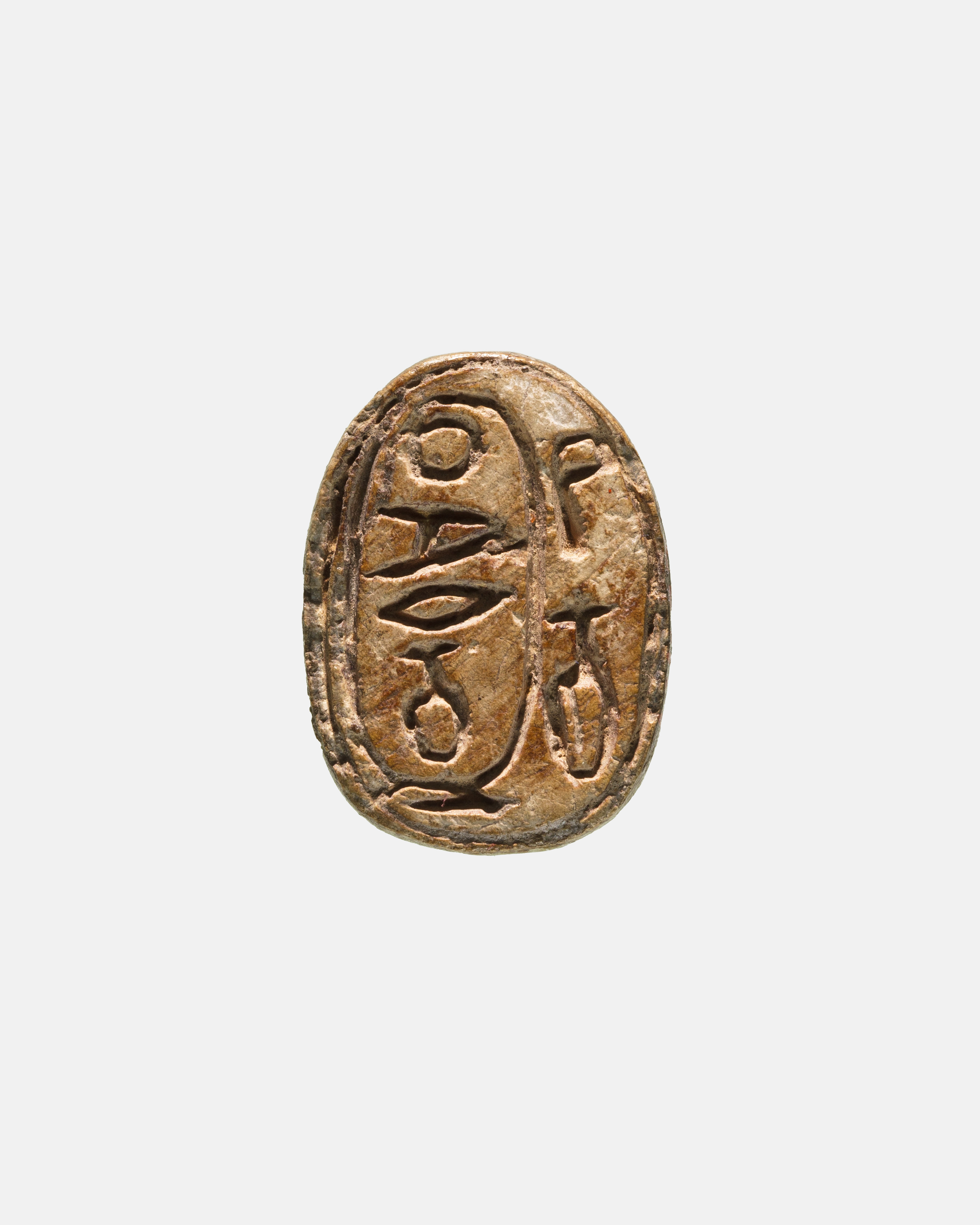
Heritage Analysis: The Scarab Inscribed for Pharaoh Aya (I)
Introduction: The Scarab as a Cultural Artifact of Power and Protection
The scarab inscribed for Pharaoh Aya (I), dating to the late 18th Dynasty of Ancient Egypt (circa 1327–1323 BCE), represents a seminal artifact within the lineage of symbolic adornment. Crafted from steatite—a soft, metamorphic stone prized for its ease of carving and subsequent glazing—this scarab functions as both a personal amulet and a public declaration of royal authority. For Katherine Fashion Lab, this artifact offers a strategic blueprint for embedding layered cultural symbolism into high-end luxury narratives. The scarab’s dual role as a talisman of spiritual protection and a marker of dynastic legitimacy provides a rich foundation for a 2026 collection that bridges ancient heritage with contemporary luxury strategy.
Symbolic Power: The Scarab as a Metaphor for Renewal and Authority
The scarab beetle, in Ancient Egyptian cosmology, was synonymous with the sun god Khepri, who rolled the sun across the sky each day, symbolizing creation, rebirth, and the cyclical nature of existence. For Pharaoh Aya (I), a ruler who ascended during a period of political and religious transition following the Amarna period, the scarab served as a potent emblem of restored order and divine mandate. The inscription bearing his name transformed the artifact from a generic religious symbol into a personalized instrument of governance. In strategic terms, the scarab’s symbolic power lies in its ability to communicate transformation and continuity—two attributes that resonate deeply with modern luxury consumers seeking brands that honor legacy while embracing innovation. Katherine Fashion Lab can leverage this duality by positioning the scarab motif as a visual shorthand for personal evolution and timeless prestige, aligning with the 2026 luxury trend toward meaningful iconography over ephemeral aesthetics.
Historical Adornment: Steatite as a Medium of Accessible Opulence
Steatite, while less precious than lapis lazuli or carnelian, was extensively used in Ancient Egyptian amulet production due to its workability and ability to hold a vitreous glaze. The choice of steatite for a royal scarab indicates a deliberate balance between material accessibility and artisanal sophistication. The stone was often glazed in shades of blue or green to imitate turquoise or faience, colors associated with rebirth and the Nile’s fertility. For Katherine Fashion Lab, this historical precedent underscores a strategic opportunity: the use of unexpected materials to convey exclusivity. In a 2026 luxury market increasingly defined by sustainability and artisanal craftsmanship, steatite-inspired finishes—or ethically sourced steatite itself—can serve as a signature medium. The scarab’s historical role as an adornment worn on necklaces, bracelets, or rings—often mounted in gold or silver—offers a direct template for jewelry and accessory design. By reimagining steatite’s matte texture and glazed finishes in modern silhouettes, the brand can evoke archaeological authenticity while meeting contemporary standards of wearability and prestige.
Spiritual Meaning: The Amuletic Function as a Luxury Experience
Beyond ornamentation, the scarab held profound spiritual significance. It was believed to protect the wearer from evil, ensure safe passage into the afterlife, and confer the pharaoh’s blessings. The scarab inscribed for Aya (I) would have been a conduit of divine energy, imbued with the pharaoh’s name as a source of protective power. This spiritual dimension transforms the object from a mere accessory into a talismanic experience. For Katherine Fashion Lab, this suggests a luxury strategy centered on intentionality and ritual. In 2026, high-end consumers are increasingly drawn to products that offer emotional resonance and personal meaning—what industry analysts term “conscious luxury.” By framing the scarab as a modern amulet, the brand can position each piece as a vessel for personal empowerment. Limited-edition collections, each accompanied by a narrative of the scarab’s protective properties, can create a sense of exclusivity and spiritual connection. This approach aligns with the growing market for mindful consumption, where luxury is measured not only by price but by emotional and symbolic value.
2026 High-End Luxury Strategy: Integrating Heritage into Brand Architecture
The strategic integration of the Scarab Inscribed for Pharaoh Aya (I) into Katherine Fashion Lab’s 2026 collection requires a multi-faceted approach that respects historical authenticity while driving commercial relevance.
1. Narrative-Driven Design: The scarab’s inscription functions as a historical signature. Katherine Fashion Lab can adopt a similar practice by offering customizable engravings on scarab-inspired pieces, allowing clients to inscribe personal symbols or initials. This transforms the artifact into a bespoke luxury item, echoing the pharaonic tradition of personalizing amulets for individual authority.
2. Material Innovation with Heritage Resonance: Steatite’s historical use suggests a material strategy that blends tradition with modern techniques. The brand could develop a proprietary composite material that mimics steatite’s texture and glazing properties but incorporates recycled metals or bio-resins, appealing to the 2026 luxury consumer’s demand for sustainable craftsmanship. Collaborations with contemporary lapidaries can further elevate the material’s prestige.
3. Experiential Retail and Storytelling: The spiritual meaning of the scarab offers a platform for immersive retail experiences. Pop-up installations that recreate the ambiance of an Egyptian tomb or workshop, complete with guided narratives about Aya (I)’s reign and the scarab’s protective role, can deepen consumer engagement. This aligns with the 2026 trend toward phygital luxury, where physical spaces are augmented by digital storytelling.
4. Limited-Edition Drops with Provenance: Releasing a limited run of scarab-themed pieces, each accompanied by a certificate of heritage linking the design to the original artifact, creates scarcity and collectibility. This strategy leverages the provenance economy, where historical authenticity drives premium pricing. The scarab’s association with Pharaoh Aya (I)—a ruler who restored stability—can be framed as a metaphor for resilience, a theme resonating with post-pandemic luxury consumers.
5. Collaborative Scholarship: Partnering with Egyptologists and museum curators to co-create the collection ensures historical accuracy and adds intellectual gravitas. Such collaborations also generate editorial coverage and position Katherine Fashion Lab as a cultural steward rather than a mere commercial entity.
Conclusion: The Scarab as a Strategic Archetype for Modern Luxury
The Scarab Inscribed for Pharaoh Aya (I) is far more than a relic; it is a strategic archetype for how ancient symbolism can inform contemporary luxury. Its power lies in its ability to synthesize spiritual protection, political authority, and artisanal beauty into a single, portable object. For Katherine Fashion Lab, this artifact provides a template for a 2026 collection that is both historically grounded and commercially innovative. By embracing the scarab’s narrative of renewal, material ingenuity, and amuletic purpose, the brand can offer clients not just adornment, but a connection to a timeless lineage of power and meaning. In a market saturated with transient trends, the scarab’s enduring resonance offers a strategic foundation for luxury that endures.