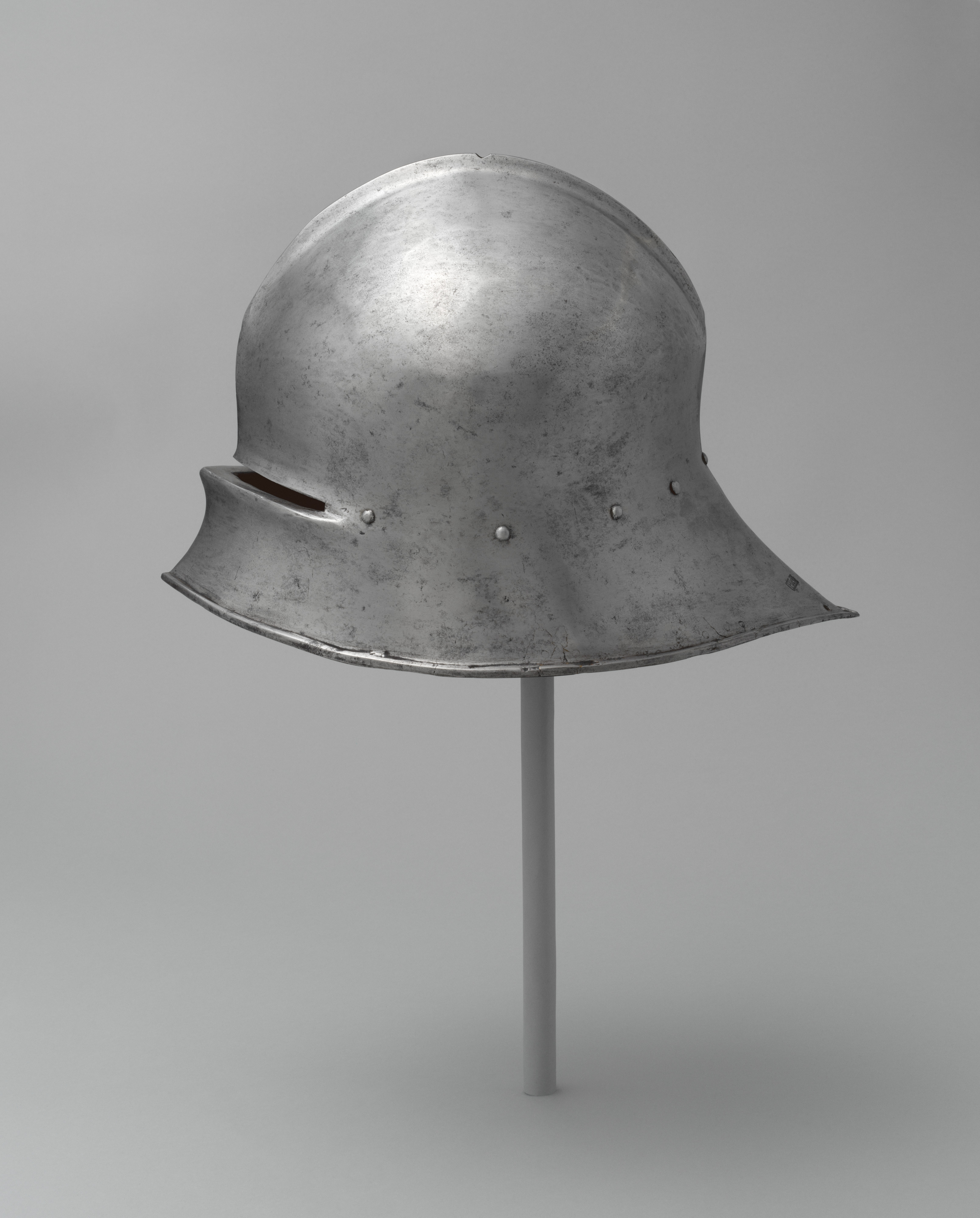
Heritage Analysis: The Sallet Helmet of Mühlau – From Martial Totem to Luxury Code
For Katherine Fashion Lab, heritage is not an archive but an active lexicon. Our strategic standalone research into specific artifacts allows us to decode profound narratives of power, protection, and identity, which can be recalibrated for the future of luxury. This analysis examines a pivotal object: the late 15th-century Sallet helmet, originating from the Austrian armory center of Mühlau. Crafted from steel, leather, and textile (linen/cotton), this piece transcends its functional genesis to become a potent vessel of symbolic power, historical adornment, and spiritual meaning. Our deconstruction of its layered semantics provides a critical framework for a forward-looking 2026 high-end luxury strategy centered on intellectual armor and ritualized protection.
I. Anatomical Symbolism & The Semiotics of the Gaze
The Sallet’s form is a masterclass in anthropomorphic symbolism and psychological warfare. Unlike the enclosing great helm, the Sallet, with its distinctive swept-back skull and pivoting visor, mimics the human profile while simultaneously dehumanizing the wearer. The visor, often shaped into a snarling grimace or a sleek, avian beak, transforms the warrior’s face into an icon of calculated ferocity or detached menace. This represents a fundamental shift in martial adornment: the face is not hidden but re-authored. The warrior’s identity is subsumed by a crafted persona, a performative mask of power meant to intimidate before the first blow is struck.
This manipulation of the gaze is paramount. The narrow ocular slit creates a hyper-focused, tunnel-vision perspective for the wearer, while presenting the outside world with an inscrutable, metallic stare. The power dynamic inherent in this obscured gaze—seeing without being fully seen—is a powerful metaphor for modern luxury. It speaks to discretion, curated perception, and the authority that comes from controlled revelation. For a 2026 strategy, this translates into pieces that empower the wearer through a sense of selective visibility and psychological boundary-setting, transforming the wearer into an active agent of their own narrative.
II. Material Stratification & The Hierarchy of Craft
The material composition of the Mühlau Sallet reveals a sophisticated hierarchy of craft and purpose, directly analogous to the layered construction of modern luxury goods. The primary medium, steel, provides the non-negotiable core value: imperviousness and survival. Its surface, often “blackened” through controlled oxidation or meticulously polished to a mirror finish, served both practical (anti-glare) and symbolic (aesthetic intimidation) functions. This is the equivalent of a luxury house’s foundational leather or metal hardware—the element that must communicate integrity and permanence.
Yet, the steel shell was intimately integrated with organic materials. A leather liner, custom-fitted to the wearer’s cranium, provided critical suspension and comfort, a direct precursor to the ergonomic considerations of haute couture and fine leather goods. The textile elements—a linen arming cap worn beneath and often a decorative cotton or silk cover (a “visor-cover” or “helmzier”) worn over—introduced softness, moisture management, and, crucially, heraldic adornment. This layered system—functional textile, personalized leather, symbolic steel—maps perfectly onto a luxury strategy where technical performance (performance fabrics), personalized comfort (bespoke fitting), and external symbolic statement (iconic hardware and silhouette) are seamlessly fused. The 2026 consumer seeks this holistic integrity, where every layer, even the unseen, is endowed with meaning and quality.
III. Spiritual Meaning & The Metaphysics of Armor
Beyond physical defense, armor like the Sallet carried profound spiritual and talismanic weight. It was a sacred shell, consecrated in some traditions, intended to protect the soul’s vessel as much as the body. The act of donning the helmet was a ritual transition from man to knight, from civilian to combatant—a metamorphosis into a state of grace and purpose. The helmet’s form, echoing the domes of chapels and the curve of the celestial sphere, subtly aligned the wearer with divine order. In an age of palpable spiritual belief, the armor was a portable chapel, a fortified identity blessed for a sacred duty.
This concept of spiritual armor is acutely relevant for the 2026 luxury landscape. In a world of digital saturation, psychological stress, and fragmented identity, modern consumers seek objects that offer metaphysical protection and facilitate personal ritual. Luxury is increasingly framed as a tool for self-preservation, focus, and intentional living. A garment or accessory inspired by the Sallet’s ethos is not merely clothing; it is an instrument for mental fortification, a ritual object donned to face the modern arena—be it a boardroom, a social space, or the internal battlefield of daily life. It offers a narrative of resilience and focused intent.
Strategic Application: The 2026 Luxury Codex
Katherine Fashion Lab’s 2026 high-end luxury strategy, informed by this analysis, will move beyond literal interpretation to codify the Sallet’s principles into a contemporary design language and brand philosophy.
Core Strategic Pillars:
1. The Re-Authored Silhouette: Collections will feature sharp, swept-back lines and occluded details that manipulate perception. Asymmetric closures, integrated “visors” in eyewear or collars, and silhouettes that create a sense of forward momentum and focused intent will be key. Fabrics will play with contrasts of hard (polished tech materials, rigid structuring) and soft (luxury linens, padded leathers), mirroring the steel-and-textile stratification.
2. Ritualized Craft & Layered Integrity: We will emphasize the “unseen layers” as a point of distinction. This includes proprietary interior finishes, custom-fit technologies adapted from bespoke tailoring, and a narrative that highlights the protective and comforting properties of materials closest to the skin. The craftsmanship story will be one of integrated systems, not just surface decoration.
3. The Talismanic Product: Key pieces will be positioned as modern talismans—armor for the contemporary self. This will be supported by brand content focusing on mental clarity, curated presence, and personal ceremony. Limited editions may incorporate materials or processes with symbolic weight (e.g., metals treated with unique patinas, embedded sensory elements for grounding).
4. The Controlled Gaze as Brand Ethos: Our marketing and retail experience will embody the Sallet’s controlled gaze. This means curated exclusivity, an emphasis on the customer’s perspective and empowerment, and a visual identity that is striking yet subtly impenetrable, fostering desire through intelligent mystique rather than over-exposure.
In conclusion, the Mühlau Sallet provides Katherine Fashion Lab with a rich, non-obvious heritage cipher. It is an object where anatomy becomes architecture, materiality tells a story of layered defense, and function is inseparable from spiritual metaphor. By transposing these codes—of symbolic power, ritualized adornment, and metaphysical protection—we can architect a 2026 luxury proposition that is intellectually rigorous, deeply resonant, and powerfully distinctive. We are not selling armor; we are offering the tools to forge an inviolable self.