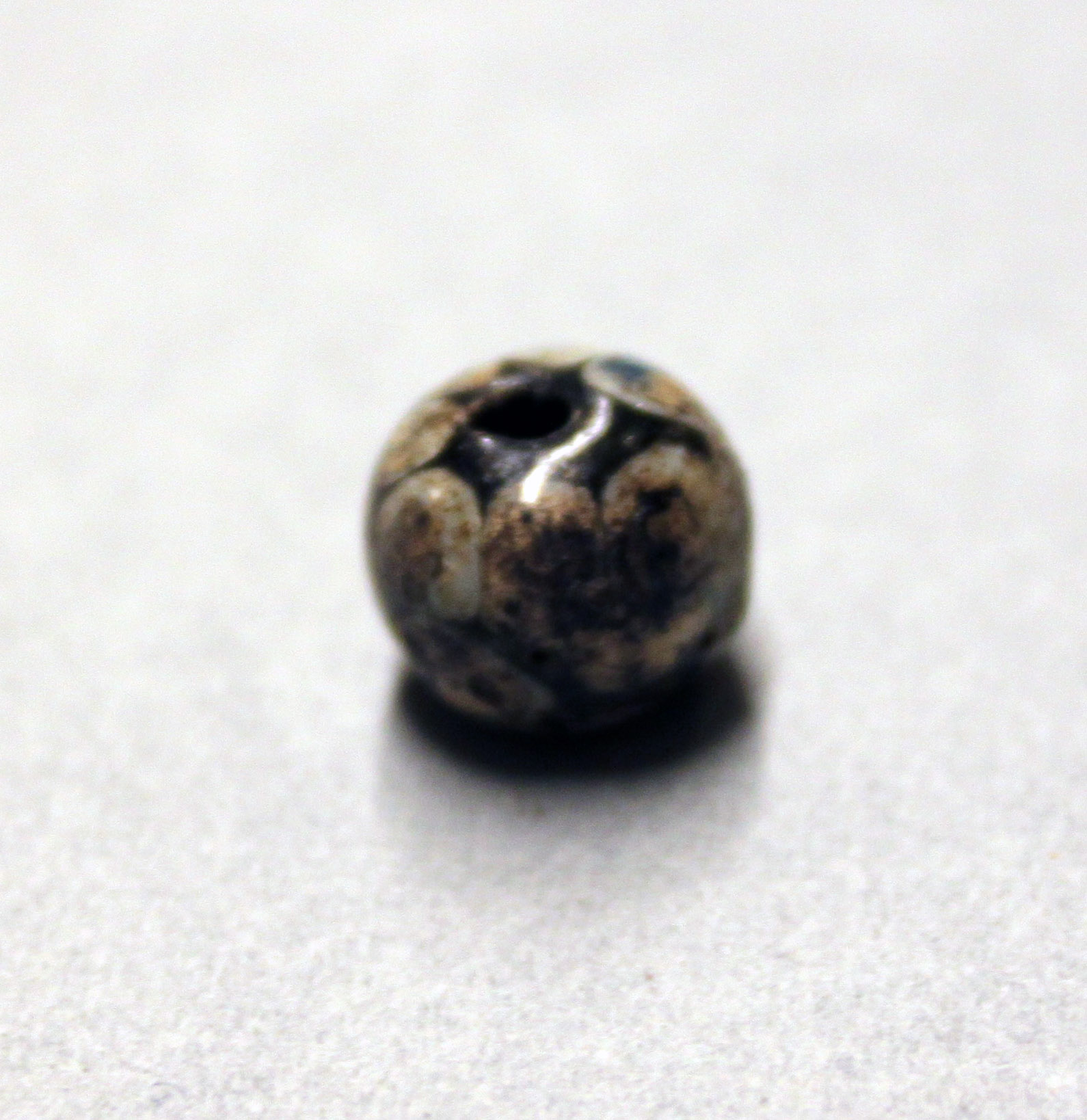
The Art of the Bead: A Couture Analysis of Global Heritage in Glass
Introduction: The Bead as a Cultural and Couture Artifact
In the realm of haute couture, where fabric often commands the narrative, the bead emerges as a silent yet potent protagonist. At Katherine Fashion Lab, the bead is not merely an embellishment; it is a standalone study in craftsmanship, history, and transnational dialogue. This analysis delves into the couture application of glass beads, tracing their lineage through global heritage and examining their transformative power within contemporary fashion. The glass bead, with its inherent luminosity and structural versatility, serves as a microcosm of cultural exchange—a tangible thread connecting artisans from Venice to India, from the Czech Republic to West Africa. This report dissects the bead’s role in elevating design from garment to artifact, exploring its material properties, cultural provenance, and the technical mastery required to integrate it into couture-level creations.
Materiality and Craft: The Glass Bead’s Technical Virtuosity
Glass beads possess a unique dichotomy: they are both fragile and durable, transparent yet refractive. Their production, particularly in lampworking and seed-beading traditions, demands precision that aligns perfectly with couture’s ethos of meticulous handwork. At Katherine Fashion Lab, the choice of glass over plastic or metal is deliberate. Glass offers a depth of color and light dispersion that synthetic materials cannot replicate. Each bead acts as a miniature prism, catching ambient light and creating a dynamic interplay of shadow and sparkle across the garment’s surface.
The lab’s artisans employ techniques such as bead embroidery, where individual beads are sewn onto fabric in intricate patterns, and bead weaving, where beads are linked together to form structural components like collars or cuffs. The weight of glass beads introduces a gravitational quality to the fabric, altering its drape and movement. A gown adorned with thousands of hand-sewn glass beads does not simply hang; it cascades, each bead pulling the silk or tulle into a rhythm dictated by the artisan’s hand. This technical complexity underscores the bead’s role as a standalone element—not an afterthought, but a foundational design decision.
Global Heritage: Tracing the Bead’s Cultural Lineage
The narrative of the glass bead is inherently global. Its origins span millennia, with early examples found in Mesopotamia and Egypt. However, the modern couture bead owes much to two primary heritage streams: Venetian Murano glass and Czech Bohemian crystal. Venetian beads, particularly the intricate millefiori and chevron patterns, represent centuries of trade and artistry. These beads traveled along the Silk Road and into the African continent, where they became symbols of status, currency, and spiritual significance. In West African cultures, such as the Yoruba and Ashanti, glass beads were woven into crowns, masks, and ceremonial regalia, imbuing them with ancestral power.
Katherine Fashion Lab’s approach honors this heritage by sourcing beads from traditional artisans in Venice and the Czech Republic, as well as collaborating with contemporary beadworkers in India and Ghana. The lab does not merely appropriate these motifs; it recontextualizes them within a couture framework. For example, a jacket might feature a pattern inspired by Ghanaian Ndebele beadwork, but executed with Czech glass seed beads in a gradient of indigo and gold. This synthesis respects the original cultural meaning while allowing the bead to speak a new visual language. The result is a garment that carries the weight of history without being weighed down by it.
Design Language: The Bead as Structural and Narrative Element
In standalone couture pieces, beads often serve as the primary structural medium. A beaded bodice can replace traditional boning, offering both support and ornamentation. Katherine Fashion Lab explores this by creating beaded exoskeletons—garments where the beadwork forms a lattice that shapes the silhouette. For instance, a floor-length gown might feature a fully beaded corset that transitions into a sheer, unadorned skirt. The contrast between dense beadwork and negative space emphasizes the bead’s sculptural potential.
Narratively, beads can evoke themes of migration, memory, and connection. A collection might trace the journey of a single bead from a Venetian furnace to a West African marketplace, then to a Parisian atelier. Each bead carries the residue of its journey—the heat of the glassblower’s torch, the hands of the trader, the needle of the embroiderer. Katherine Fashion Lab capitalizes on this by using beads to create cartographic patterns: maps of trade routes, constellations of cultural exchange, or abstract representations of diaspora. The bead becomes a pixel in a larger image, a discrete unit that, when assembled, tells a story of global interdependence.
Challenges and Innovations in Bead Couture
The integration of glass beads into haute couture is not without technical and ethical challenges. Weight and durability are primary concerns. A heavily beaded garment can exceed ten kilograms, putting strain on both the fabric and the wearer. Katherine Fashion Lab addresses this through strategic placement and the use of lightweight, hollow glass beads developed in collaboration with Czech glassmakers. Additionally, the lab employs reinforced stitching and double-lining to distribute weight evenly, ensuring that the garment remains wearable without compromising its structural integrity.
Ethically, the lab navigates the fine line between appreciation and appropriation. By crediting the cultural origins of specific beadwork techniques and compensating traditional artisans fairly, the lab fosters a model of collaborative heritage. The bead is not extracted from its cultural context; it is invited into a new one, with its history acknowledged and celebrated. This approach aligns with contemporary couture’s growing emphasis on transparency and cultural sensitivity.
Conclusion: The Bead as a Standalone Study in Couture
The glass bead, when examined as a standalone subject, reveals itself as a nexus of art, history, and innovation. At Katherine Fashion Lab, the bead is elevated from a decorative accessory to a primary design element, one that demands technical mastery and cultural literacy. Its global heritage—from Venetian canals to West African courts—infuses each garment with layers of meaning, while its material properties challenge designers to rethink structure and light. In a fashion landscape increasingly defined by digital fabrication and fast production, the hand-sewn glass bead stands as a testament to slowness, skill, and story. This analysis affirms that the bead is not merely a detail; it is a discipline, one that Katherine Fashion Lab continues to refine with each stitch, each refraction, each thread of heritage woven into the fabric of couture.