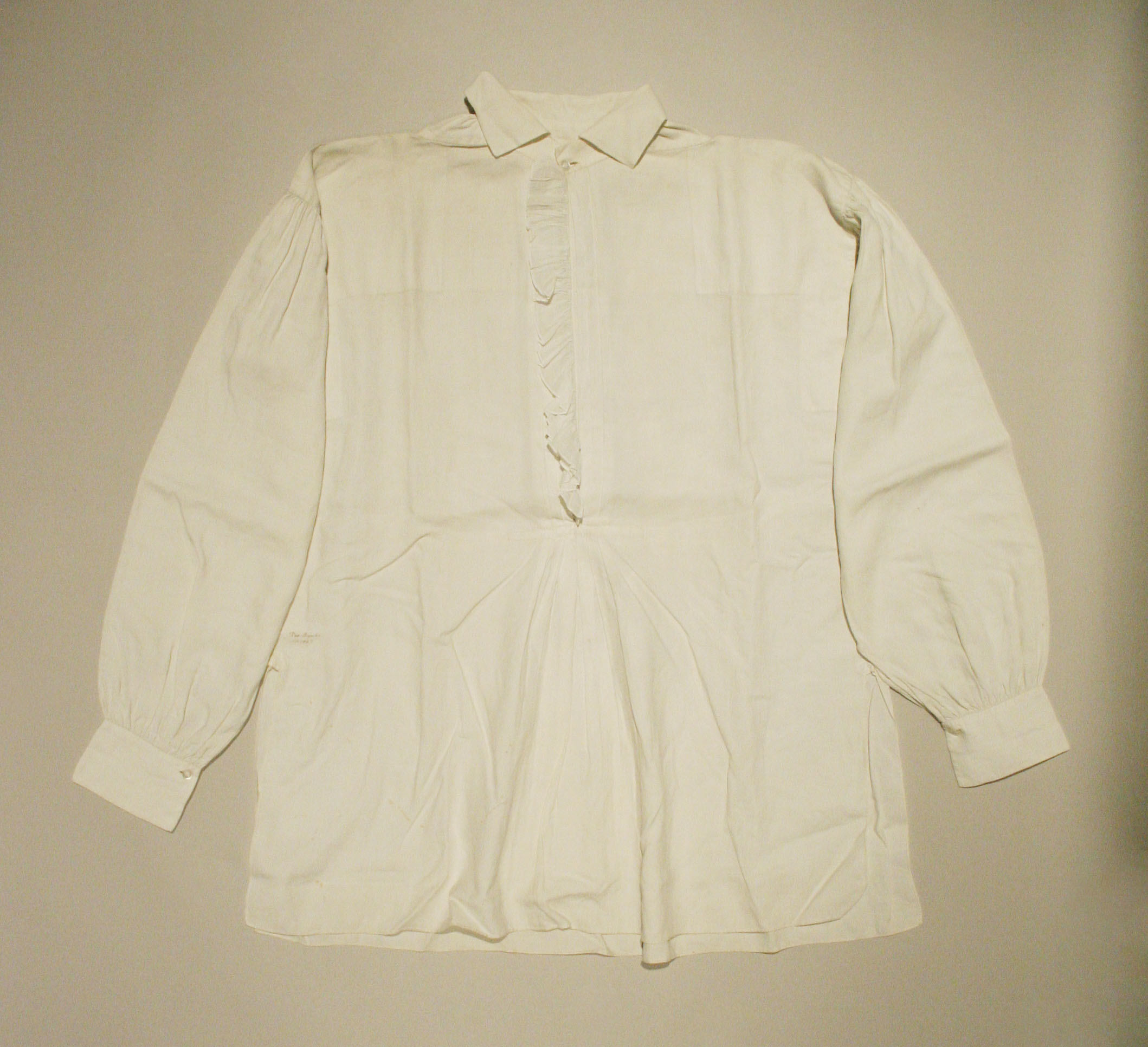
The American Linen Shirt: A Study in Elevated Utility
In the vast lexicon of American fashion, few garments occupy a position as paradoxical as the linen shirt. It is at once a staple of casual ease and a testament to refined restraint. At Katherine Fashion Lab, this subject—the American linen shirt—demands a dedicated analysis, not merely as a product of textile engineering but as a cultural artifact. This standalone study dissects the shirt’s materiality, construction, and aesthetic resonance, revealing how a humble fiber can be elevated to couture-worthy status through deliberate design and uncompromising craftsmanship.
Material Origins: The American Linen Paradox
Linen, derived from the flax plant, is one of humanity’s oldest textiles. Yet its adoption in American ready-to-wear has historically been overshadowed by cotton’s ubiquity. The American linen shirt, however, represents a deliberate departure from mass-market norms. At Katherine Fashion Lab, we examine linen not as a substitute for cotton but as a superior medium for structure and breathability. The fiber’s natural irregularities—its slight slubs, its crisp handfeel, its propensity to soften with wear—are not flaws but intrinsic markers of authenticity. In a couture context, these qualities are celebrated, not corrected.
The sourcing of American linen itself is a nuanced narrative. While much of the world’s flax is grown in Europe, a growing movement of domestic producers has emerged, particularly in regions like the Pacific Northwest and the Mid-Atlantic. These fibers are harvested, retted, and spun with an attention to terroir that mirrors fine winemaking. The result is a linen that carries a distinct sense of place: a whisper of the cool, damp mornings of Oregon or the sun-drenched fields of Pennsylvania. For the Katherine Fashion Lab, this provenance is non-negotiable. The shirt becomes a canvas for regional identity, a wearable document of American agricultural heritage.
Construction: The Architecture of Ease
The distinction between a mass-produced linen shirt and a couture-grade garment lies in the architecture of its construction. At Katherine Fashion Lab, the focus is on structural integrity married to fluid movement. The typical American linen shirt—often characterized by boxy fits and stiff collars—is reimagined through a lens of precision tailoring. Key elements include:
Seam Finishes: French seams or flat-felled seams are employed not merely for durability but to eliminate raw edges that can fray and compromise the garment’s longevity. This technique also reduces bulk, allowing the linen to drape naturally against the body. The interior of the shirt becomes a hidden testament to craftsmanship, where every stitch is a deliberate choice.
Button Placket and Closure: The placket is reinforced with a subtle interlining of organic cotton, preventing the linen from stretching or distorting over time. Buttons—sourced from natural corozo or mother-of-pearl—are hand-sewn with a shank to allow for slight movement, reducing stress on the fabric. The buttonholes themselves are keyhole-shaped and hand-stitched, a detail that signals couture-level care.
Shoulder and Sleeve Integration: The classic American shirt often features a dropped shoulder for a relaxed silhouette. In this analysis, the shoulder seam is slightly raised and reinforced with a bias-cut strip of linen, allowing for a more tailored fit without sacrificing ease. The sleeves are cut with a subtle curve at the bicep, enabling a full range of motion while maintaining a clean line from shoulder to cuff. The cuff itself is a study in proportion: a two-button closure that can be dressed up or down, with a slight mitered corner for a crisp finish.
Collar and Yoke: The collar is a defining feature. Rather than a stiff, fused collar that can feel unnatural, Katherine Fashion Lab employs a unfused, hand-rolled collar that softens with wear, creating a lived-in elegance. The yoke, often overlooked, is cut on the bias to allow for subtle give across the shoulders, preventing the shirt from pulling or gaping when the wearer moves. This bias cut also enhances the fabric’s drape, creating a gentle fall that flatters a variety of body types.
Aesthetic Resonance: The American Vernacular
The aesthetic of the American linen shirt, as analyzed here, is one of studied simplicity. It rejects overt ornamentation in favor of proportion, color, and texture. The palette is restrained: undyed natural tones, soft ecru, pale indigo, and muted slate. These colors are not arbitrary but chosen to harmonize with the linen’s inherent warmth and to evoke the American landscape—the bleached bones of desert rock, the soft haze of coastal fog, the deep shadows of a forest floor.
Texture plays a pivotal role. The linen’s slight slub and irregular weave are not sanded or chemically treated to achieve a uniform hand. Instead, they are left as-is, allowing the fabric to develop a patina over time. This is a garment that ages with grace, each wash softening the fibers and deepening the color’s nuance. The shirt becomes a personal artifact, recording the wearer’s life in subtle creases and faded patches.
Silhouette is equally deliberate. The shirt is neither overtly fitted nor overly loose; it occupies a middle ground that Katherine Fashion Lab terms "relaxed precision." The hem is slightly curved, longer in the back than the front, allowing it to be worn untucked without looking sloppy or tucked without excess bulk. The side seams are subtly darted to create a gentle waist definition, but the cut remains generous enough to allow for layering over a simple tank or under a structured blazer.
Cultural Context: The Standalone Statement
In a fashion ecosystem dominated by fast-moving trends and seasonal novelties, the American linen shirt stands as a counterpoint. It is not a statement of novelty but of enduring relevance. This analysis positions the shirt as a standalone study because it requires no accompaniments to justify its existence. It is a complete garment, capable of defining an outfit on its own. The wearer does not need to accessorize heavily or pair it with statement pieces; the shirt itself carries the narrative.
This aligns with a broader cultural shift toward mindful consumption. The American linen shirt, as crafted by Katherine Fashion Lab, is an investment in quality over quantity. It is designed to be worn for years, not seasons, and to transcend the binary of "casual" versus "formal." It can be worn to a gallery opening with tailored trousers or to a weekend brunch with raw denim. Its versatility is not a compromise but a strength—a testament to the garment’s architectural integrity.
Conclusion: The Art of the Everyday
The American linen shirt, when subjected to the rigorous lens of couture analysis, reveals itself to be far more than a basic wardrobe staple. It is a masterclass in material honesty, structural intelligence, and aesthetic restraint. At Katherine Fashion Lab, we see this garment as a blueprint for how American fashion can reclaim a narrative of craftsmanship—one that honors the fiber, the maker, and the wearer in equal measure. In a world of disposable fashion, the linen shirt endures as a quiet, powerful statement: that true luxury lies not in excess but in the perfect execution of the essential.